Russia has been quick to blame militants from the northern Caucasus region for Monday's deadly Metro attacks in Moscow, partly because the suicide bombers were identified as women.
Over years of conflict, Islamic militants have sought to recruit women who have suffered in some way at the hands of Russian soldiers operating in the Chechen Republic, in Russia's South.
Two of the women who took part in the 2002 Moscow Theatre siege are said to have been sisters who were seized in a Chechen village by Russian soldiers, before being gang-raped.
News that makes sense
Your trusted source for staying up-to-date with the world around you. Get free daily news updates and analysis, straight to your inbox.
They died among 129 members of the audience when the building was gassed and raided by Russian forces.
Russia brands the insurgents in the region terrorists, and following the September 11 attacks, Western powers markedly slowed criticism of Moscow's conduct in the region.
Long history of conflict
The current conflict between Chechen rebels and Russian forces has its roots in the eighteenth century, when Russian troops moved in.
Throughout the nineteenth and twentieth centuries, Chechens rose up against Russian rule, resulting in the mass deportation of Chechens and occupants of Ingushetia under the Soviets.
Both Ingueshtia and Dagestan, fellow North Caucasus republics within the Russian Federation, have experienced degrees of ethnic tensions, islamic militancy, and insurgency against Russian forces in recent years, with the decline in Chechnya corresponding to increases elsewhere, as the the conflict spread.
Unlike many other 'nations' in the USSR, the resource-rich North Caucasus republics did not gain independent statehood when the cold war ended.
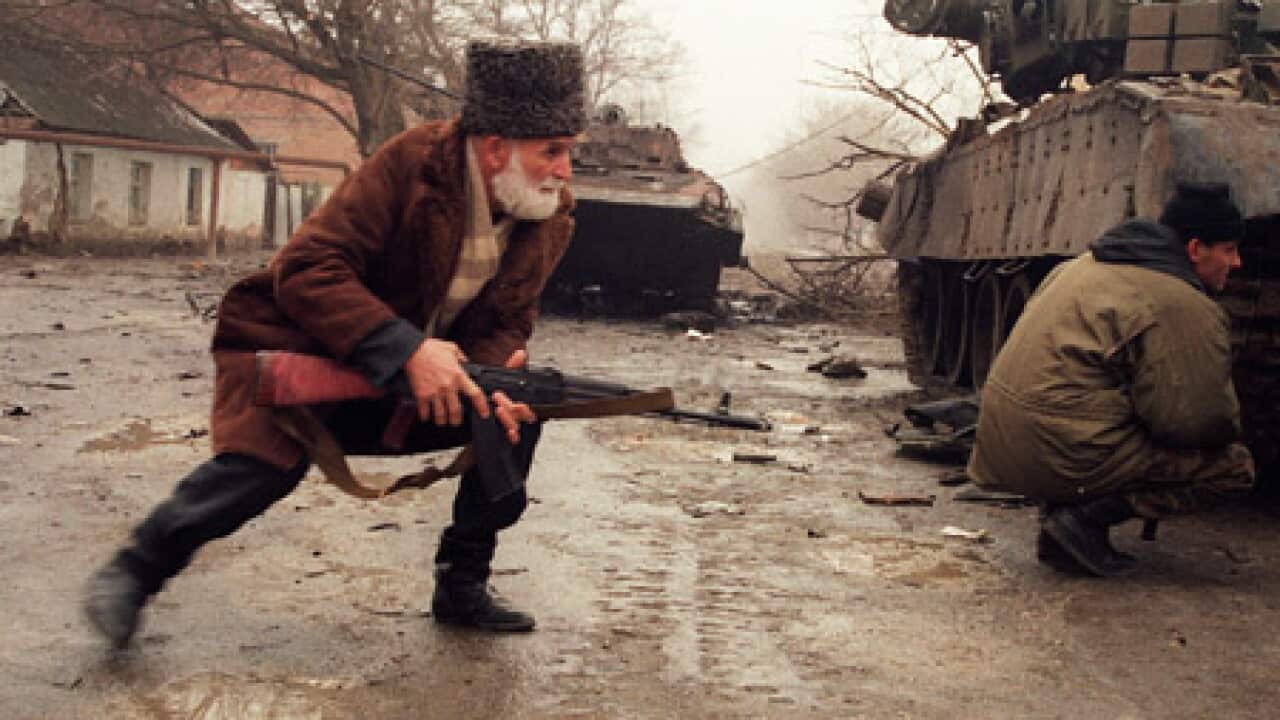
Over the past 16 years Russian soldiers have been accused of using excessive and indiscriminate force in Chechnya, leaving a trail of both physical and pschological destruction.
Chechnya has seen two major conflicts since the fall of communism, with the capital Grozny becoming a by-word for the horrors of war.
Some militant leaders actively recruit women who have lost their husbands, sons, brothers and fathers - and they're known as the Black Widows.
Although no responsibility has been claimed for yesterday's attacks, the news that women were involved had many analysts and government figures pondering the Black Widows' potential role.
Human rights groups call for restraint
Human rights groups have condemned these latest attacks, but called on Russia to show restraint.
"We're telling those who carry out these attacks that they shoudln't do it", Claudio Cordone of Amnesty International said.
When it comes to Russian authorities, Cordone says, "of course they have to make sure they identify those responsible and bring them to justice, but they ought to do so again respecting fundamental priciples of human rights."
But Chechnya's Russian backed President said extremists should be shown no mercy.
"I would like to say that whenever there is terrorism where they spill blood, Islam teaches us whenever they appear and spill blood they should be destroyed, which we do in the Chechen Republic", Chechen President Ramzan Kadyov said.
Recently, Chechen rebels have stepped up attacks - including a deadly passenger train bombing between Moscow and St Petersburg last November.
But while the Chechen connection to these latest attacks is yet to be proven, rebel leader Doku Umarov recently warned the Kremlin that the war 'is coming to your cities.'







