
A former SS guard has gone on trial in Germany accused of complicity in mass murder at a Nazi death camp during World War Two.
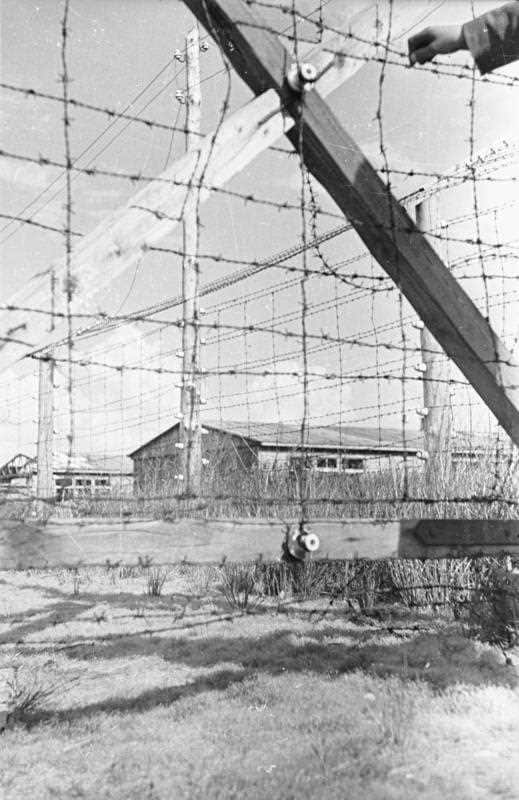
The German man, 94, from the western district of Borken, North Rhine-Westphalia state, served as a guard from June 1942 to September 1944 at the Stutthof camp near what was then Danzig, now Gdansk in Poland.
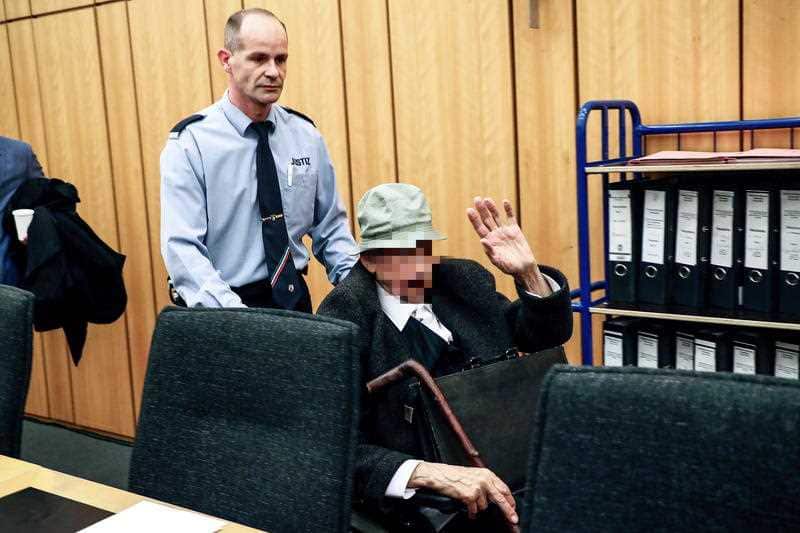
The defendant, who has not been publicly named, is reportedly a retired landscape architect.
Dressed in a wool suit, he entered the regional court of Muenster in a wheelchair, with a walking stick in hand, facing charges of being an accessory to the murders of several hundred camp prisoners.
News that makes sense
Your trusted source for staying up-to-date with the world around you. Get free daily news updates and analysis, straight to your inbox.
These included more than 100 Polish prisoners gassed in June 1944 and "probably several hundred" Jews killed from August to December 1944 as part of the Nazis' so-called "Final Solution".
Initially composed, the defendant started weeping when the court heard written testimony from Holocaust survivors who now live in the United States or Israel, read out by their lawyers.
Marga Griesbach recalled, according to national news agency DPA, how she saw her six-year-old brother for the last time in the camp before he was sent to Auschwitz where he died in the gas chambers.
Another survivor and co-plaintiff, a woman from the US state of Indianapolis, charged that the defendant "helped to murder my beloved mother, whom I have missed my entire life".
'Gassed, shot, left to die'
Aged 18 to 20 at the time, and therefore now being tried under juvenile law, the defendant is "accused in his capacity as a guard of participating in the killing operations," said prosecutor Andreas Brendel.
"Many people were gassed, shot or left to die of hunger," he added, stressing that the guards "knew about the killing methods".
But when interrogated by police in August 2017, the accused insisted he knew nothing about the atrocities in the camp, Die Welt daily reported.
Asked why the camp detainees were so thin, he reportedly said that food was so scarce for everyone that, figuratively speaking, two soldiers could fit into one uniform.
Stutthof was set up in 1939 and would end up holding 110,000 detainees, 65,000 of whom perished, according to the Museum Stutthof.
Each court hearing will likely last for a maximum of two hours due to the defendant's advanced age -- even though, the prosecutor said, "mentally, he is still fit".
The defendant was planning to make a statement during the course of the trial, his lawyer told DPA.
If found guilty, he faces a sentence of up to 15 years in prison -- even though, given his age and the possibility of an appeal, he is considered unlikely to serve any time behind bars.
The prosecutor noted that German law has no statute of limitations on murder and pointed to the moral imperative to pursue the case.
"Germany owes it to the families and victims to prosecute these Nazi crimes even today," he said.
"That is a legal and moral question."
'No exceptions'
Germany has been racing to put on trial surviving SS personnel, after the legal basis for prosecuting former Nazis changed in 2011 with the landmark conviction of former death camp guard John Demjanjuk.
He was sentenced not for any atrocities he committed, but on the basis that he was a cog in the Nazi killing machine by serving at the Sobibor camp in occupied Poland.
German courts subsequently convicted Oskar Groening, an accountant at Auschwitz, and Reinhold Hanning, a former SS guard at the same camp, for mass murder.
However both men, convicted at age 94, died before they could be imprisoned.
Prosecutors have also filed charges against another former SS guard at Stutthof, a 93-year-old from the city of Wuppertal.
It remains to be determined if he is fit to stand trial.
Historian Peter Schoettler highlighted "an important humanitarian and legal reason" to push on with the justice process, stressing that "the rule of law should not allow for exceptions".
Griesbach, in her testimony, said that "I don't harbour hatred or rage in my heart".
Rather, she said her main concern was remembrance of the crimes at a time when Holocaust deniers are being heard again, including in her country the United States.







