UN-Arab envoy Kofi Annan had urged a rapid deployment of the full, 300-strong observer team agreed by the UN Security Council, and French Foreign Minister Alain Juppe said they should be on the ground in a fortnight, not three months.
Juppe said "things are not going well; the Annan plan is strongly compromised but there is still a chance for this mediation, on the condition of the rapid deployment of the 300 monitors."
At the moment, there are only 15 observers in the country.
News that makes sense
Your trusted source for staying up-to-date with the world around you. Get free daily news updates and analysis, straight to your inbox.
Juppe said that May 5, when Annan is to present his next report on the peace process, will be a "a moment of truth."
"The Damascus regime does not respect the commitments it made. Repression is continuing. Monitors cannot work on the ground. This cannot last indefinitely," Juppe said, after meeting Syrian opposition members.
If the UN mission "is not working, we cannot continue to accept the defiance of the regime" and the international community will have "to move on to other things to stop the tragedy."
He said he hoped Russia, which has blocked some previous efforts against the Syrian regime in the Security Council, would draw the right conclusions from Syria's efforts to block the monitors' deployment.
At least 27 civilians were killed across the country, including in cities visited by monitors, taking to around 300 the number of people who have died since a ceasefire technically went into effect on April 12, the Syrian Observatory for Human Rights said.
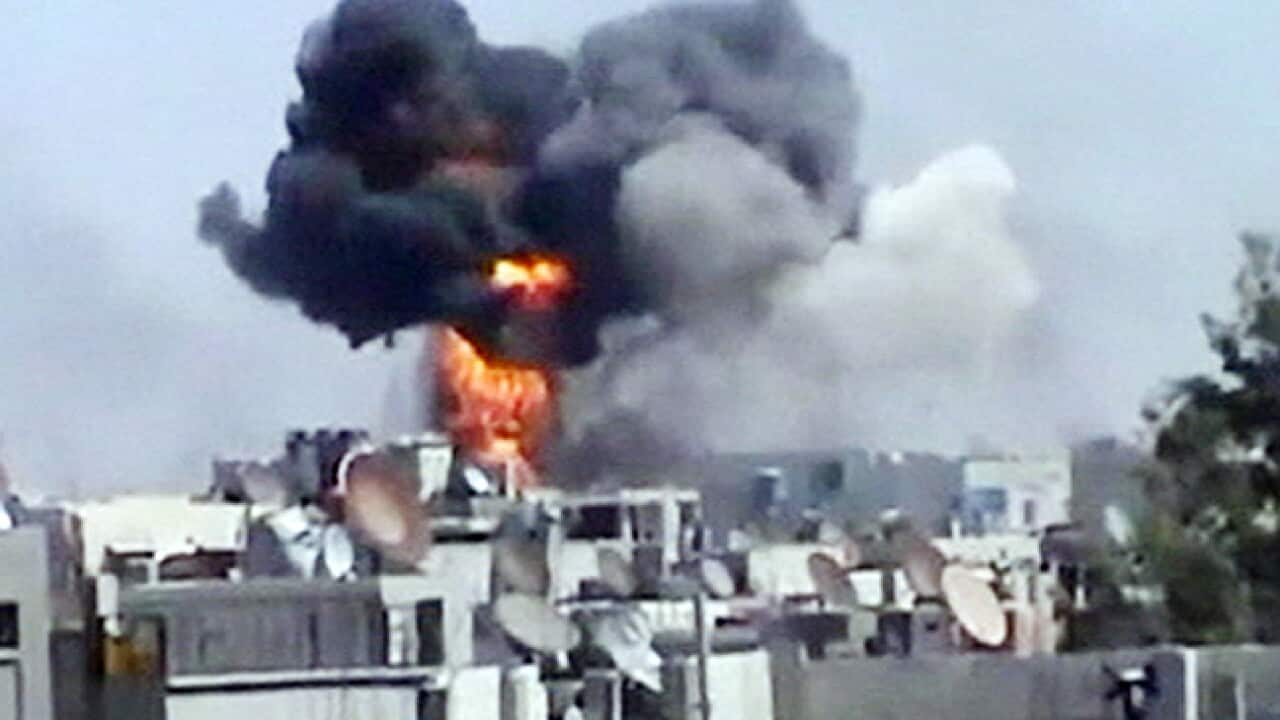
Twelve of them died in government shelling of the Mashaa al-Tayaran district in the central city of Hama, the London-based Observatory said.
Elsewhere, two civilians were killed by sniper fire in Douma, a northeastern suburb of the capital.
It was unclear whether UN monitors, who visited Douma on Wednesday, were present before or afterwards.
Three soldiers died in clashes with armed rebel groups in the southern province of Daraa, cradle of the uprising against President Bashar al-Assad.
Annan has branded the bloodshed "unacceptable" as he and world powers called for the speedy deployment of the 300 observers.
Given the ongoing violence, he said it was urgent for them to arrive in Syria quickly.
"We need eyes and ears on the ground, able to move freely and quickly, and to engage all parties -- something which must be guaranteed by the Syrian authorities."
But UN peacekeeping chief Herve Ladsous said it would take at least one month to get the first 100 into Syria.
He told the Security Council Damascus was refusing to accept monitors from the Western and Arab coalition of countries in the so-called Friends of Syria group that has backed the Syrian opposition.
Addressing the UN Security Council via teleconference, Annan said he was "concerned" about the violence surging after observers visit individual cities.
The former UN chief said Assad has still not fulfilled a promise to end violence and said the situation was "bleak" and "unacceptable."
Annan said he was "particularly alarmed" at reports that government forces had entered Hama after a visit by UN monitors and killed "a significant" number of people.
"If confirmed this is totally unacceptable and reprehensible," he told the council.
Neeraj Singh, spokesman for the advance team of UN monitors, said two were based in Hama and two in Homs -- cities that have both witnessed fierce fighting between government and rebel forces -- and the rest in Damascus.
Singh said the observers, who are set to number 30 in the coming days, report back to Annan daily on what they witnessed.
Annan spokesman Ahmad Fawzi acknowledged that the truce aimed at ending 13 months of violence that the United Nations says has killed more than 9,000 people remained "extremely fragile".
He said satellite imagery showed the regime had not fully withdrawn all of its heavy armour from population centres as required by the Annan plan.
Fawzi added that in areas visited by the observers, the guns were falling silent but credible reports indicated the violence resumes once they leave.
Meanwhile, diplomats said the United Nations will name Major General Robert Mood to head the ceasefire observer mission, and that he is expected to be in Damascus as early as this weekend.
UN member states have so far offered only 100 military officers for the unarmed force given the risky mission.







