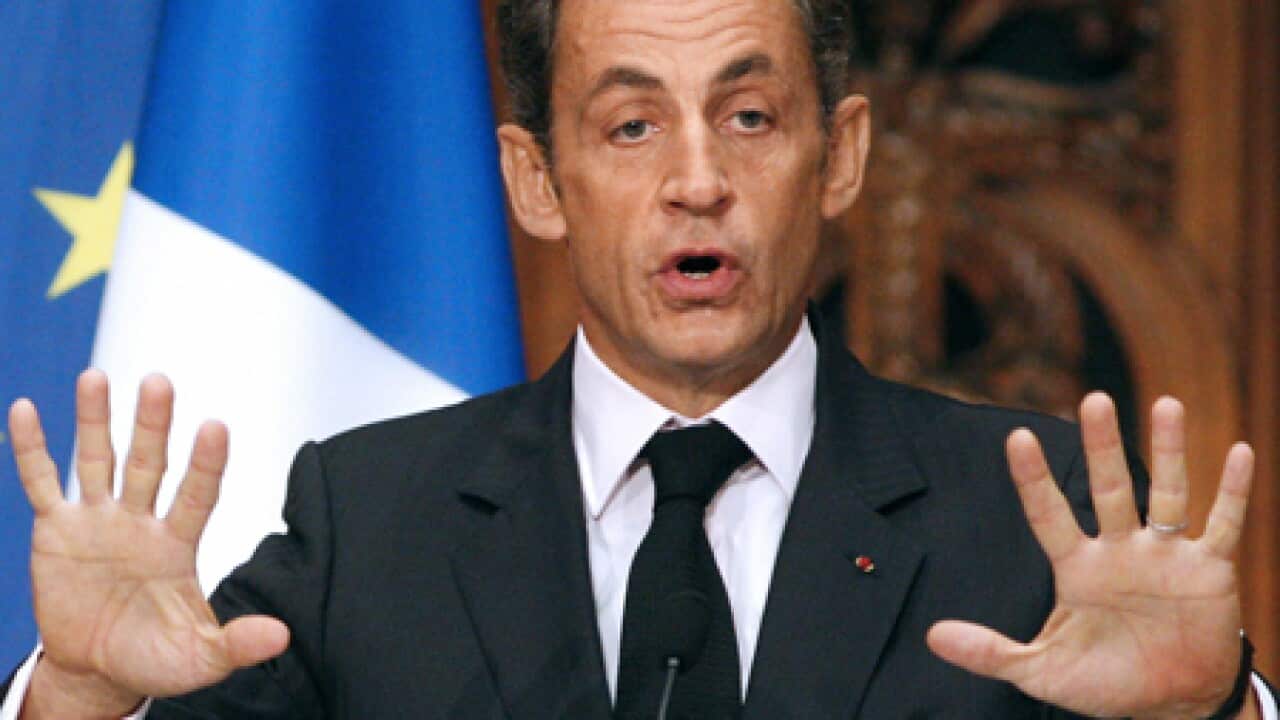
The vote all but sealed the reform, the centrepiece of Sarkozy's agenda, and government now expects the text will next be reconciled with a lower house version before being definitively adopted in a final vote on Wednesday.
"The day will come when former opponents will thank the president and the government ... for acting responsibly," Labour Minister Eric Woerth predicted just before the upper house approved the bill by 177 votes to 153.
News that makes sense
Your trusted source for staying up-to-date with the world around you. Get free daily news updates and analysis, straight to your inbox.
"It's not by looking to the past that we will protect our social model."
But amid street battles, and with strikes disrupting fuel supplies, labour unions vowed further protests over what they regard as an unfair reform, hoping to force Sarkozy to back down even at this late stage in the game.
The protests have become the biggest battle of the right-wing president's first term. With his poll ratings at an all-time low, he staked his credibility on a reform he says is essential to reduce France's public deficit.
Opponents say the reforms unjustly penalise workers for the failures of global finance and have called instead for tax rises on banks and the rich.
"You're voting for a reform that's unfair, brutal and inefficient. This reform will be 85 percent paid out of salaries, when we're scarcely scraping the surface of capital gains," declared left wing Senator Guy Fischer.
More than a million people took to the streets on Tuesday, the sixth day of nationwide action since early September, and this week rioters burned, smashed and looted while police fired tear gas and arrested hundreds.
Tension over the fuel standoff escalated dramatically ahead of Friday's vote, when police broke up pickets besieging oil refineries and fuel depots.
Officers fired tear gas to disperse 200 demonstrators trying to block a fuel depot near the southern city of Toulouse, and moved in to seize control of the Grandpuits refinery, the main one serving the Paris region.
Strikers said three protesters were injured as the police went in, although at Grandpuits they did so without helmets or batons. Unions said a state official had issued them with a "requisition" ordering them back to work.
Strike leaders denounced the orders as an assault on the constitutional right to strike -- one even compared them to the tactics of France's World War II fascist regime -- and union lawyers lodged legal challenges to them.
The government said it acted to secure access to the refinery's fuel depot for emergency services and to protect "freedom of movement". Prime Minister Francois Fillon's office promised more action as half-term holidays begin.
"At a time when many French people wish to travel for the November 1 holiday weekend, it is in everyone's interest to make all necessary efforts to return the situation to normal, which will take several more days," it said.
Transport Minister Jean-Louis Borloo said no nationwide fuel rationing was yet envisaged, but state representatives in two northern districts imposed limits on how much petrol each motorist could buy.
Hundreds of riot squad officers stood by in Lyon to try to prevent a repeat of Thursday's violence that saw security forces fire water cannon and fight running battles with rampaging youths in the east-central city.
The government had hoped rushing through a vote to cement the law would end the protests but, even as the Senate met, unions called for workers to join two new days of nationwide demonstrations on Thursday and on November 6.
University students -- traditionally a radical force in French protests -- intensified their own fight, with France's main student union UNEF calling on its members to take to the streets on Tuesday.
The government said the Senate's amended bill would be reconciled with the lower house's version on Monday and then face formal final votes by both houses, with the lower National Assembly having a final vote on Wednesday.
This will allow Sarkozy to sign the bill into law, but the unions hope political pressure could still force him to back down.
An opinion poll published Friday by the BVA institute, showed that most French voters back the strikes, by a margin of 69 percent to 29 -- but 52 percent oppose the blockade of refineries.







