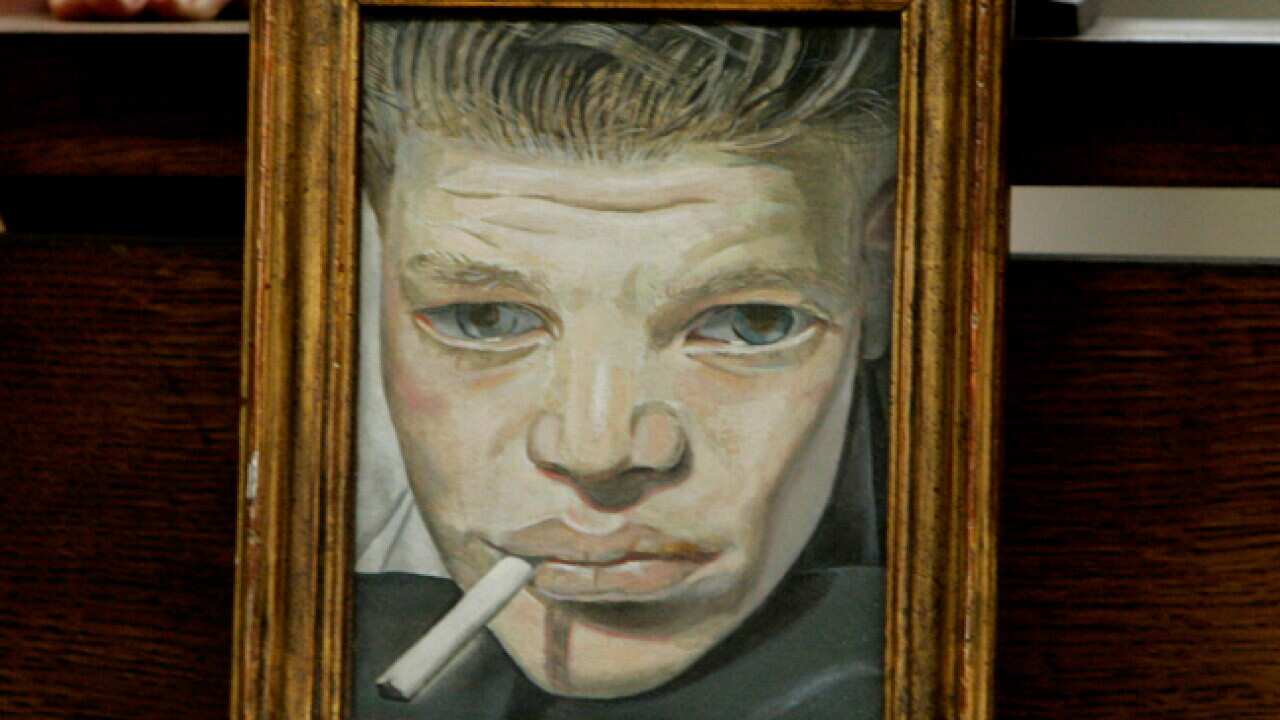
Freud was one of the most influential artists of his generation, and his paintings were known for their realism, especially of the human figure.
BBC arts editor Will Gompertz describes the artist's "intense scrutiny" of his subjects, which transforms into a "fleeting moment" when you see the paintings.
Freud had "the eyes of a hawk, with which he used to intensely scrutinise his subjects," says Gompertz.
News that makes sense
Your trusted source for staying up-to-date with the world around you. Get free daily news updates and analysis, straight to your inbox.
"The objective was the get to the truth – to create paintings that revealed the inner personality of his sitter and the artist."
"He would spend weeks, months, even years on a single portrait – he rushed for no-one,” says Gompertz.
"You get a real sense of the artist and the universal idea of what it is to be human."
The exhibition is a full sweep of his career, from when he was a teenager in the 1940s, right through to his last unfinished painting of his long-time assistant and friend, David Dawson.
In the lead-up to the exhibition, Dawson and artist David Hockney have given unique insight into what it was like to sit for a Freud portrait.
"He would look very, very intently and closely at a certain part of your body, mix the colour on a palette, put one mark down, look again, clean that bit off on his apron, mix some more, just a slight gradient and difference, put that mark down… decision making all the time," says Dawson.
Hockney said it was a "terrific experience" to sit for Freud, but it was time-consuming.
"He could paint faster if he pre-mixed a few colours... but I realised he likes you there longer."
Lucian Freud Portraits can be seen at the National Portrait Gallery, London from 9 February until 27 May 2012.
David Dawson: Working with Lucian Freud can be seen at Pallant House Gallery, Chichester until 20 May 2012.







