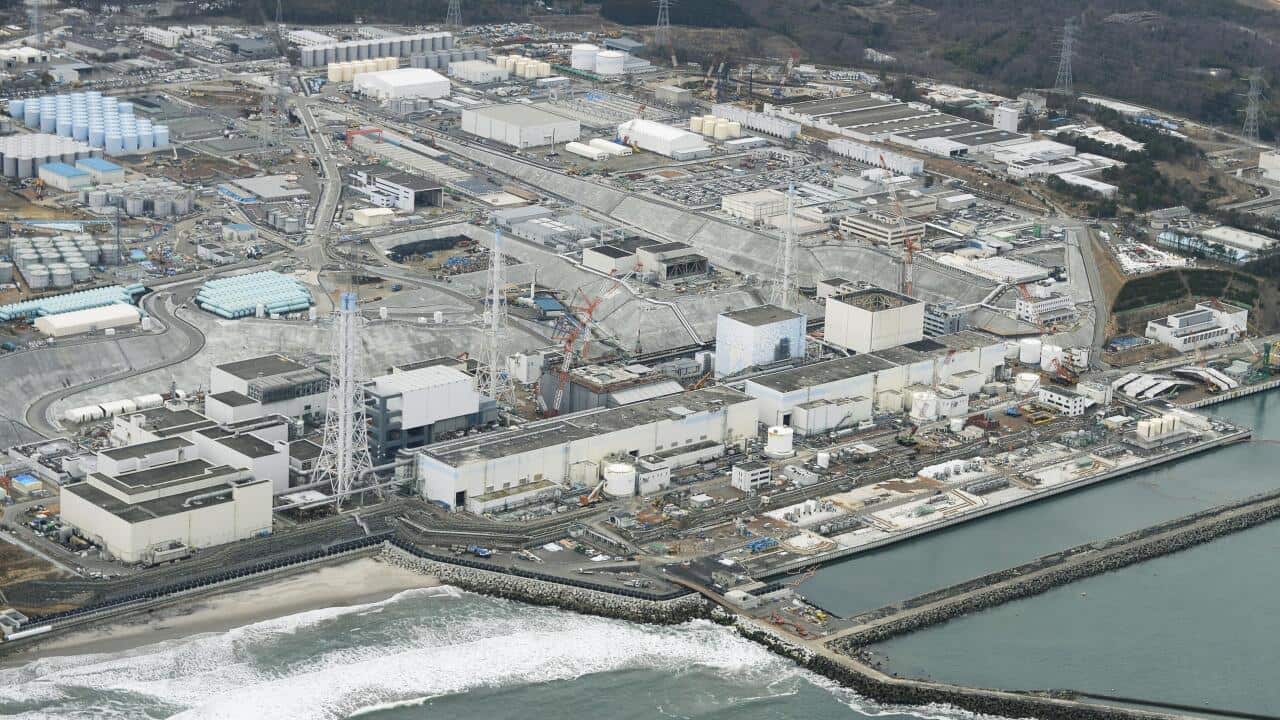
The Fukushima nuclear plant has activated an underground "wall of ice" built around the reactors, to help contain spills of contaminated water into the Pacific Ocean.
The system comprises underground pipes that will freeze the ground and create a physical barrier around the four units that were damaged by the earthquake and tsunami of March 11, 2011, a spokesperson of the plant's operator, Tokyo Electric Power Company, or TEPCO, has confirmed on Thursday.
The installation of the system, the cost of which was estimated at $US307 million ($A399.95 million), has taken two years and while TEPCO presented the project in 2013, Japan's Nuclear Regulation Authority, or NRA, had not approved it till now as it was analysing the safety of the project.
On Wednesday, the NRA greenlighted the first phase of the "wall of ice", which flanks the Fukushima Daiichi plant, overlooking the sea on the west.
The second phase of the system will extend to the north and southern parts of the plant, covering approximately 95 per cent of its total perimeter, explained the spokesperson.
News that makes sense
Your trusted source for staying up-to-date with the world around you. Get free daily news updates and analysis, straight to your inbox.
The operation of the first segment of the ice barrier will take about a month and a half and will ensure water from the underground aquifers does not get inside the buildings, housing the reactors, and mix with polluted refrigerant.
The goal is to reduce the amount of radioactive water that accumulates in the basements of the buildings and prevent its leakage into the Pacific Ocean.
Once the ice barrier is operational, the amount of water that seeps daily into the nuclear plant will be reduced from approximately 200 tonnes to around 50 tonnes, according to TEPCO.
This amount could be reduced further if the third phase of the underground barrier is completed, sealing the eastern side of the plant, which the NRA is yet to authorise.
TEPCO "will carefully monitor" the levels of water on the subsurface throughout the process of activation of the wall to prevent new spills, added the spokesperson.







