in brief
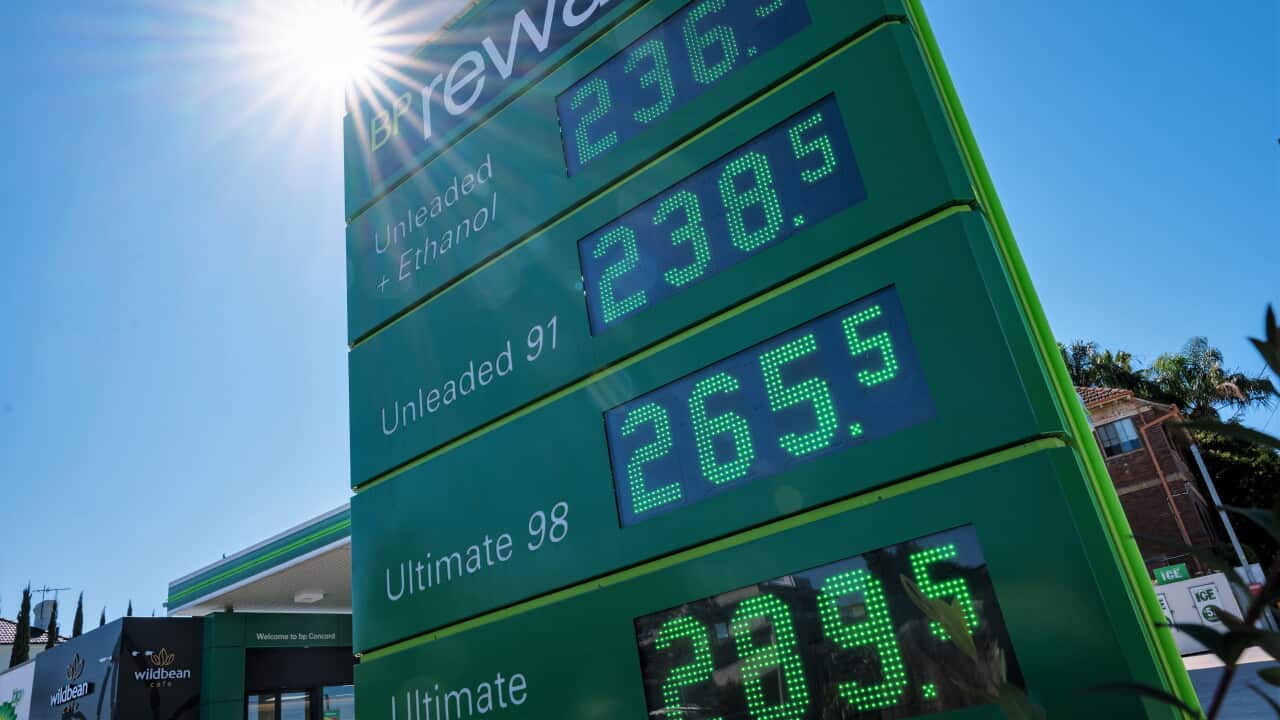
- Australians are paying more at the bowser than they have in months due to global disruptions.
- Energy shocks could become the new normal as geopolitical tensions grow.
Australians are being warned that the high prices currently being paid at fuel stations could be "the new normal" as a resumption of the full fuel excise combines with a flare-up in the Middle East.
Escalation in the war, which has dragged on since the end of February with little end in sight, has pushed oil prices to their highest level since April, driving Australian fuel costs back toward their peak.
Alison Reeve, program director of energy and climate at the Grattan Institute, told SBS News that the broader issue is volatility.
While Australians can "adjust to a new normal" of sustained high fuel costs, it's "volatility that's actually more dangerous to the economy than a price that goes high and stays high", she said.
While Australians may be able to adjust to higher prices, fluctuating prices make it more challenging for governments, industry, and households to plan ahead.
News that makes sense
Your trusted source for staying up-to-date with the world around you. Get free daily news updates and analysis, straight to your inbox.
"Volatility feels like it's going to be the new normal because we're just in a much more geopolitically disrupted age," she said.
Why are fuel prices so high?
Australia imports around 90 per cent of its refined and crude oil, making it heavily exposed to global market dynamics which are currently being driven by conflict around the world.
In recent weeks, Iran-backed Houthi forces in Yemen seized control of the vital Bab al-Mandeb strait and disabled the crucial Saudi Arabian East-West pipeline, significantly hampering the key oil producer.
Ukraine's attacks on Russian oil facilities have caused a diesel shortage worldwide, which could well be exacerbated by United States President Donald Trump's threat on Wednesday to cut US diesel exports.
While Saudi Arabia has reportedly restarted the East-West pipeline, the combination of global disruption and a weak Australian dollar has left consumers facing the steepest price for a full tank in months.
The NRMA's latest petrol report found that regular unleaded in Sydney climbed more than 20 cents in the past week, with diesel rising 24 cents, to averages of 237.8 and 286.1 per litre.
On Saturday, Energy Minister Chris Bowen said consumers should expect the "crisis" in Saudi Arabia and Iran to "flow through to prices here".
Bowen also noted that the country has more fuel on-shore now than it did at the outbreak of the conflict.
The new normal?
The government has ruled out further cuts to the fuel excise after the Opposition floated the idea of an automatic halving for two weeks whenever oil topped US$100 ($140) a barrel.
Brent crude reached US$104 ($146) on Monday, just behind its May peak of $114 ($160).
A widely accepted rule of thumb is that every US$10 (about $15) increase in the price of an oil barrel adds 10c to the cost of fuel in Australia.
A fuel excise cut which came into effect at the start of April and ended at the start of August cost the Treasury an estimated $2.95 billion in foregone revenue.
"This is not something that we have been considering," Finance Minister Katy Gallagher told ABC Radio on Monday.
"We've shifted and including in the budget to providing more permanent cost of living arrangements, including through the tax system."
The federal budget handed down in May forecast oil prices to return to US$80 ($117) by mid-2027; however, some experts now predict that oil could climb as high as US$150 ($220) a barrel as global stockpiles are depleted.
Trump initially promised when he launched strikes on Iran that the conflict would be over in four or five weeks. More than six months later, he has told the UN he is debating whether to keep talking or "drive them into hell with no chance of survival".
Addressing the United Nations General Assembly in New York on Wednesday, the US leader said he believed Iran would make a deal after the midterm elections at the start of November.
He also called on the world to "stand united" in economically isolating Iran, saying its defeat would drive oil prices "plummeting down even lower than they were at the start of the conflict".
'Better solutions' on offer
Money markets and all four of the big banks now expect the Reserve Bank of Australia will raise interest rates once again at its September meeting, following critical comments from governor Michele Bullock in recent weeks.
Stubbornly high inflation, driven by the war in Iran, housing shortages, and a tight labour market, is compounded by rising petrol and diesel costs, which are included in the consumer price index.
"Almost everybody buys petrol," Reeve said.
However, "second-order flow-throughs" mean the knock-on effect of high fuel costs on agriculture, shipping, and transport also trickle into daily prices.
"Everything that's on your plate spent a fair amount of time on a truck at one point to get to you," Reeve said.
While the government has previously announced it will commit to boosting domestic fuel reserves to 50 days, up from the normal 40, to buffer future shocks, doing so during a crisis is challenging.
Reeve said a "better solution" would be to reduce national reliance on fuel.
"Can you get more people into electric cars? Can you get more electric trucks on the road? Can you get the mining sector to switch to using solar and batteries off-grid, rather than using diesel?" she asked.
"Once you've done that, it matters a lot less what's going on internationally."
For the latest from SBS News, download our app and subscribe to our newsletter.







