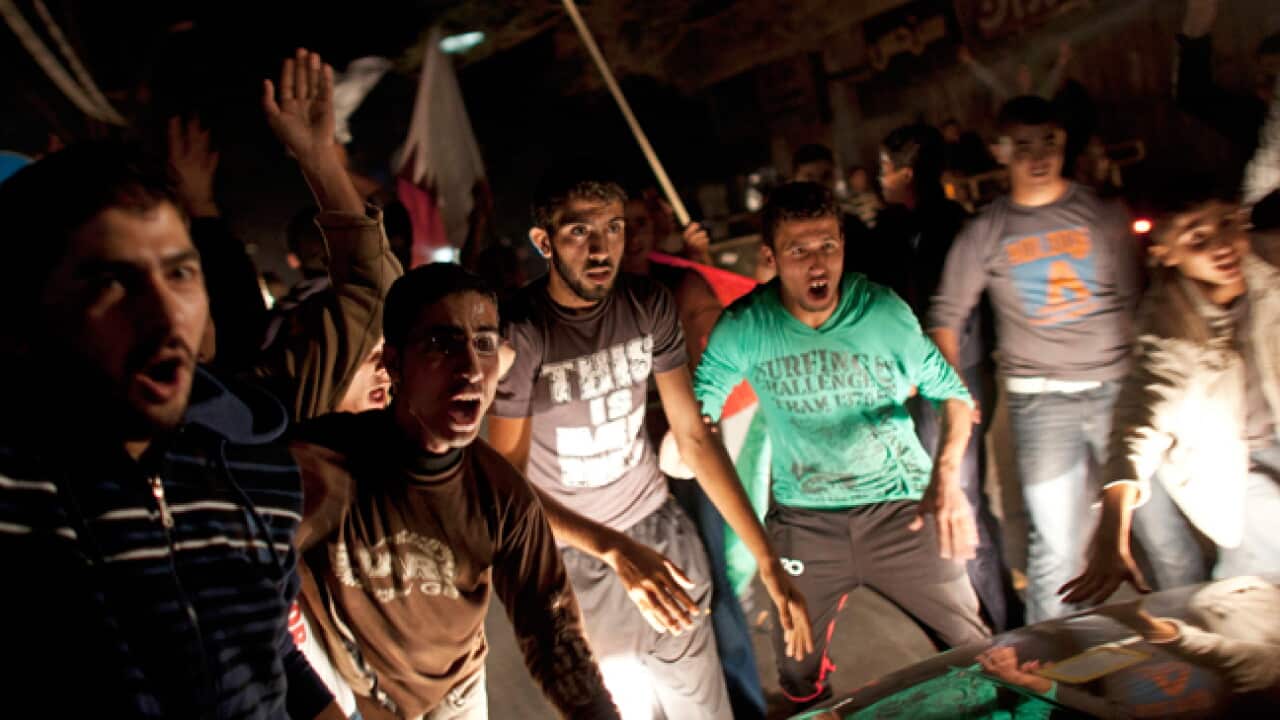
An Egypt-brokered truce took hold in the Gaza Strip on Thursday after a week of bitter fighting between militant groups and Israel, with both sides claiming victory but remaining wary.
In Gaza City, there was a semblance of normality in the streets following a week of relentless Israeli air strikes and a night of celebrations that began as the truce came into effect at 1900 GMT on Wednesday.
Foreign Minister Mohammed Kamel Amr of Egypt, which sponsored the marathon talks which resulted in the ceasefire, announced the cessation of hostilities at a joint news conference in Cairo with US Secretary of State Hillary Clinton.
News that makes sense
Your trusted source for staying up-to-date with the world around you. Get free daily news updates and analysis, straight to your inbox.
The UN Security Council urged Israel and Hamas to respect the ceasefire while joining with US President Barack Obama in praising Egypt's President Mohamed Morsi for mediating an end to the bloodshed.
As calm returned to the skies after a week of unstinting air strikes which began on November 14 when Israel killed a top Hamas commander, jubilant Gazans flooded into the streets to celebrate.
Gunfire and fireworks streaked into the dark night sky, where Israeli drones could still be heard buzzing overhead, as mosques broadcast the chants: "God is greatest" and "The resistance is victorious."
Some residents waved the green flags of Gaza's ruling Hamas movement and others the Egyptian flag, in tribute to the role Cairo played in the negotiations.
"I'm very happy about the end of the war and the truce. I haven't left the house since the beginning of the escalation. I feel free now," 26-year-old Mai Abu Watfa told AFP.
"We were in prison. I'm overjoyed at the end of the bombing and the war," Nasim Hamduna said, walking with his child.
"I left my house during the violence and here I am today going back to it," he said gleefully.
In parts of the city, the celebrations were distinctly triumphal, with members of Hamas's armed wing, the Ezzedine al-Qassam Brigades, given a hero's welcome.
As the truce came into effect, Hamas chief Khaled Meshaal said that Israel had "failed in all its goals.
"After eight days, God stayed their hand from the people of Gaza, and they were compelled to submit to the conditions of the resistance," Meshaal said.
"Israel has failed in all its goals," he told reporters at a Cairo hotel, while warning Israel against violating the agreement.
"If you commit, we will commit. If you do not commit, the rifles are in our hands," he said, vowing: "We will continue to arm ourselves."
Israeli Defence Minister Ehud Barak also issued a similar warning.
The ceasefire "could last nine days or nine weeks or more but if it doesn't hold, we know what to do and of course, we will consider the possibility of resuming our activity if there is any firing or provocations," Barak told Israeli public radio on Thursday.
"Such an operation could have created a situation in which we would have had to stay in Gaza for years," he said.
Israeli Prime Minister Benjamin Netanyahu said that the Jewish state had been as good as its word in carrying out Operation Pillar of Defence.
"I said we'd extract high price from terror organisations. The terror organisations thought we'd refrain from strong action. They were wrong," he said, saying the campaign had taken out militant commanders, destroyed thousands of rockets and had wrecked Hamas command centres.
The army says that during the eight-day operation it hit more than 1,500 targets and destroyed thousands of rockets, while Gaza militants fired more than 1,500 rockets back at Israel, whose vaunted Iron Dome anti-missile system intercepted more than 420 of them.
In total, 155 Palestinians died in Israel's bombing campaign, and five Israelis, including a soldier, were killed by rocket fire.
The accord calls on Israel to "stop all hostilities... in the land, sea and air including incursions and targeting of individuals" and urges the Palestinian factions to end "rocket attacks and all attacks along the border".
Israel would be obliged to ease restrictions on Gaza residents under the deal which specified that "procedures of implementation" would be put in place 24 hours after the ceasefire comes into effect on opening Gaza's border crossings and allowing the free movement of people and goods.







