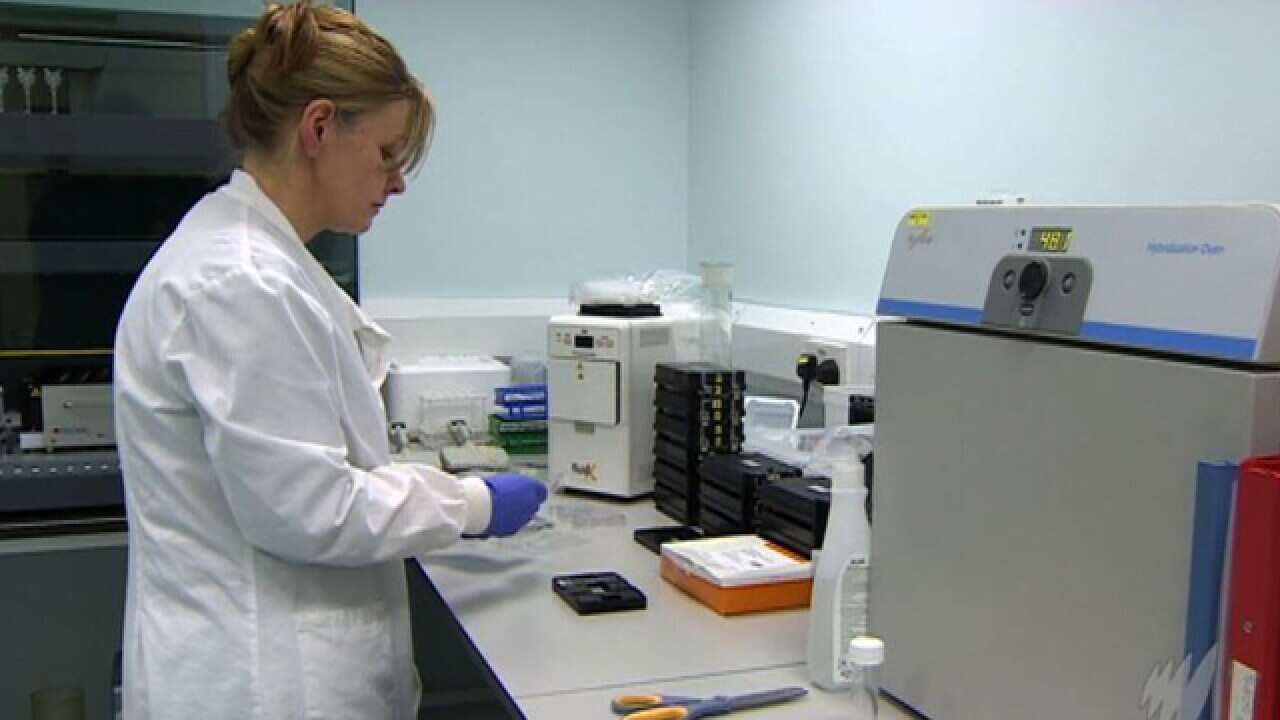
By studying the DNA makeup of 200,000 people, scientists have identified genetic "spelling errors" that may increase cancer risk.
This is a major step towards new treatments, says Professor Georgia Chenevix-Trench, head of the Queensland Institute of Medical Research Cancer Program, which she says played a major role in the study.
"We are also now on the verge of developing tests to complement breast screening, to identify those people at greatest risk," she said.
News that makes sense
Your trusted source for staying up-to-date with the world around you. Get free daily news updates and analysis, straight to your inbox.
She says it is difficult to predict when the public will benefit.
"But I would hope that within five years we would be using this information to give more precise individual estimates of cancer risks. It is likely to take longer to get new drugs into the market."
The tests are most likely to be used first in women at risk because of family history or because they carry a major fault in a predisposition gene.
These women sometimes decide to have their breasts or ovaries removed to reduce their risk, but Prof Chenevix-Trench says "a simple blood test" could help them make much more informed choices.
The study, which involved more than 200 research groups around the world, was led by Cambridge University.
By themselves, each of the genetic "spelling errors" increases the risk of cancer by a very small amount, Prof Chenevix-Trench says.
But the small number of women who have many of them are three times more likely to develop breast cancer than women who carry an average number.
"To work out how to prevent or treat cancers, we need to understand what causes them in the first place. This research has found about 80 genes that underlie the risk of breast, ovarian or prostate cancer," says Prof Chenevix-Trench.
The 12 studies which make up the research were released on Thursday and published simultaneously in several journals.







