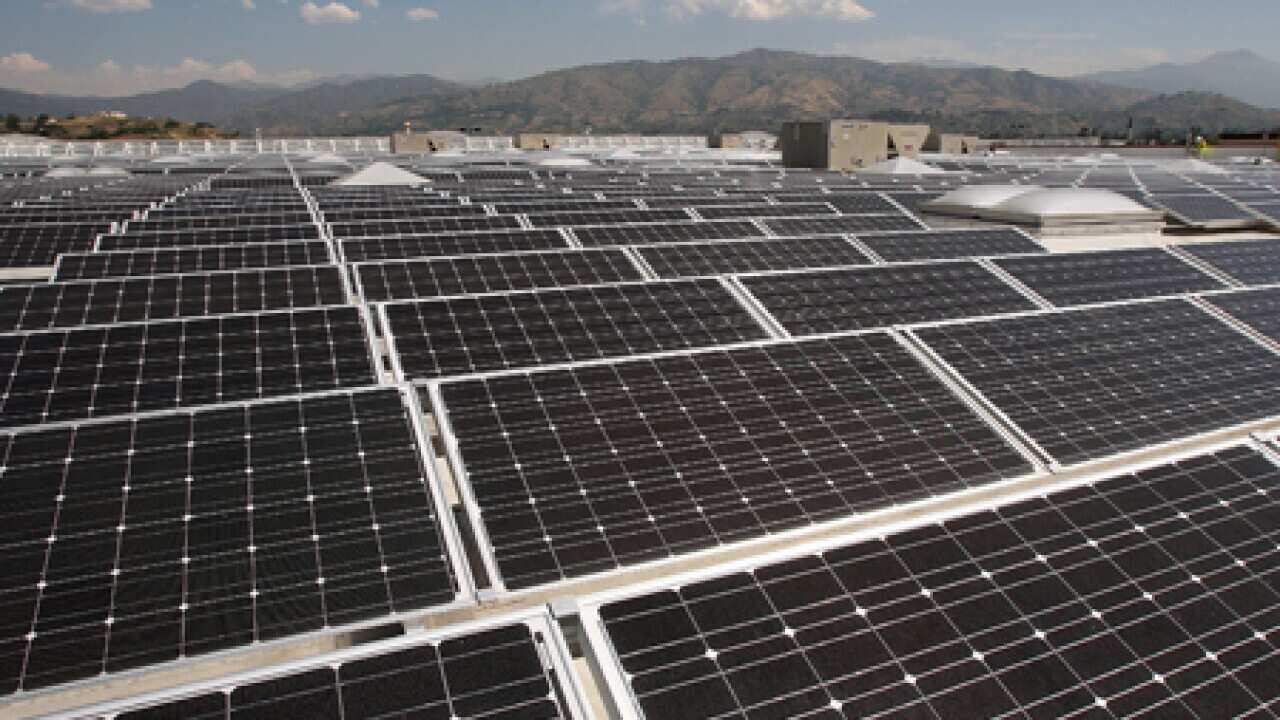
An international study on clean energy conducted by the Pew Center has found that despite its weather advantage, Australia is far from leading the way on green energy.
Australia is considered a good fit for solar panels because it is sunny, has long daylight hours and plenty of space for panels.
News that makes sense
Your trusted source for staying up-to-date with the world around you. Get free daily news updates and analysis, straight to your inbox.
But it ranks 15th on the world solar scale, with fewer solar panels than countries such as Germany, South Korea, Mexico and South Africa.
Experts blame a lack of government incentives for Australia's solar slump of the past 15 years.
The study found Australia was doing better on wind power, and came in at 14th overall in clean energy investment last year, spending US$1 billion.
That's less than Turkey, Mexico and Canada.
Clean energy demand surging
Of the money spent on clean energy by the G20 - the world's richest countries - Australia accounted for less than one per cent.
China is leading the world on clean energy, spending the most and now rivalling the US in installed capacity.
"With clean energy investments up more than 50 per cent in 2009, China took the lead among G20 nations for the first time," the report found.
Pew, a respected US-based research organisation, found investment in clean energy surged 230 per cent in the last five years, with US$162 billion spent last year alone.
Australia recently introduced a target to have 20 per cent of electricity come from renewable sources by 2020, although the scheme ran into trouble and is being fixed.
Plans to introduce an emissions trading scheme, which would put a price on carbon pollution and favour clean energy, are on hold after the Senate blocked them.
John Connor, chief executive of the Climate Institute, said Australia was "slipping behind... dangerously" on clean energy.
"There is no getting around the need to have clear directions for limiting and pricing climate pollution as well as additional policies to better improve our woeful energy wastefulness," he said.







