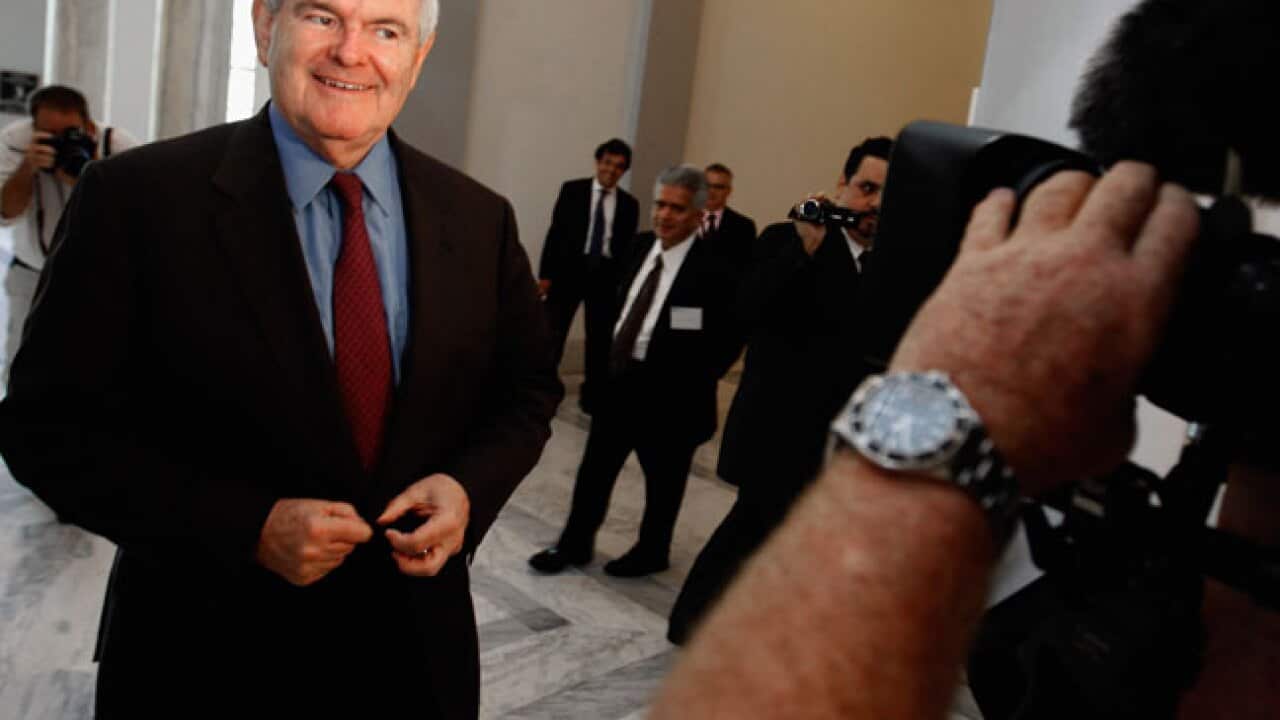
Only weeks old, Newt Gingrich's US presidential campaign is on life support following the mass departure of his entire senior staff.
Craig Schoenfeld, the former House speaker's top Iowa adviser, told close associates he planned to resign because lack of commitment from Gingrich to pursuing a "path to victory", including rigorous grassroots campaigns in Iowa, South Carolina and New Hampshire, and an ambitious fundraising schedule.
Longtime spokesman Rick Tyler had also indicated earlier in the week to a campaign associate he would be departing from the campaign.
News that makes sense
Your trusted source for staying up-to-date with the world around you. Get free daily news updates and analysis, straight to your inbox.
Other reports also include campaign adviser Rob Johnson, strategists Sam Dawson and Dave Carney, and South Carolina adviser Katon Dawson among the aides who are moving on.
Problems for Gingrich's presidential ambitions emerged from the outset, but reached a crisis inside the campaign last week when the candidate disappeared with his wife on what was described as a "long-planned vacation".
As Gingrich began a cruise in the Greek isles, a prominent Iowa campaign organiser, Will Rogers, resigned, saying he was concerned about the timing of the vacation and about whether Gingrich was committed to the grassroots campaigning necessary to win the nomination.
Rogers said Thursday that after he announced his resignation he had sympathetic calls from other top Gingrich staffers.
The news comes only days before Gingrich is to participate in a debate with six other Republican presidential hopefuls in New Hampshire, the first significant forum of the primary season. He skipped last week's Faith and Freedom Coalition Conference, which featured most other likely and official Republican candidates.
That field remains in flux. Speculation is growing that Texas Gov. Rick Perry may choose to enter the race; some of Gingrich's aides have also advised Perry.
Gingrich kicked off his campaign on May 11 with a YouTube video sent to supporters. But only days later, he was under fire from fellow Republicans for comments during an appearance on "Meet the Press," when he called the Republican Medicare proposal "right-wing social engineering."







