
This article contains references to eating disorders.
For Kansasin Darwan, living in Bajool in central Queensland, the weight-loss injection was supposed to be a solution. Instead, she says, it left her barely able to function.
I was dizzy, nauseous, and I lost my appetite. To put it simply, I could barely live.
The 48-year-old says she had gained weight during perimenopause and believed her Australian GP was unlikely to prescribe a weight-management medicine because she did not meet the relevant clinical criteria.
In Australia, GLP-1 weight loss drugs are generally prescribed for chronic weight management in adults with a body mass index (BMI) of 30 or higher, or a BMI of 27 to under 30 with at least one weight-related health condition.
News that makes sense
Your trusted source for staying up-to-date with the world around you. Get free daily news updates and analysis, straight to your inbox.
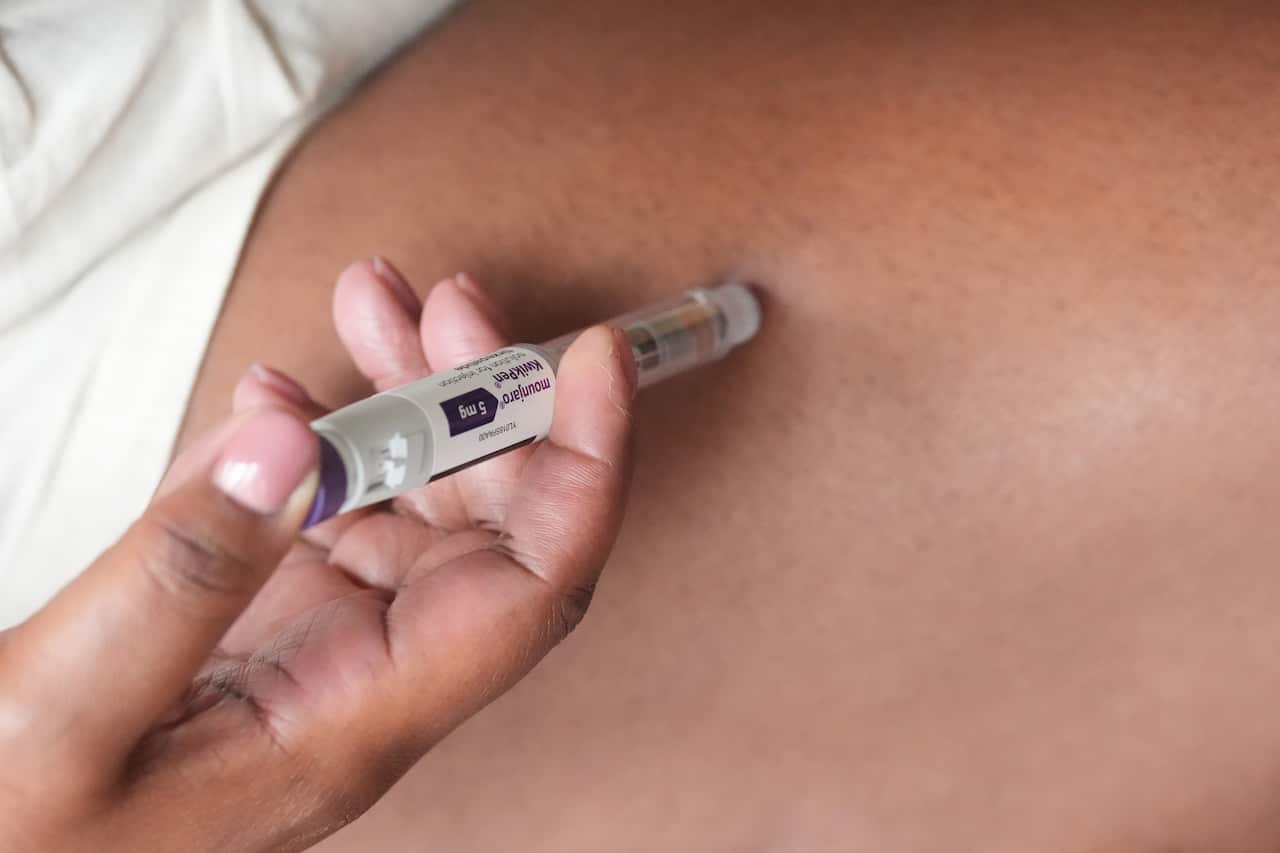
So, while on holiday in her home country of Thailand, Darwan went to a beauty clinic in outer Bangkok and bought an injectable medicine branded as Mounjaro.
Beauty clinics in Thailand are generally supervised by doctors. However, the screening process for GLP-1 use can be less extensive than the assessment typically conducted by GPs in Australia. For example, some customers at beauty clinics may be prescribed GLP-1 drugs even if they do not have diabetes or are within a healthy weight range.
Darwan brought the drugs back to Australia and began using them to lose weight.
"I couldn't concentrate while driving. I wasn't feeling like myself. I couldn't sleep. Even my children noticed that I was different," she tells SBS Thai.
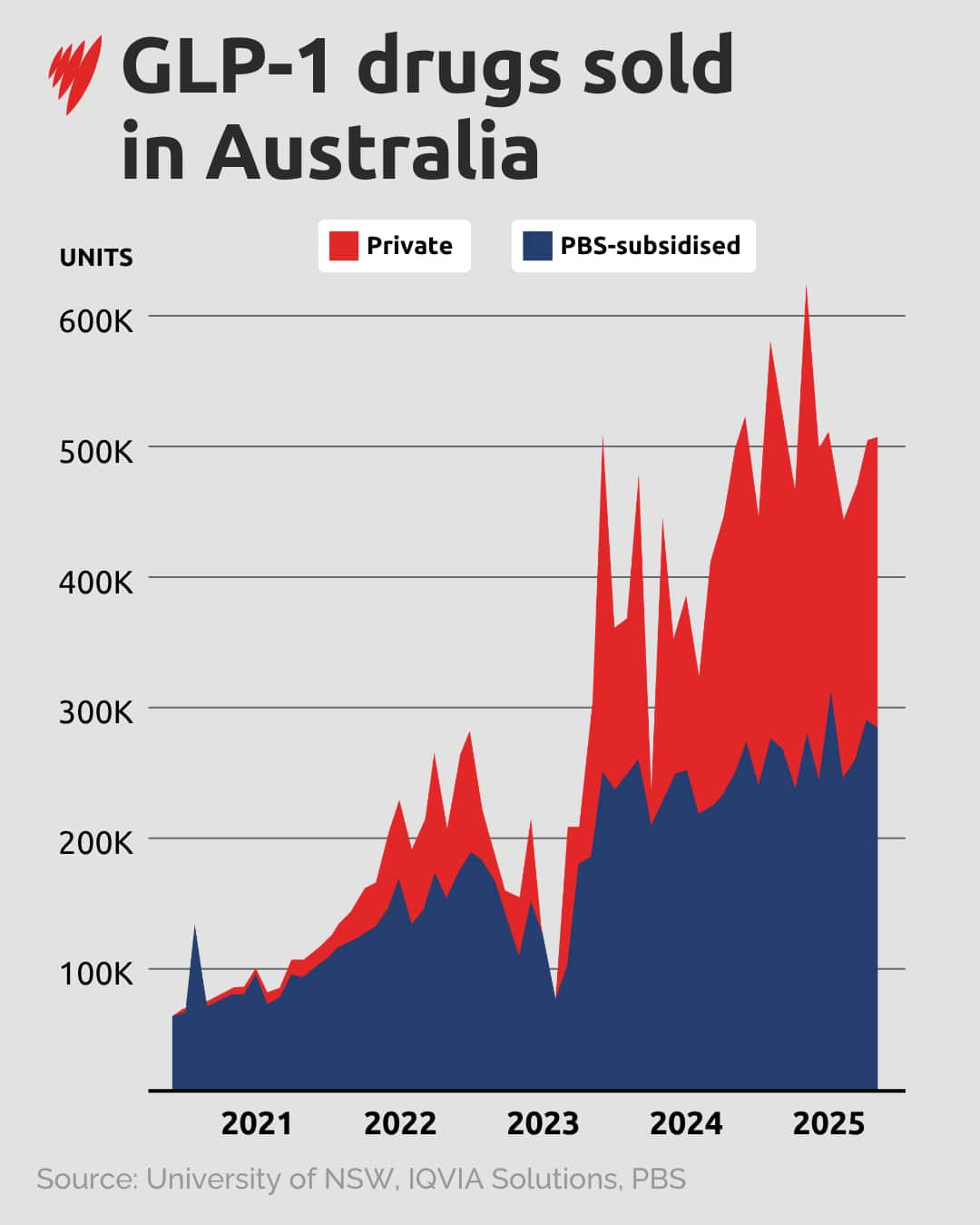
Eighteen out of every 1,000 Australians, or almost 2 per cent of the population, are now taking GLP-1s regularly, according to a study by scientists at the University of New South Wales (UNSW) published in November 2025.
Darwan's experience offers a glimpse into a fast-growing market for weight-loss injections, where some Australians are seeking access overseas, while others are obtaining medicines through social-media sellers and informal supply channels.
An investigation by SBS Thai found weight-loss medicines being offered without a doctor's prescription in Australian community groups, reports of products entering the country through informal channels, and unapproved peptides being marketed as weight-loss products.
But access to these medicines is not uniformly occurring outside the established medical system. Many Australians obtain weight-loss drugs through registered health professionals and pharmacies.
For consumers navigating this market, the distinction between an approved prescription medicine, an experimental drug and an unapproved product can be difficult to see — with experts and authorities warning that using medicines outside approved pathways can carry serious risks.
The unregulated supply chain
For some consumers, access does not require a trip overseas.
SBS Thai found GLP-1 injectable medicines openly advertised in Australian Thai community Facebook groups, with some sellers offering the products without requiring a prescription.
We contacted one Melbourne-based seller, posing as a potential customer interested in buying "Mounjaro". The seller offered a 5mg vial for $750, saying it had been sourced from a beauty clinic in Udon Thani, a provincial city in north-east Thailand.
We contacted the clinic identified by the seller, which confirmed that it supplied products to the Melbourne-based seller.
SBS Thai has not independently established the circumstances of every shipment or whether every product sold through the channel was imported in accordance with Australian requirements.
The price for the 5mg multi-dose pre-filled injection pen also appeared significantly higher than the price we found for the same branded medicine at Australian pharmacies, where it was listed between $375 and $415 depending on the pharmacy and required a prescription.
The seller's claim of easy access raises significant regulatory and health concerns.
In response to an SBS Thai query, a Therapeutic Goods Administration (TGA) spokesperson said: "It is not legal to import GLP-1 medicines or peptide products into Australia for commercial purposes without appropriate authorisation and declaration."
The spokesperson said GLP-1 receptor agonists, including semaglutide and tirzepatide, are prescription-only medicines in Australia and should be used under the supervision of a qualified health professional.
The regulator has also warned about unregistered products being sold as GLP-1 medicines, particularly those obtained online or from overseas.
In March, TGA testing found several imported products labelled as containing GLP-1 or GLP-1 analogues contained none of those ingredients. The regulator advised consumers to obtain prescription medicines from registered Australian pharmacies rather than social media or other digital platforms.
The regulator has also increased its focus on unapproved peptide products.
Earlier this month, with assistance from NSW Police, the TGA seized more than $120,000 worth of unapproved peptide and anabolic steroid products from two NSW properties. The TGA said the products had allegedly been imported, relabelled and promoted for sale through social media and a website.
One of the products seized was labelled "retatrutide" — a name that also appeared in SBS Thai's investigation.
We found retatrutide offered at $300 for a 10mg vial at a Thai grocery store in Geelong, Victoria. The seller claimed the injectable product could help with weight loss and work similarly to other GLP-1 medicines.

Retatrutide is different from approved GLP-1 medicines such as Ozempic and Wegovy. While those medicines contain semaglutide, retatrutide is an experimental drug that acts on three hormone pathways involved in appetite and metabolism. It is not approved for sale as a medicine in Australia.
SBS Thai did not independently test the product or establish what was inside the vial. The TGA says unapproved peptide products have not been evaluated for safety, quality or effectiveness.
There is also a separate health warning involving products labelled retatrutide.
In June, Victoria's Department of Health said it had been notified of six cases of acute liver injury since January among people who had used products labelled as retatrutide. The department said investigations were continuing.
Demand is surging
The informal market is emerging alongside a rapid increase in legitimate use of GLP-1 medicines.
Researchers at UNSW found that total sales of GLP-1 medicines rose from about 58,000 in May 2020 to 500,000 in April 2025. They also noted a significant disruption in sales from late 2022 to early 2024, when a drug shortage caused sales to drop by almost 80 per cent.
The researchers found that private, non-subsidised access had grown sharply, accounting for 43.8 per cent of estimated use by April 2025, with prices up to $600 per month.
The study did not include Wegovy and Saxenda, which are marketed specifically for weight loss. The researchers said their figures should therefore be regarded as a minimum estimate of overall GLP-1 use.
That expanding market is also being discussed heavily on social media.
Like Darwan, Ople Petchdee, who lives in Croydon South in Melbourne's east, also bought a GLP-1 injectable from a beauty clinic just outside the Thai capital, Bangkok.
Petchdee, who has called Australia home for the past 15 years, says she became interested in the medicines after seeing friends post about their experiences.
"Everyone posted on their Facebook, on their social media, that these medications helped them lose weight. So, my friends suggested I use them, too," she tells SBS Thai.
Beyond the weight-loss promise
For Trevor Steward, an associate professor of psychology at the University of Melbourne, the concern is not only how people obtain GLP-1 medicines but also how the drugs are presented and understood online.

Steward is currently running a clinical trial examining how GLP-1 drugs affect the neurobiological function of people with binge eating disorder.
It's not about aesthetics. It's not about achieving a certain number on a scale.
"It's about someone's mental and physical wellbeing. And that's something that needs to be considered holistically with a doctor involved," Steward tells SBS Thai.
He says there are also unanswered questions about what happens when treatment stops for people with eating disorders.
"If the weight comes back, we can maybe stipulate that the food noise will come back. And how will that person cope with that, thinking that they have achieved a certain sense of recovery and then falling back into that old pattern of behaviour before."
Steward says social media often strips away that nuance, framing GLP-1 medicines as a shortcut to achieving a particular body shape or weight, rather than treating them as serious medications to be considered in the context of a person's overall mental and physical health.
For Darwan, who had gone looking for a way to lose weight, reality was harder.
"My mood was depressing. I suffered from energy loss."
I will not use [GLP-1 drugs] again.
This story was produced in collaboration with SBS Thai.
Readers seeking support with mental health can contact Beyond Blue on 1300 22 4636. More information is available at beyondblue.org.au. Embrace Multicultural Mental Health supports people from culturally and linguistically diverse backgrounds.
Readers seeking support for eating disorders or body image concerns can call the Butterfly National Helpline on 1800 ED HOPE (1800 33 4673) or visit www.butterfly.org.au
Disclaimer: This article is for general information only and should not be relied on as a substitute for professional medical advice. Readers are advised to consult a qualified health professional for guidance specific to their situation.
For the latest from SBS News, download our app and subscribe to our newsletter.







