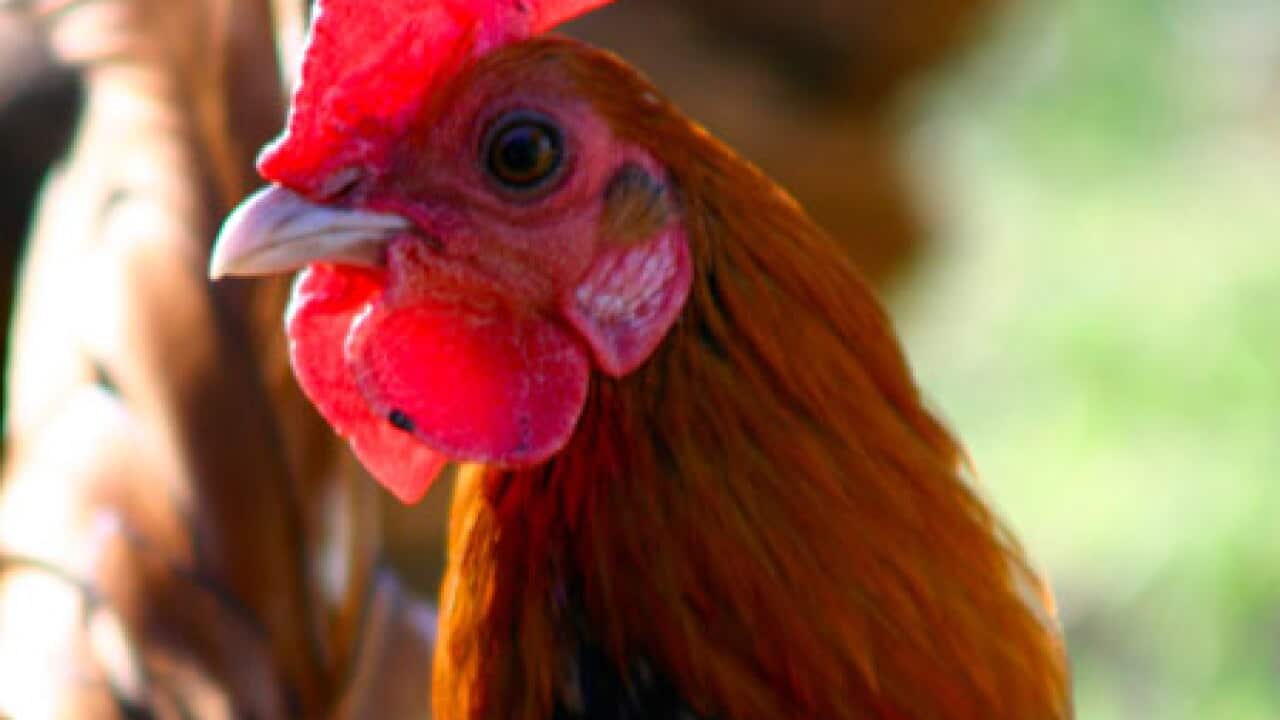
European scientists say their genetically modifed chickens won't transmit bird flu, according to research published in the journal Science.
Bird flu, also known as H5N1 avian influenza, usually afflicts poultry but can cross over to humans and cause lethal respiratory problems and other complications.
The first cases detected in humans were in Hong Kong in 1997. A wider global outbreak took hold in 2004 and cases have flared across parts of the world ever since.
News that makes sense
Your trusted source for staying up-to-date with the world around you. Get free daily news updates and analysis, straight to your inbox.
Scientists from the Universities of Cambridge and Edinburgh said the modified chickens could get bird flu but could not pass it on to other chickens.
"Chickens are potential bridging hosts that can enable new strains of flu to be transmitted to humans," said Laurence Tiley, of the University of Cambridge's Department of Veterinary Medicine.
"Preventing virus transmission in chickens should reduce the economic impact of the disease and reduce the risk posed to people exposed to the infected birds."
However, Tiley noted that the research still in its early stages, and the birds they developed are not intended to be eaten by people.
"The genetic modification we describe is a significant first step along the path to developing chickens that are completely resistant to avian flu," Tiley said.
"These particular birds are only intended for research purposes, not for consumption."
The birds were altered by a new gene that makes a "decoy" molecule that imitates an element of bird flu virus.
Then the virus is "tricked into recognizing the decoy molecule instead of the viral genome and this interferes with the replication cycle of the virus," the study said.
When scientists infected the genetically modified chickens with avian influenza, the birds fell ill but did not spread the flu to other birds, whether those birds were genetically modified or not.
"The results achieved in this study are very encouraging," said researcher Helen Sang of the University of Edinburgh.
"Using genetic modification to introduce genetic changes that cannot be achieved by animal breeding demonstrates the potential of GM to improve animal welfare in the poultry industry," she said.
"This work could also form the basis for improving economic and food security in many regions of the world where bird flu is a significant problem."







