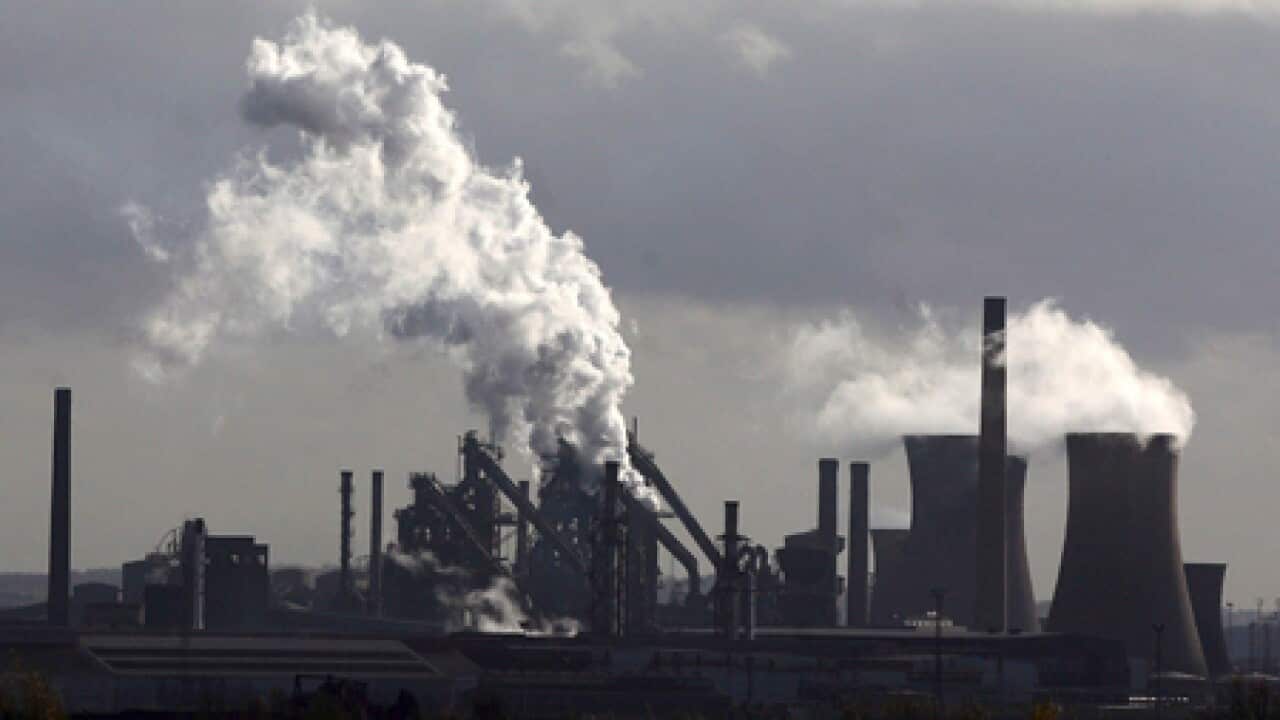
The amount of global warming-causing greenhouse gases in the atmosphere rose to a new high in 2010, and the rate of increase has accelerated, the UN weather agency says.
Levels of carbon dioxide - a greenhouse gas and major contributor to climate change - rose by 2.3 parts per million between 2009 and 2010, higher than the average for the past decade of two parts per million, a new report by the World Meteorological Organisation has found.
"The atmospheric burden of greenhouse gases due to human activities has yet again reached record levels since pre-industrial time," said WMO Secretary-General Michel Jarraud.
Greenhouse gases trap radiation within the earth's atmosphere, causing it to warm.
The last two decades have seen a 29 per cent increase in radiative forcing - the warming effect - from greenhouse gases, the report said.
News that makes sense
Your trusted source for staying up-to-date with the world around you. Get free daily news updates and analysis, straight to your inbox.
Scientists attributed the continuing rise in levels of carbon dioxide, which contributes about 64 percent to climate warming, to fossil fuel burning, deforestation and changes in land use.
Methane, produced by cattle-rearing and landfills, is the second most important greenhouse gas after carbon dioxide, followed by nitrous oxide.
The WMO's annual Greenhouse Gas Bulletin said methane levels rose five parts per billion or 0.28 per cent in 2009-2010 after a period of relative stabilisation from 1999 to 2006, possibly due to the thawing of the Northern permafrost and increased emissions from tropical wetlands.
Nitrous oxide, emitted into the atmosphere from natural and man-made sources, including biomass burning and fertiliser use, rose 0.8 parts per billion to 323.2 in 2010 - 20 per cent higher than in the pre-industrial era, defined as the period before 1750.
Its impact on the climate over a 100-year period was said to be 298 times greater than equal emissions of carbon dioxide.
"Even if we managed to halt our greenhouse gas emissions today - and this is far from the case - they would continue to linger in the atmosphere for decades to come and so continue to affect the delicate balance of our living planet and our climate," said Jarraud.
"Now more than ever before, we need to understand the complex, and sometimes unexpected, interactions between greenhouse gases in the atmosphere, Earth's biosphere and oceans."
The seventh Greenhouse Gas Bulletin comes ahead of a new round of UN climate talks in South Africa next Monday, testing global resolve to tackle what scientists warn is a time bomb with an ever-shorter fuse.
Analysts say the UN process is still traumatised by the near-collapse of the 2009 Copenhagen Summit and, in Durban, faces a bust-up over the Kyoto Protocol, the only agreement setting legal curbs on greenhouse gases.
Data from the US Department of Energy, released earlier this month, showed carbon emissions from burning fossil fuels made their biggest ever annual jump in 2010, led by China, the United States and India.







