Economic growth may have perked up to its fastest pace in almost two years, rebounding after a dismal finish to 2017.
Some economists upgraded their growth forecasts for the March quarter after Tuesday's new figures showed a lift in exports and stronger than expected government investment spending.
This builds on previously released reports showing rising company profits and inventories, increasing business investment and a modest lift in household consumption.
Overall economists are expecting Wednesday's national accounts will show quarterly growth of close to one per cent, more than double the rate recorded in December quarter.
That would see annual growth nudging three per cent compared to just 2.4 per cent previously.
News that makes sense
Your trusted source for staying up-to-date with the world around you. Get free daily news updates and analysis, straight to your inbox.
"This makes sense given the big lift in employment growth over the past year," Commonwealth Bank economist Gareth Aird said.
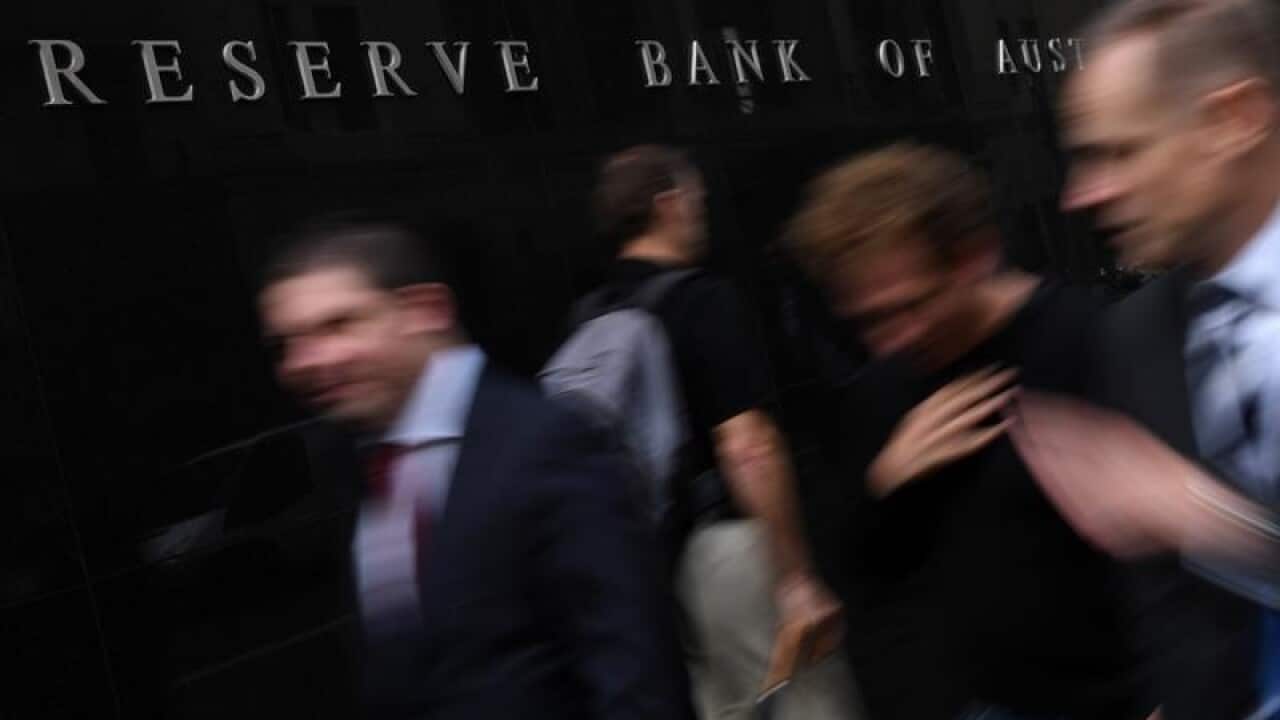
Such acceleration in economic expansion failed to stir the Reserve Bank, which kept the cash rate at a record-low of 1.5 per cent after its monthly board meeting.
Central bank governor Philip Lowe said recent data on the economy have been consistent with the Bank's central forecast for GDP growth to pick up to an average a bit above three per cent in 2018 and 2019.
"One continuing source of uncertainty is the outlook for household consumption," Dr Lowe said in his post-board meeting statement.
"Household income has been growing slowly and debt levels are high."
Consumer confidence eased further in the past week, reversing the positive mood surrounding last month's federal budget.
The weekly ANZ-Roy Morgan confidence index dropped one per cent, extending the 3.2 per cent fall in the previous week.
ANZ head of Australian economics David Plank suspects higher petrol prices and concerns about falling capital city house prices weighed down confidence.
Dr Lowe did little to lift the dour mood, saying wages are likely to only grow slowly, while a decline in the unemployment rate is expected to be gradual.
Financial market economists are generally of the view the cash rate will remain steady into 2019 or perhaps even 2020.
However, the Organisation for Economic Cooperation and Development last week predicted a move by the end of this year on the basis of inflation and wages picking up.
The Australian National University's so-called "shadow RBA board" - made up of economists, academics and former central bank board members - sees a 73 per cent probability of an increase in the next six months.







