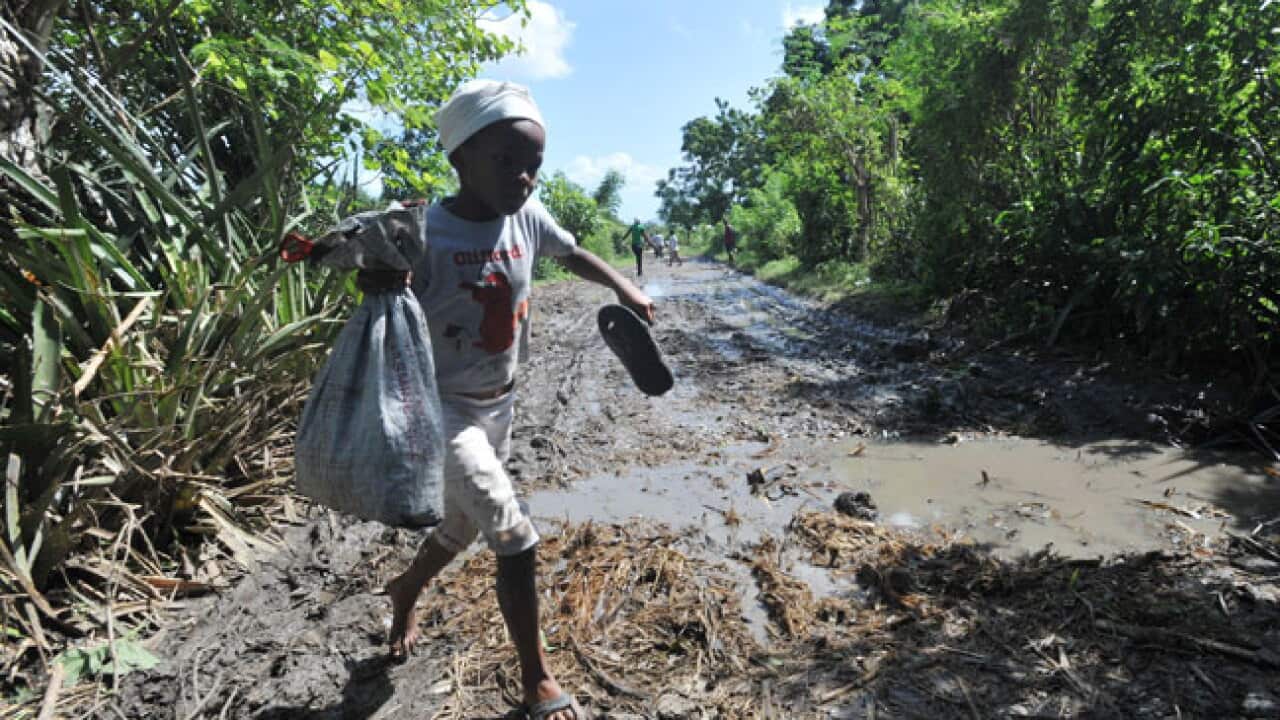
The storm killed more than 50 people in Haiti as it churned through the Caribbean last week on its way to a deadly and destructive blast along the US East Coast.
Relief workers are still trying to make a full assessment of Sandy's ugly footprint on Haiti. But for now it is known the storm destroyed, damaged or flooded the homes of up to 20,000 people, said Johan Peleman, head of the UN relief office in Haiti, in comments published Friday on the UN website.
News that makes sense
Your trusted source for staying up-to-date with the world around you. Get free daily news updates and analysis, straight to your inbox.
Northern Haiti endured a long drought this year, and took a hit from Hurricane Isaac in August. Now there are fears that harvests being collected in the south of the country have been destroyed by Sandy.
"With the south being hit now, we are going to face in the next couple of months very serious problems of malnutrition and food insecurity," Peleman said on UN radio.
The grim picture comes as much of the world's attention is focused on the deaths and spectacular damage wrought by Sandy in the United States.
In Haiti there were still 350,000 people living in tent camps set up after the 2010 earthquake. They were evacuated before Sandy, but the storm destroyed much of the fragile housing in those camps, the official added.
In other new woes for the poorest country in the Western hemisphere, Sandy rendered roads unusable so it is hard to reach people in need, and water holes and sanitation systems need to be drained to prevent outbreaks of water-born diseases, mainly cholera.
That disease is endemic in Haiti and a rise in cases is expected, Peleman said.
Prime Minister Laurent Lamothe issued an appeal for international aid Wednesday. He said the agricultural sector alone suffered more than $104 million in losses.
Haiti is still rebuilding after the massive 2010 earthquake that leveled much of the capital, left hundreds of thousands homeless and killed more than 200,000 people.







