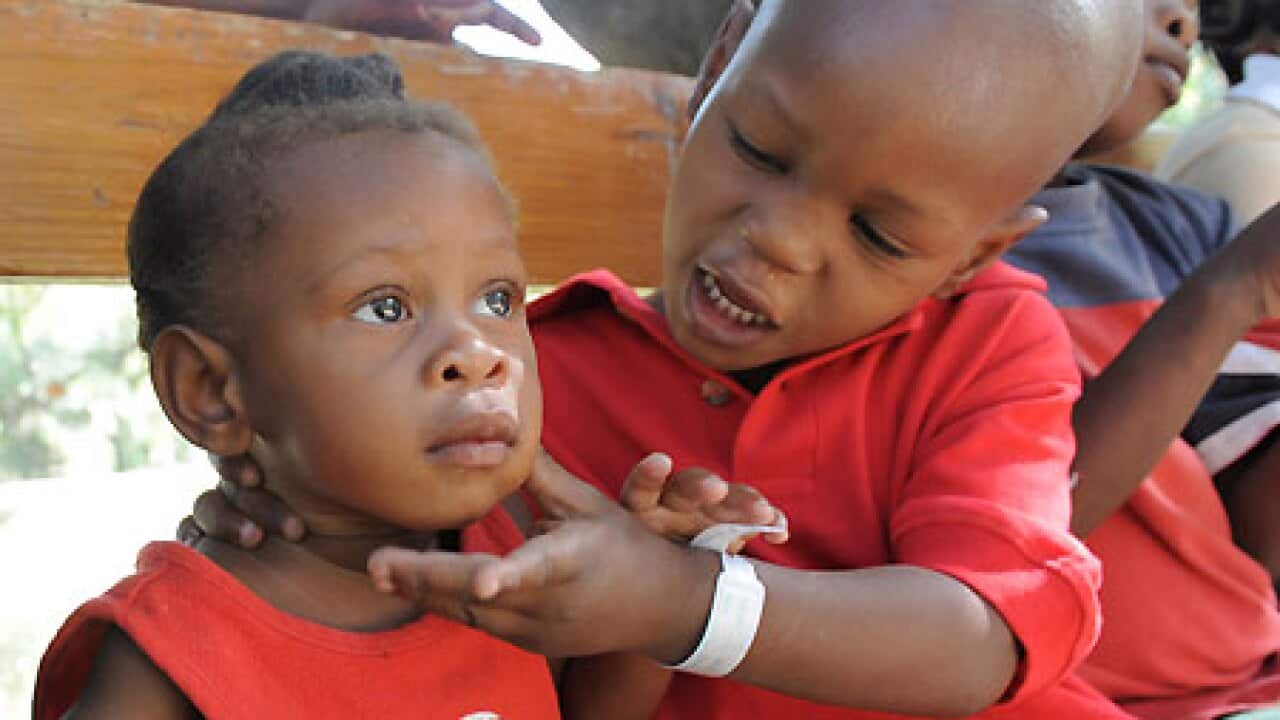
Two months after arguably the worst natural disaster of modern times, Haiti faces further calamity as more than 200,000 quake survivors camp in putrid tent cities at risk of major flooding.
The full number made homeless by the January 12 earthquake is far higher, some 1.3 million, but as the rainy season approaches the United Nations regards 218,000 people in 21 Port-au-Prince camps as those most at risk.
"The problem with the rainy season is it is a very indefinite deadline," Kristen Knutson, a spokeswoman for the UN's Office for the Coordination of Humanitarian Affairs (OCHA), told AFP.
News that makes sense
Your trusted source for staying up-to-date with the world around you. Get free daily news updates and analysis, straight to your inbox.
Emergency camps house homeless
The government is struggling to buy land to set up emergency camps outside the capital, but these fields would take up to six weeks to turn into viable sites and Knutson said moving people outside the capital was a "last resort."
"Relocation is what people focus on because it's very visual, you can see the site, and because of all the dynamics of identifying the land, buying the land," the UN spokeswoman said.
"It's dramatic. But there are other choices that are available for people and if they are better for people and they are available we want them to take them. We want people to be where they want to be."
Those with houses still standing are being encouraged to return home, but many are still traumatized by what happened and engineers and architects have to painstakingly assess which buildings are structurally sound.
600,000 move in with host families
Others are being advised to move back home and camp if a safe plot can be found, while some 600,000 people have already opted to move in with host families.
Only when those possibilities have been exhausted and no closer site can be found are those at risk in Port-au-Prince flood plains being recommended to relocate outside the capital.
Santo 17, a first planned site with an initial capacity of 1,400 opened Saturday at Croix-des-Bouquets, a town eight miles (13 kilometers) northeast of the capital.
Heavy rains poured fresh misery on Port-au-Prince early Monday and mother-of-six Berta Romelus told AFP she spent a miserable night sleeping on her feet as the rain gushed under her tent.
Football stadium turned into makeshift camp
Even if rain had turned the camp of more than 4,000 homeless in a former football stadium in the suburb of Petionville into a giant latrine, Romelus scoffed at the idea of moving.
"They cannot decide for us, we want to see first where they want to move us. We don't want to go to Croix-des-Bouquets, it is too far. We want to live close to here. We are going to stay here whatever happens."
Behind Romelus were the only tents capable of resisting the rains, but these were reserved for children and babies -- one was born overnight during some of the heaviest rains since the quake, which killed more than 220,000 people.
Here, anger and discontentment appeared to be growing against the aid workers who the Haitians said paid few visits and asked many questions without providing solutions.
Back at the UN logistics base, though, coordinators were positive they could stave off a second disaster and said they were very confident they would meet a self-imposed May 1 deadline to provide tarps and tents to all in need.
"In terms of shelter we are right on target with the distribution to date," said OCHA spokeswoman France Hurtubise. "We have covered 63 percent of the people affected, 163,000 households have received tarps or tents for a total of 814,620 people."







