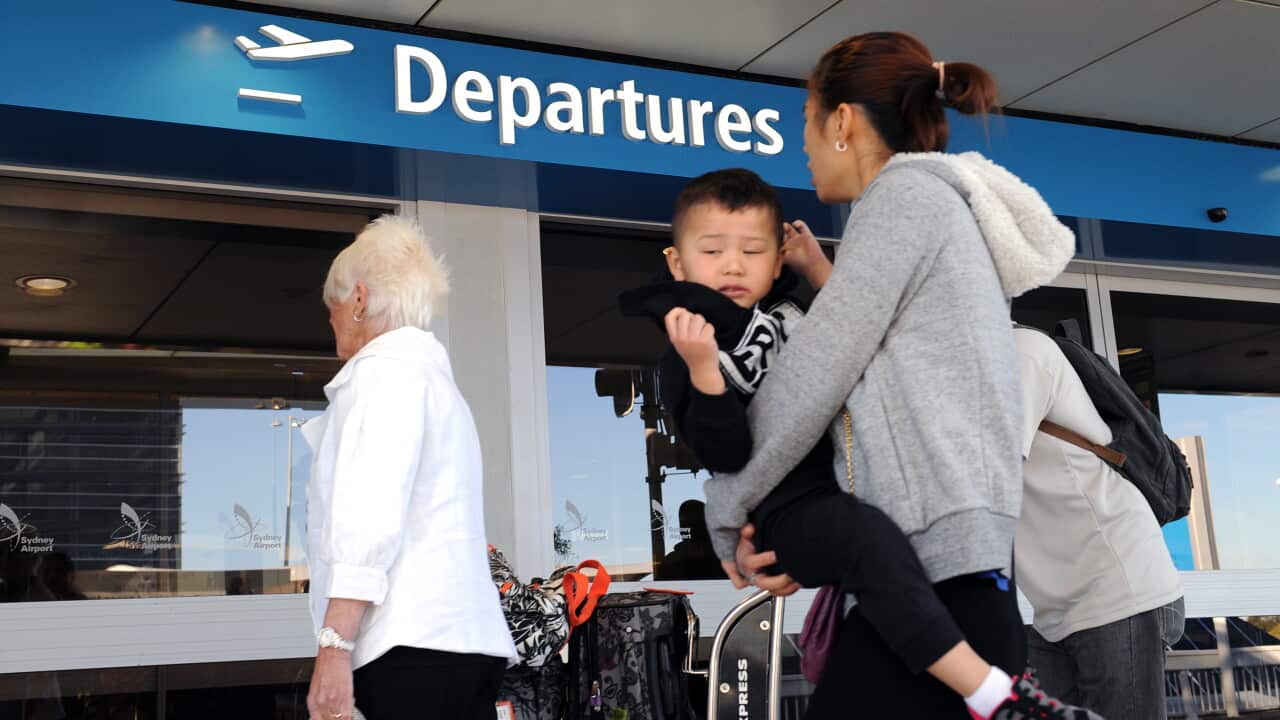
Countries that fail to comply with the new protocols or take steps to do so within 50 days could face travel sanctions.
The cable, sent to all US diplomatic posts on Wednesday, is a summary of a worldwide review of vetting procedures that was required under US President Donald Trump’s revised March 6 executive order that temporarily banned US travel by most citizens from six predominantly Muslim countries.
The memo lays out a series of standards the United States will require of other countries, including that they issue, or have active plans to issue, electronic passports and regularly report lost and stolen passports to INTERPOL.
It also directs nations to provide "any other identity information" requested by Washington for US visa applicants, including biometric or biographic details.
News that makes sense
Your trusted source for staying up-to-date with the world around you. Get free daily news updates and analysis, straight to your inbox.
The cable sets out requirements for countries to provide data on individuals it knows or has grounds to believe are terrorists as well as criminal record information.
Further, countries are asked not to block the transfer of information about US-bound travellers to the US government and not to designate people for travel watchlists based solely on their political or religious beliefs.
"This is the first time that the US Government is setting standards for the information that is required from all countries specifically in support of immigration and traveller vetting," the cable said.
The new requirements are the latest in a series of steps the Trump administration says it is taking to better protect the United States from terrorist attack.
However, former officials said much of the information sought is routinely shared between countries, including examples of passports and additional details about particular travelers that may present security concerns.
Some US allies may worry about privacy protections if Washington is seen as seeking information beyond what is already shared, said John Sandweg, a former senior Homeland Security Department official now with the firm Frontier Solutions.
"I don’t think you can ignore the political aspects of the unpopularity of the current administration. That puts political pressure to stand up to the administration," he said.
The cable lays out risk factors the U.S. government will consider when evaluating a country. Some of these are controversial and could be difficult for countries to prove to US satisfaction, including ensuring "that they are not and do not have the potential to become a terrorist safe haven."
Countries are also expected to agree to take back citizens ordered removed from the United States.
If they do not provide the information requested, or come up with an adequate plan to, countries could end up on a list to be submitted to Trump for possible sanction, including barring "categories" of their citizens from entering the United States.
The real worries for countries may not come until the results of this review are known, said Leon Rodriguez, the former director of US Citizenship and Immigration Services.
"Once they start making decisions I think that is where there is going to be a lot of anxiety," he said, saying delays in visa processing for nations that do not pose much of a threat could start to hurt "ordinary business and personal travel."
The most controversial of Trump's immigration-related moves are two executive orders, challenged in federal court, which impose a temporary ban on travel to the United States for most citizens from Iran, Libya, Somalia, Sudan, Syria, and Yemen.
While the orders were initially blocked from being enforced, the Supreme Court on June 26 allowed the ban to go into effect for people from the six nations with no strong ties to the United States.
The cable requires countries to act quickly, but stressed that the United States would work with foreign nations to assess if they meet the standards and, if not, to come up with a plan to help them do so.
The cable asks that US diplomats "underscore that while it is not our goal to impose a ban on immigration benefits, including visas, for citizens of any country, these standards are designed to mitigate risk, and failure to make progress could lead to security measures by the USG, including a presidential proclamation that would prohibit the entry of certain categories of foreign nationals of non-compliant countries."
The cable says the US government has made a preliminary determination that some countries do not meet the new standards and that others are "at risk" of not meeting them. It does not name these, listing them in a separate, classified cable.
The State Department declined comment on the cable, saying it would not discuss internal communications.
"The US government’s national security screening and vetting procedures for visitors are constantly reviewed and refined to improve security and more effectively identify individuals who could pose a threat to the United States," said a U.S. State Department official on condition of anonymity.







