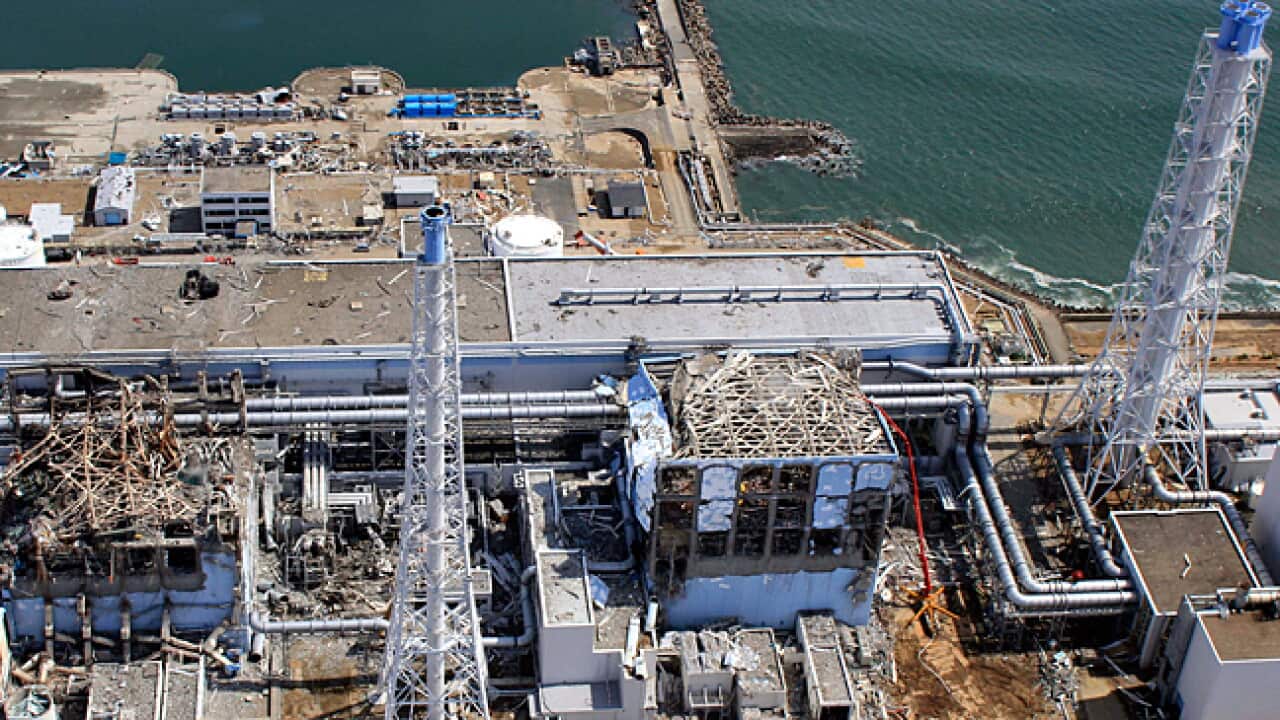
Readings taken by a robot that entered two crippled buildings at Japan's tsunami-flooded nuclear plant for the first time in more than a month displayed a harsh environment still too radioactive for workers to enter.
Nuclear officials said the radiation readings for unit 1 and unit 3 at the tsunami-flooded Fukushima Daiichi plant do not alter plans for stabilising the complex by year's end under a "roadmap" released by the plant operator on Sunday.
Workers have not gone inside the two reactor buildings since the first days after the plant's cooling systems were wrecked by a catastrophic earthquake and tsunami on March 11.
Hydrogen explosions in both buildings in the first few days destroyed their roofs and littered them with radioactive debris.
A US-made robot that looks like a drafting lamp on treads haltingly entered the two buildings on Sunday and took readings for temperature, pressure and radioactivity.
News that makes sense
Your trusted source for staying up-to-date with the world around you. Get free daily news updates and analysis, straight to your inbox.
More data must be collected and radioactivity must be further reduced before workers are allowed inside, said Hidehiko Nishiyama of Japan's Nuclear and Industrial Safety Agency.
"It's a harsh environment for humans to work inside," Nishiyama said.
It is still possible, he said, to achieve plant operator Tokyo Electric Power Company's (TEPCO) goal of achieving a cold shutdown of the plant within six to nine months as laid out in a timetable the company announced on Sunday.
"I do believe we must be creative to come up with ways to achieve our goals," Nishiyama said.
"I still think the plan ... is as appropriate as we can get at the moment."
TEPCO official Takeshi Makigami said the robots must pave the way for workers to be able to re-enter the building. "What robots can do is limited, so eventually, people must enter the buildings," Makigami said. The robot was set to investigate unit 2 later on Monday.
The robots being used inside the plant, called Packbots, are made by Bedford, Massachussetts company iRobot.
Travelling on miniature tank-like treads, the devices opened closed doors and explored the insides of the reactor buildings, coming back with radioactivity readings of up to 49 millisieverts per hour inside unit 1 and up to 57 millisieverts per hour inside unit 3.
The legal limit for nuclear workers was more than doubled since the crisis began to 250 millisieverts.
The US Environmental Protection Agency recommends an evacuation after an incident releases 10 millisieverts of radiation, and workers in the US nuclear industry are allowed an upper limit of 50 millisieverts per year.
Doctors say radiation sickness sets in at 1000 millisieverts and includes nausea and vomiting.
The robots, along with remote controlled miniature helicopters, have enabled TEPCO to photograph and take measurements of conditions in and around the plant while minimising the workers' exposure to radiation and other hazards.







