This audio is voiced by AI and may occasionally mispronounce words.
Share your feedback and help us improve this feature. Read more about how we use AI at SBS here.
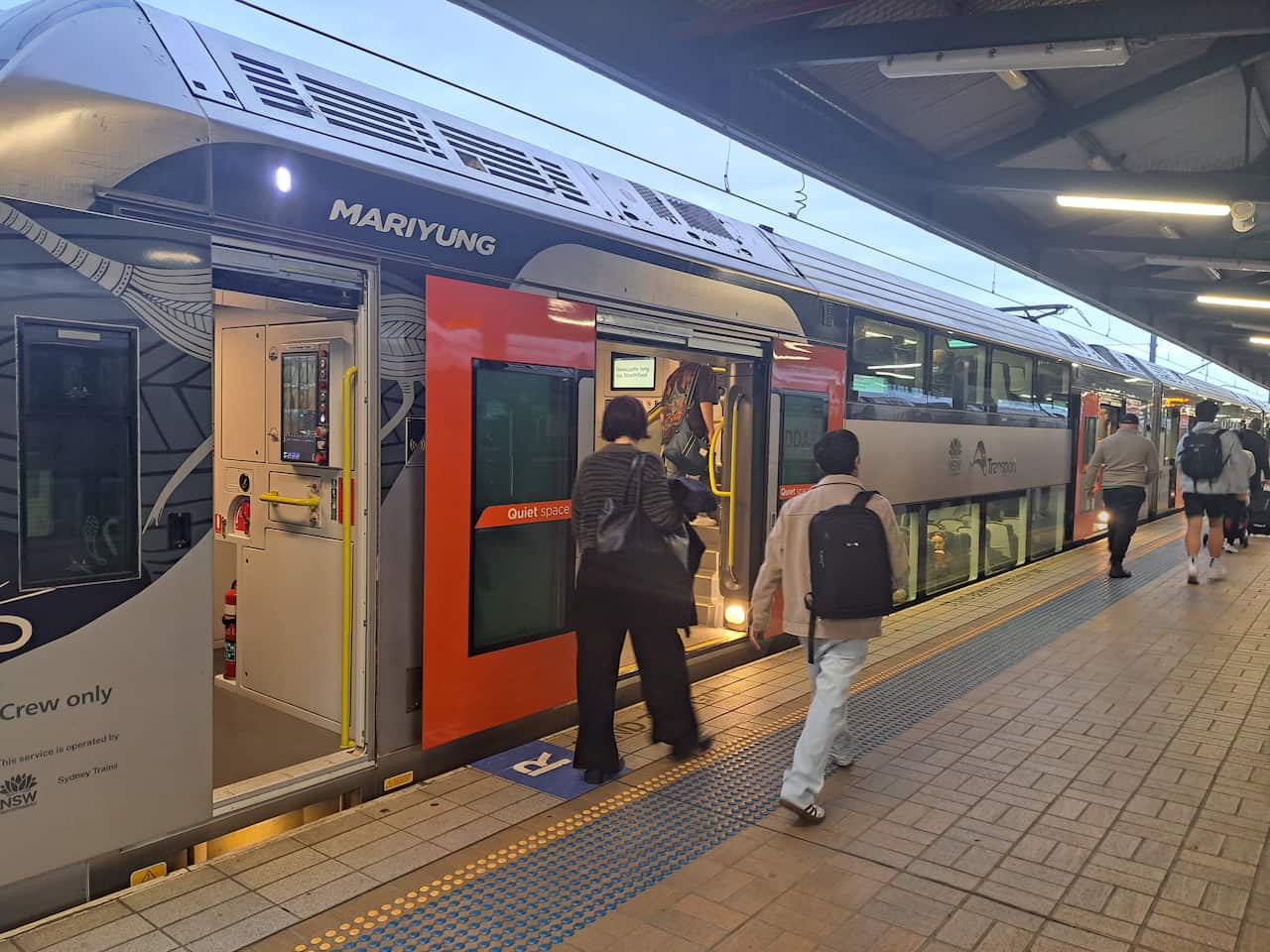
Jon Staniland is one of many commuters on the 4.33pm train to Newcastle who has settled in for a long journey home.
Door to door, it can take Staniland up to two hours to travel home from work in Sydney's CBD to Woy Woy on the Central Coast, although the trip can be as short as one hour and 40 minutes if he gets an express train.
When SBS News meets him on a Monday afternoon, Staniland is working on his laptop. His employer allows him to leave the office early — around 3pm — and finish the rest of his work while in transit.
The 51-year-old makes this four-hour return journey twice a week, but Staniland says he wouldn't have it any other way. He has lived in Woy Woy for 10 years and loves the lifestyle.
"It's like a holiday every day on the Central Coast," he tells SBS News.
News that makes sense
Your trusted source for staying up-to-date with the world around you. Get free daily news updates and analysis, straight to your inbox.
Staniland is one of the growing number of Australians choosing to live in regional areas for lifestyle and cost of living reasons, while maintaining jobs in the capital cities.
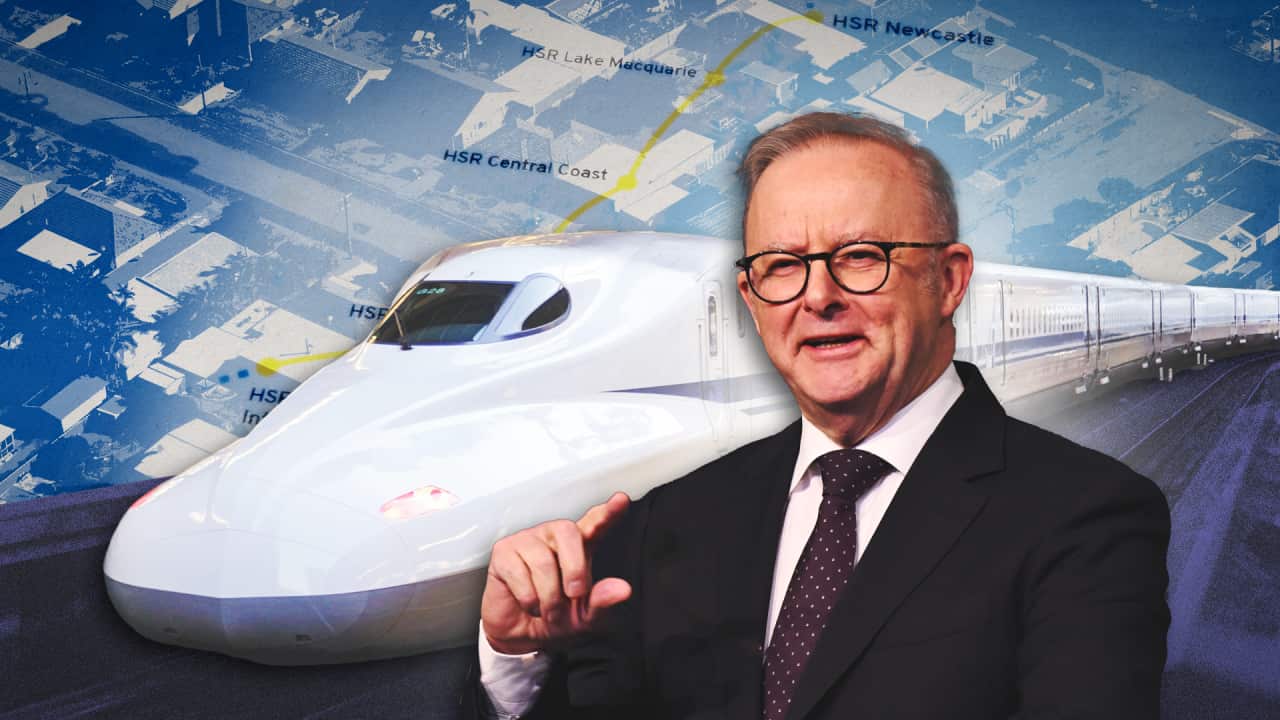
He's also among the commuters who stand to benefit from a proposed high-speed rail line between Newcastle and Sydney, a project described as a once-in-a-century opportunity to reshape Australia and redefine how people live, work and travel.
The project has progressed to a two-year development phase following the release of a partially redacted business case by the High Speed Rail Authority in February.
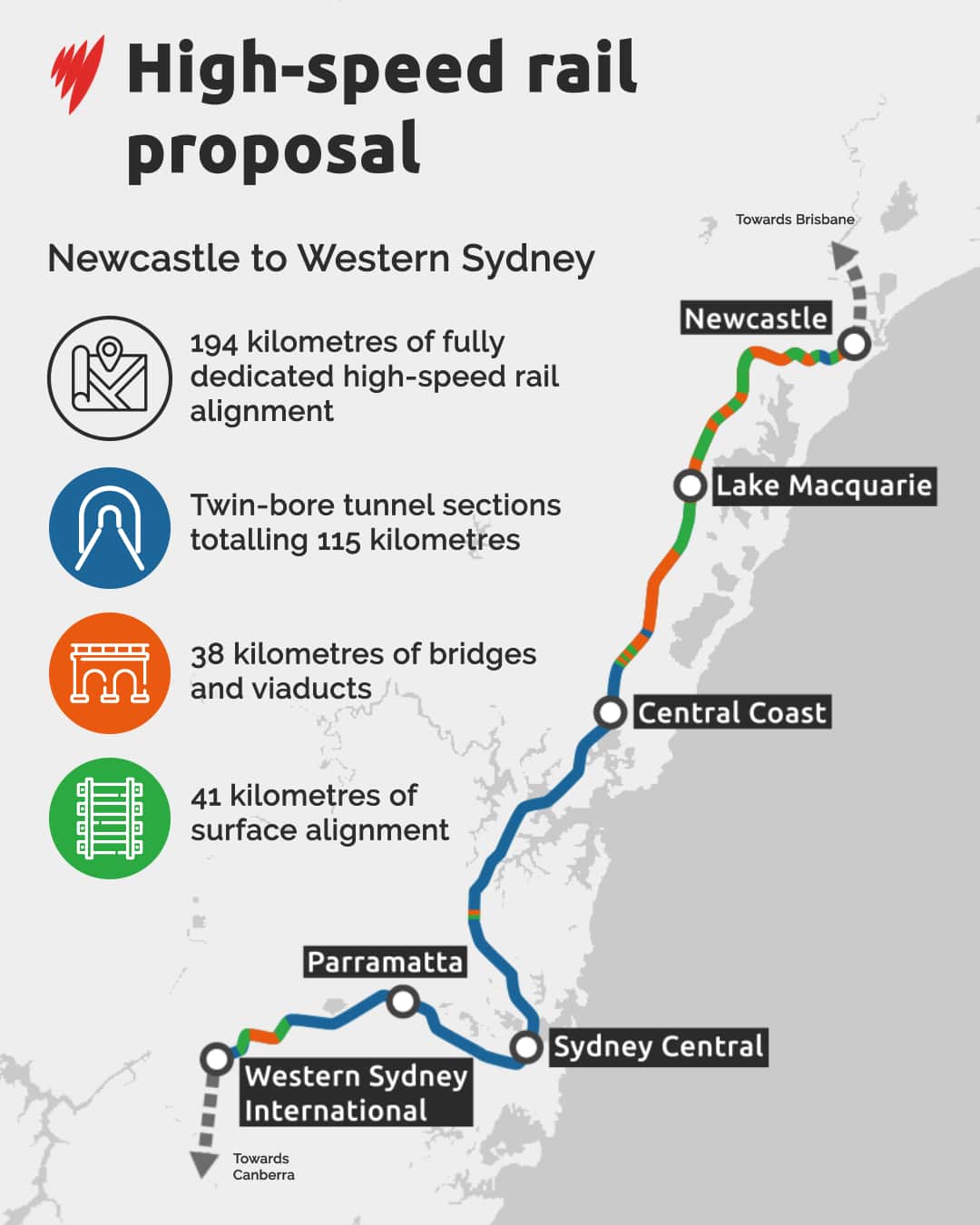
The new rail line would slash travel times from Sydney to the Central Coast to around 30 minutes, while the journey to Newcastle would take less than an hour — compared with about two and a half hours by train today.
It would also allow passengers to travel from Newcastle to the new airport in Western Sydney in about 90 minutes.
The federal government announced the start of a two-year development phase in March. Last week, expressions of interest closed for the design and construction of the rail line between the Central Coast township of Ourimbah and Central Station in Sydney's CBD.
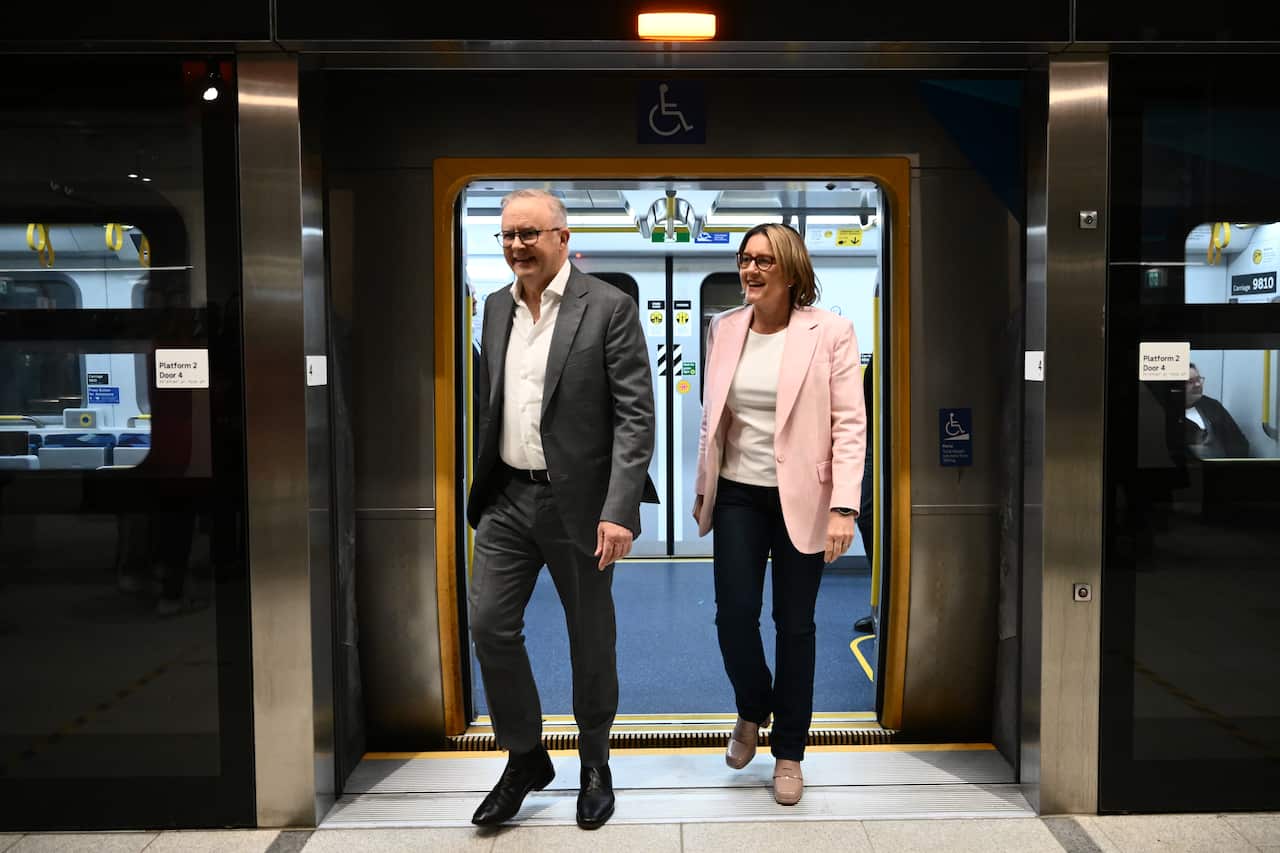
In an opinion piece published on 4 March, Prime Minister Anthony Albanese said: "The time has come for high-speed rail in Australia — for the good of Australians and, as the business case now shows, for the good of the economy."
While the project still faces significant engineering, funding and political challenges, some experts believe this is the closest Australia has come to getting a high-speed rail project off the ground, and the timing may finally be right.
Is high-speed rail set to become a reality?
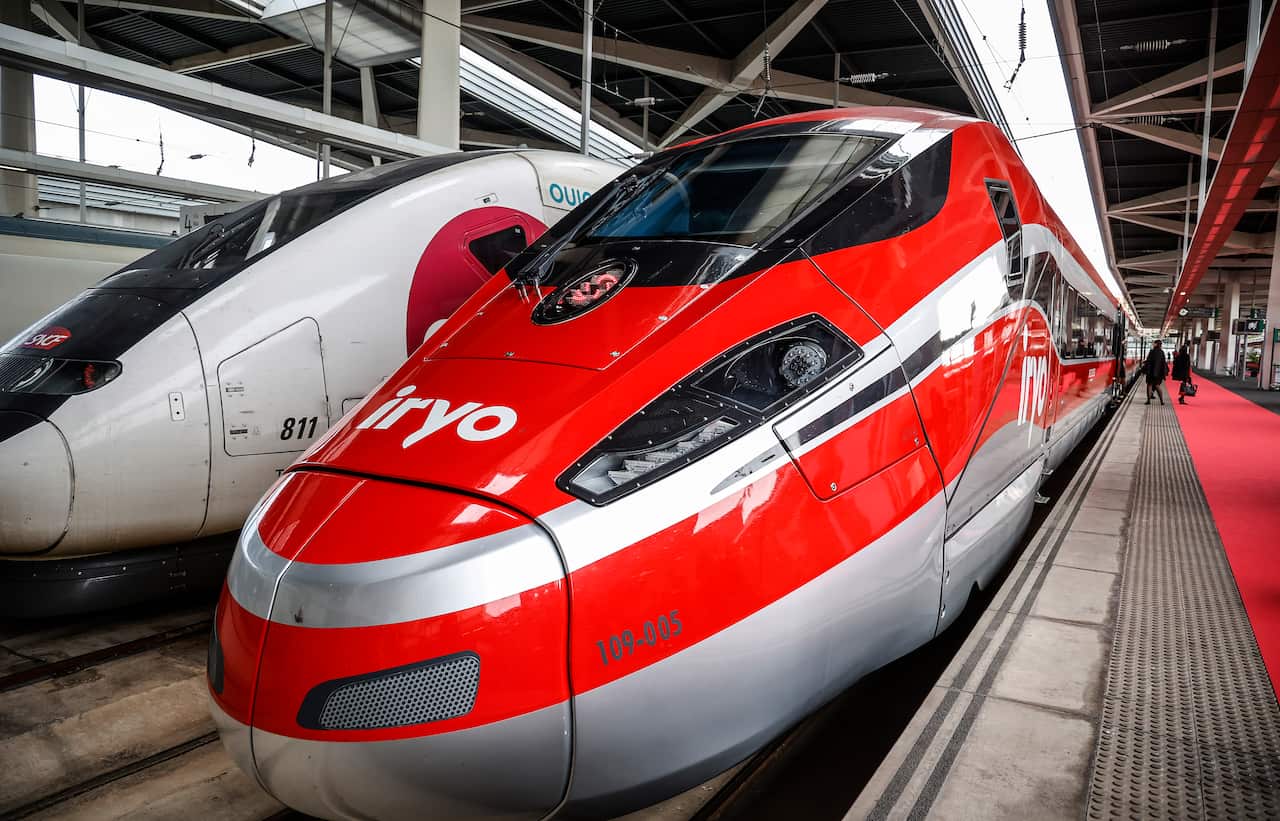
The idea of high-speed rail excites many Australians, but previous plans have often been stymied by the high costs required.
Wollongong University associate professor Philip Laird, who specialises in the rail freight and passenger transport industries, says proposals have been discussed since the 1980s.
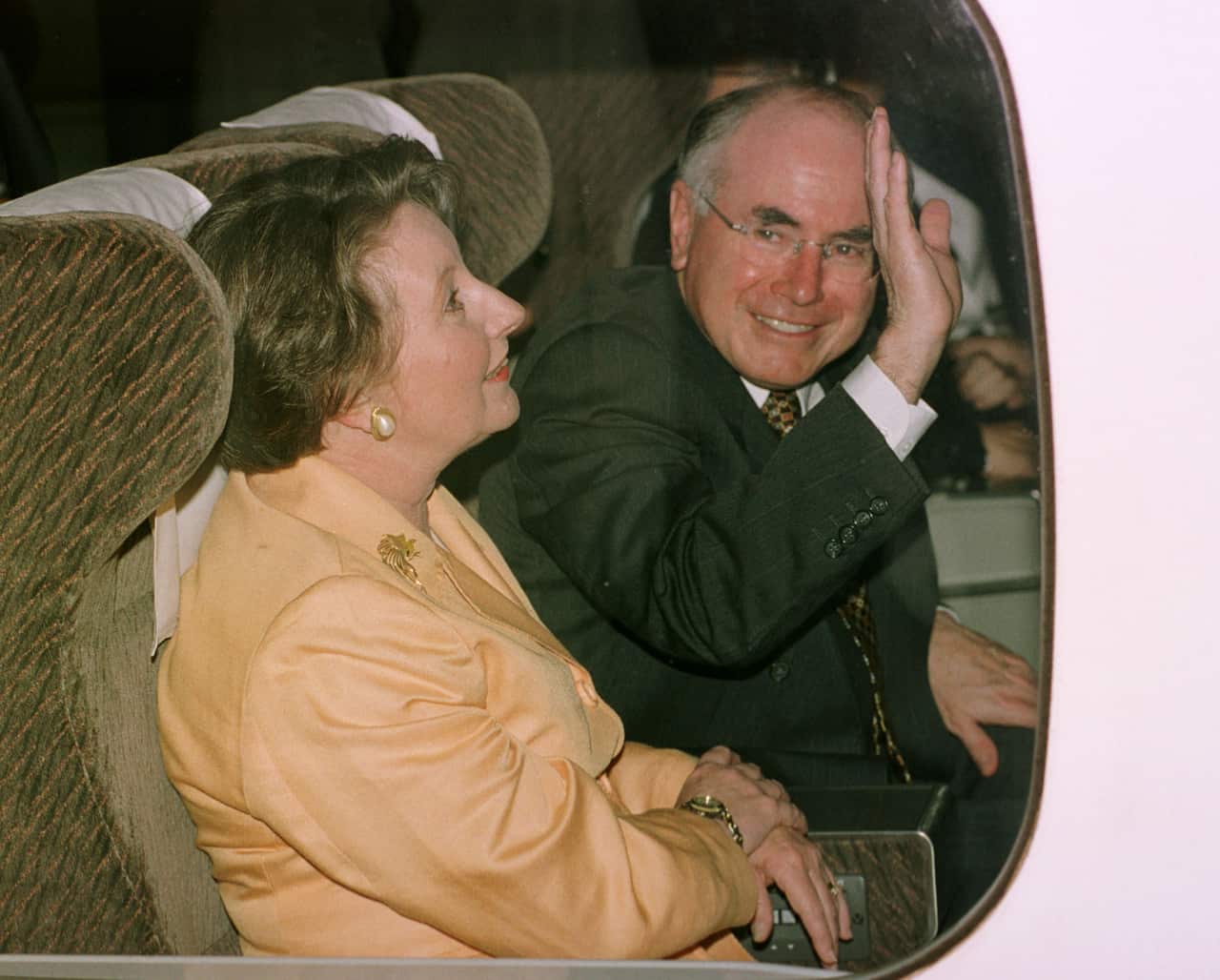
Former prime minister John Howard even announced a $3.5 billion project in 1998 that would have transported people between Sydney and Canberra in 81 minutes. The proposal was ultimately abandoned after being deemed too expensive, while the NSW government was also reluctant to provide funding.
The Howard proposal went as far as selecting a successful proponent — the 'Speedrail Consortium' — to build and operate the line, but it was noted that the project would only proceed on the basis of "no net cost to taxpayers".
It also included stations built in the Southern Highlands, Goulburn and Canberra Airport, as well as the refurbishment of Campbelltown Station.
Laird says the Albanese government's proposal has "gone beyond studies".
"It's formed a high-speed rail authority — which required legislation — it's funding it to go step-by-step [from] a proposal stage to a development stage, and all going well it'll say 'go ahead and build it in 2028'."
Laird also points to statements made by Albanese and says: "We've never seen so much support for an actual project."
The partly redacted business case for the Newcastle to Sydney line released in March by the High Speed Rail Authority — which has been tasked with planning, developing and delivering the network — found the project was feasible, economically viable and an important priority for the country.
Laird says there has been scepticism around high-speed rail projects in the past but he believes "we're beyond that now".
"But there's a challenge to build up public confidence in the project and also to ensure that it can survive any change of government, and we've got to make sure that it doesn't go the way of inland rail in Australia, where the costs blow out too [much]."
Why start with Newcastle-Sydney?
Current transport options on the Newcastle to Sydney corridor, which is Australia's busiest intercity rail route, are already limited, slow and congested.
But experts say the project will be the most difficult section of the network to deliver.
About 60 per cent of the line — 115km — is expected to be built as twin-bore tunnels, making it both expensive and technically challenging.
According to the business case, the Newcastle stretch is favoured over the less complex Sydney to Canberra route, partly because the economies of Newcastle, Central Coast and Sydney are already well integrated, with significant movement of people travelling between these regions for work, education and other activities. There is also greater potential to provide a long-term pipeline for housing.
The authority says the rail line could support the construction of 160,000 new homes, create more than 99,000 new jobs and deliver a $250 billion economic boost over 50 years.
In contrast, a line to Canberra is estimated to add 32,500 dwellings.
Not everyone agrees with this approach, though.
Laird says linking the south-west Sydney suburb of Macarthur to Mittagong in the Southern Highlands would be cheaper and could be completed faster, as it would require less tunnelling.
"If we were to build this within five years, it would develop an appetite for more," he says.
The broader vision of a high-speed rail network linking Melbourne and Brisbane would take decades to achieve, and professor Ravi Ravitharan, director of the Institute of Railway Technology at Monash University, says delivering a smaller section, such as the Newcastle-Sydney corridor, would help demonstrate the project’s value and build public support.
Without a railway network connecting the major east coast cities, [how are we going to achieve] the mobility required? The population is going to be significantly more than it is now.
Ravitharan says the effectiveness of this approach has been seen in projects such as light rail on the Gold Coast, which was initially opposed by some local residents and politicians but has gained support since opening and secured further extensions.
This strategy has also been adopted in Spain and France, which continue to expand their high-speed rail networks by 70-120km each year.
It allows projects to build momentum while also developing the expertise required to deliver future links.
An idea whose time has come?
NSW's rail line was built more than 100 years ago and has an average speed of 60km/h.
If it's not upgraded, Laird argues the government will eventually be forced to widen the M1 Pacific Motorway — an option that would also be expensive and less environmentally friendly. There is already significant congestion on these roads during peak periods.
The business case notes that the punctuality of train services in NSW is declining, with 79 per cent of services meeting targets in the 2024 financial year. Road crashes have also increased amid heavier traffic.
Ravitharan believes a variety of other factors are also making high-speed rail even more attractive.
We are talking about carbon emissions, we are talking about a fuel crisis, we are talking about sovereign capability, we are talking about growth, we are talking about housing. All of these stack up with high-speed rail.
"I think it's a great time to build it. If you don't build it, I think the cost will be much higher."
Because it is electric, high-speed rail could produce as little as 1 per cent of carbon emissions of a comparable flight, he says, helping Australia achieve its net zero target by 2050.
It could also reduce reliance on imported fuel and open up new areas for housing development.
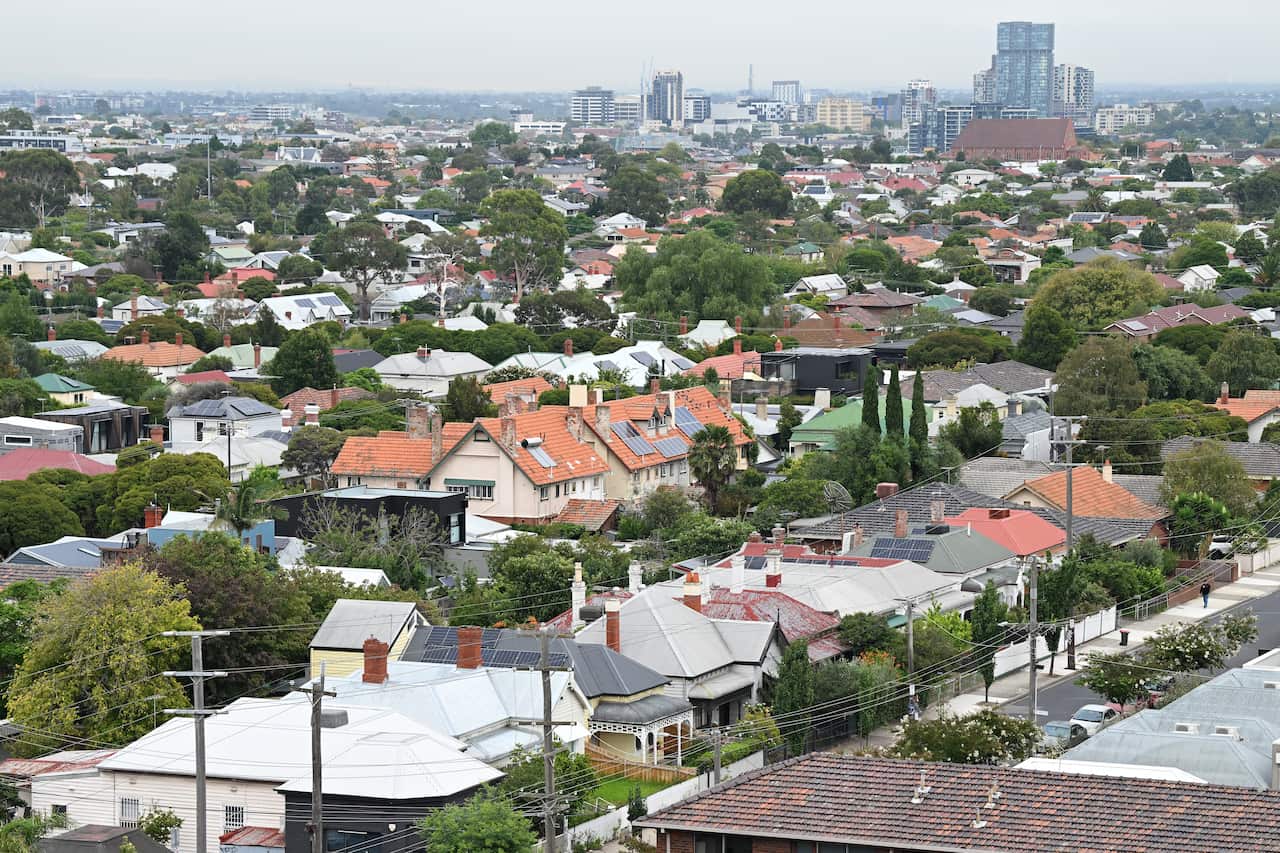
The population shift to regional areas since the COVID-19 pandemic, combined with the entrenchment of work-from-home arrangements, has further strengthened the case for faster connections to cities and the specialist services they provide.
"With [the COVID-19 pandemic], a lot of people moved away from the cities into regional centres, but once they've moved, you have to provide them with facilities that are equivalent to what they're used to," Ravitharan says.
He says high-speed rail would provide easier access to city-based services but could also enable professionals like surgeons to travel more easily to regional areas.
[A surgeon could] travel to a regional city in the morning and come back in the evening, or stay there for a couple of days [to perform surgeries] and come back.
"That would actually change the whole medical requirement for people to move to the city to get surgery done."
Ravitharan says flights are often less convenient than rail travel because of the time it takes to reach airports and the early check-in requirements.
"[With high speed rail] you can get onto the train within minutes and then travel and get to [your destination] in a decent time and deliver [your services or do what you need to do], fresh as you have left home," he says.
Commuters would not be the only beneficiaries. Faster rail connections could also open up opportunities for tourism, education and business.
One of the longstanding criticisms of high-speed rail in Australia is that the population may be too dispersed to support it.
The High Speed Rail Authority disputes that assessment, noting that around 60 per cent of the nation's population lives along the east coast. There are 624 people per square kilometre along the Newcastle-to-Sydney corridor.
"This is more than twice the density of the Spanish high-speed rail corridor between Barcelona and Zaragoza, which has a population density of 244 people per square kilometre, suggesting the corridor is prime to benefit from high speed services," the business case states.
Will political support last?
Delivering such an ambitious and expensive project will likely require long-term support from both major parties, experts say.
"It's a nation-building exercise," Ravitharan says.
"So with the current government interested in supporting it, [and] the continuation of any future governments providing that required support, this is the greatest chance that we have to build a high-speed rail."
Geoffrey Clifton, senior lecturer in transport and logistics management at the University of Sydney, says the future of the Newcastle line may ultimately depend on Albanese's longevity as prime minister.
"This is a particular project that's close to his heart and he's championing it in government," he tells SBS News.
"We have seen that when governments change, priorities change and projects like this fall by the wayside.
How far this gets will [likely] depend on how far Anthony Albanese can take it and how long he's the prime minister for.
Why is high-speed rail so hard to build?
To reach top speeds of up to 320km/h, tracks need to be as straight as possible. Tunnelling helps achieve this and reduces environmental impacts, although trains would need to slow to around 200km/h inside these tunnel sections.
Construction of the first section of the line between Newcastle and Sydney's CBD is expected to take about 10 years once planning is completed next year. The total cost of delivering the line, which will eventually extend to Western Sydney, is estimated to be $94 billion.
In comparison, the cost to build the Sydney Metro City & Southwest, which also required tunnelling works under Sydney Harbour, blew out to around $20 billion. The Metro West section is now projected to cost up to $29 billion.
The business case suggests two potential funding models for the high-speed network: a public-private partnership (PPP) model covering most aspects of the project, or a model in which government investment would be capped to a certain amount each year (around $5 billion per year for the Newcastle to Sydney CBD section), combined with PPP packages for specific elements such as major tunnel works.
The authority argues that incremental delivery of the network — with less than 1 per cent of the Commonwealth budget set aside for works each year — could help fund the project over a 10-to 30-year period rather than the "stop-start approach" that often pushes up infrastructure costs.
Joe Langley, chair of the Australian High Speed Rail Association, a not-for-profit organisation set up to promote the development of high-speed rail in Australia, believes funding could be assisted by capturing more of the benefits created by these projects, which tend to drive up land values.
For example, a levy on developments around the new Pyrmont Metro station has helped the NSW government fund part of its construction.
"It doesn't affect the cost of these dwellings or businesses so much as it reduces the windfall gain that owners and developers would normally receive from the project," Langley tells SBS News.
"Correctly done, value capture mechanisms don't increase the cost of housing or the cost of development."
But professor David Levinson, civil engineer and transportation analyst at the University of Sydney, is sceptical about the project and says, if delivered, it would likely feature the longest high-speed tunnel in the world.
"As shown by Snowy II and the M6 Motorway in Arncliffe, things can go wrong with tunnelling, driving up costs," he tells SBS News.
In engineering we talk about quality, speed, and cost — and generally you can only get two out of three.
"They are proposing to open this in ten years, and make mention of using new 'green' concrete technology, which obviously brings with it risks, as does any new technology."
Clifton says costs could also be driven up by Australia's relatively high wages and the limited expertise in the country to deliver this type of infrastructure.
"As much as I would love to see high-speed rail being developed in Australia, the reality is governments only have a limited amount of money," he says.
"Money they're spending on high-speed rail is money that's not being spent on education or hospitals.
"So we do need to make sure that governments are achieving value for money."
Does the business case stack up?
Clifton says more detail is needed before it is possible to determine whether high-speed rail will be economically feasible, but he says political will may ultimately prove just as important as economics.
"We've had lots of plans over many years and none of them have progressed as far as actually starting to build anything," he says.
"[But] we've got governments at the moment which aren't too concerned about traditional thoughts about value for money, which means they're more likely to go ahead with something like this."
Langley, whose group is also pushing for social and affordable housing to be part of any development opportunities around stations, notes that the benefits of these projects are often harder to quantify than the costs.
Unfortunately, we probably know a lot more about what these things cost and what can go wrong than the appreciation of what the full benefits are.
Staniland says Australia is fortunate to have a good work-life balance, but that balance would improve further if commuters like him could cut their travel times.
"Even at two days a week, I'm commuting eight hours a week," he says.
Access to high-speed rail would also give him more choice when it comes to work, as he currently avoids applying for jobs that require staff to work from the office five days a week.
Reflecting on the Speedrail project in the 90s, Laird says it was a "real lost opportunity for Australia" that could have resulted in a rail link built between Sydney and Melbourne by now — the cities were the fifth-busiest domestic air route in the world in 2024.
"If we had proceeded ... we'd have had Sydney to Canberra done by 2005 and the intervening 20 years would've seen us get to Melbourne.
"The costs of not having a decent rail system are going to grow each year until we fix it up. And Sydney-Melbourne at the moment is unfit for current and future use."
For the latest from SBS News, download our app and subscribe to our newsletter.







