
In Brief
- The latest HILDA survey was released on Thursday, finding that cost of living has impacted Australia's wellbeing.
- Australians feel overeducated in their jobs, happy in their relationships, but more fatigued than ever.
Australians are getting more educated, staying home longer and still pretty happy with their partners.
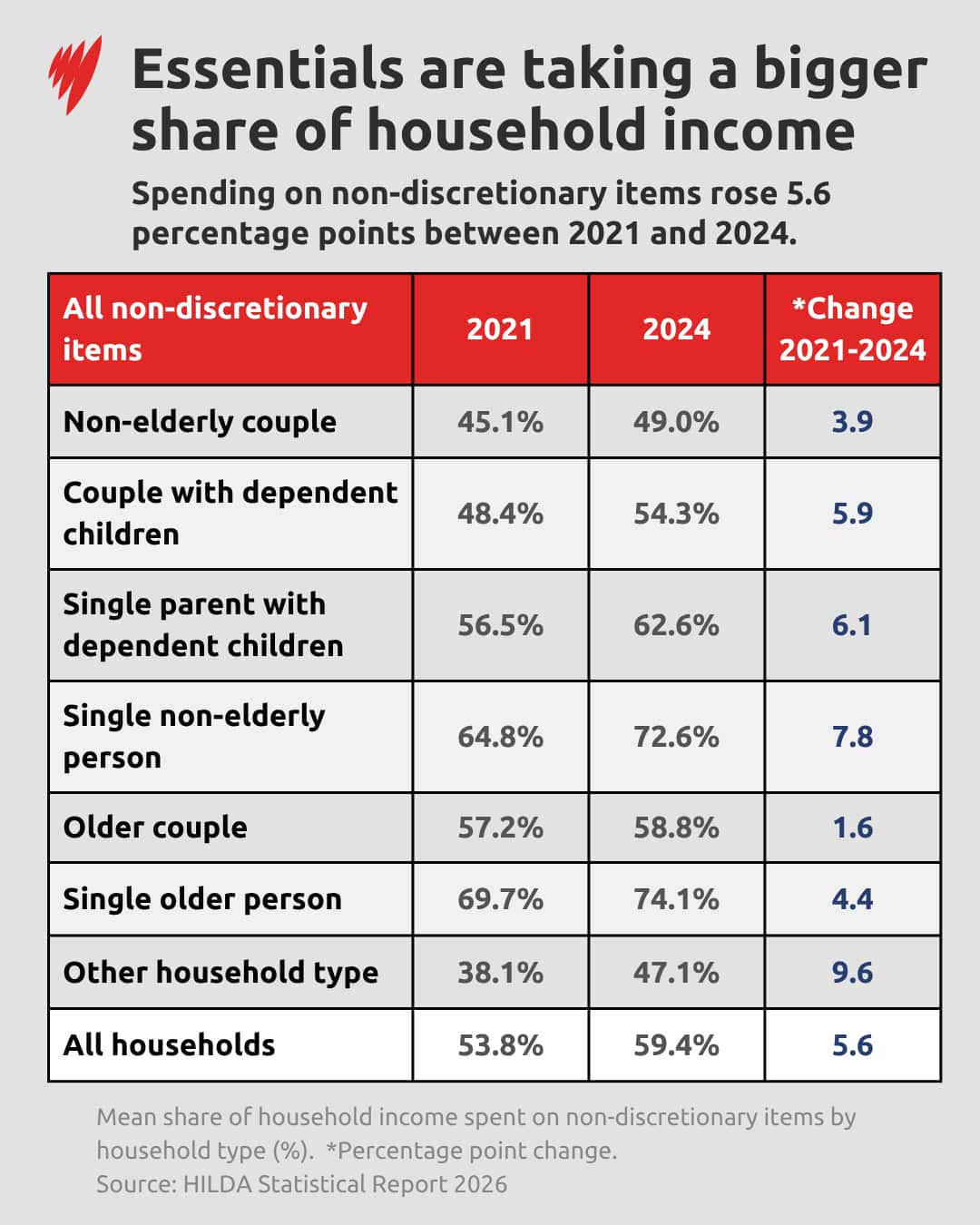
But the cost of living is squeezing households harder than ever, according to the latest Household, Income and Labour Dynamics in Australia (HILDA) report.
The annual survey, released on Thursday, is the largest longitudinal study of its kind in the country, tracking around 17,000 people across 9,000 households every year since 2001. This year's edition draws on data through to 2024 and covers everything from income and employment to relationships and mental health.
"What really comes out quite strongly from the data is the rise in the cost of living and people's incomes not really keeping pace with the rise in the cost of living," Professor Roger Wilkins, co-director of the HILDA survey, told SBS News.
"We've seen that manifest in a number of different ways. We've seen measures of hardship increasing — things like financial stress, housing stress, food insecurity, the inability to afford adequate food," he said.
News that makes sense
Your trusted source for staying up-to-date with the world around you. Get free daily news updates and analysis, straight to your inbox.
Here are five charts that sum up where Australians are at.
Half of us are 'overeducated' for our jobs
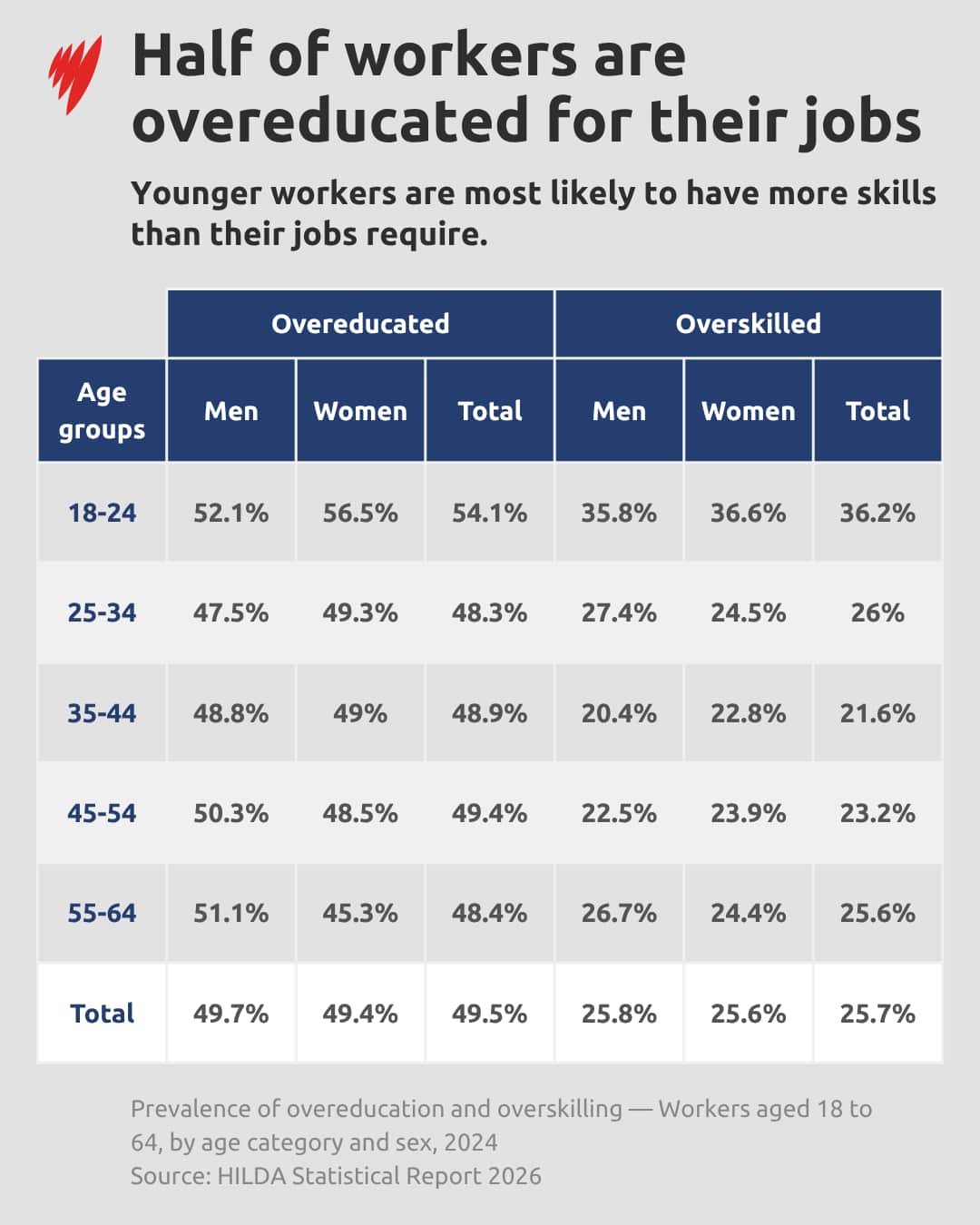
More than half of Australian workers say they have more education than their job requires — which can be associated with lower job and life satisfaction and an increased likelihood of quitting.
Workers under 25 were most likely to feel overeducated, while a quarter of workers also said they felt overskilled and unable to use their full range of abilities at work.
While it sounds like a negative, Wilkins said it isn't necessarily all bad news.
"It's remarkable how much the educational attainment of the Australian population has increased over the life of the HILDA study since 2001," he said. "We've seen a big increase in the proportion of people with a university qualification, particularly for women."
More than half of Australian women aged 25-44 now hold a university degree.
"So women are now considerably more educated than men in terms of the proportion with a university qualification," he said, adding the trend is likely to continue to increase in the long-term.
We're infected by the love bug
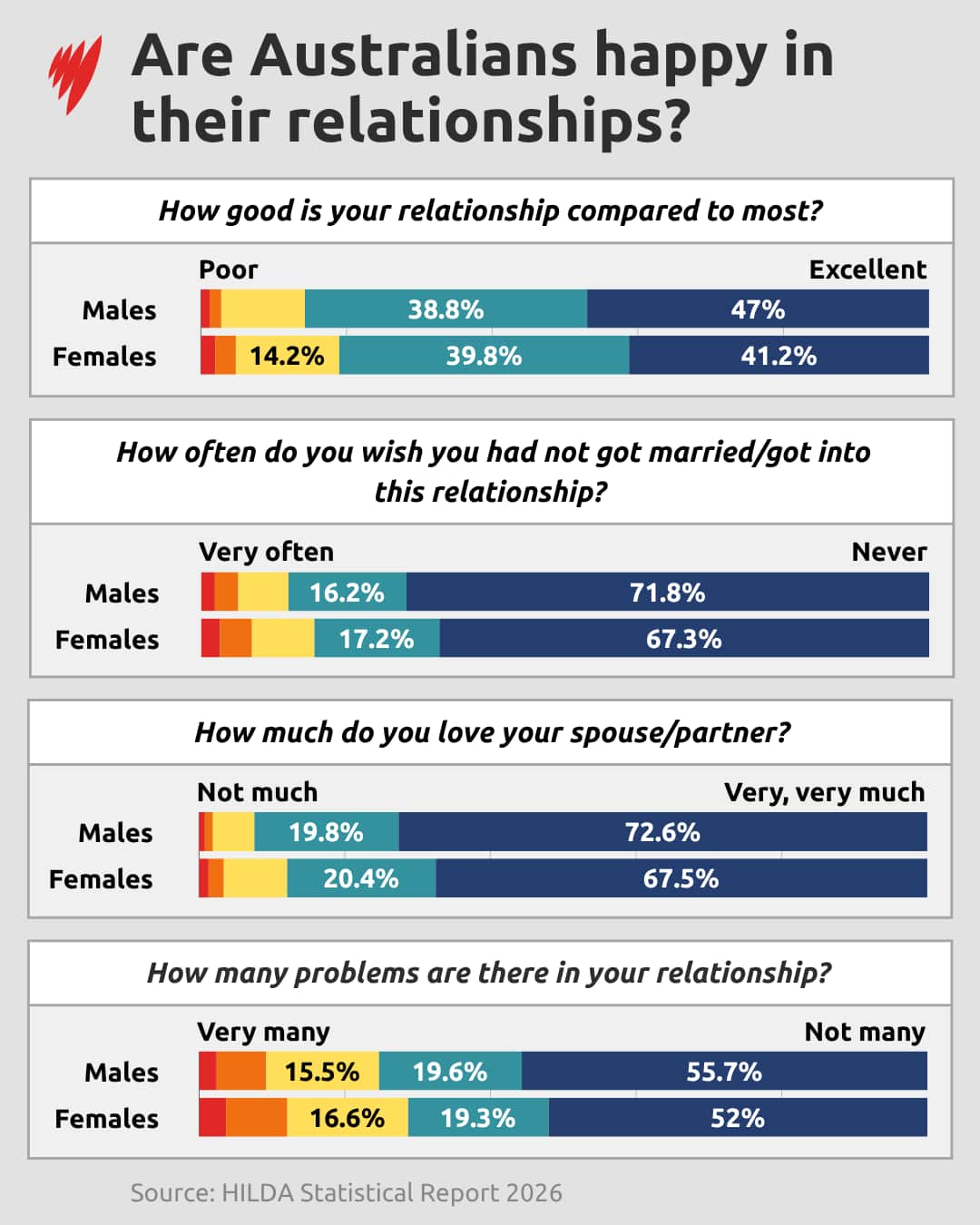
Australians in long-term relationships rated the quality of their partnership highly — an average of 4.3 out of 5 — but clear gender gaps remain.
"Most of men and women who are partnered are quite satisfied with their partner and very much report being in love with their partner, but you do also see a gender divide there in the sense that men do report higher levels of satisfaction with their female partners than females to with their male partners," Wilkins said.
Couples who split housework, childcare and earnings evenly tended to report stronger relationships overall.
Researchers also found a clear U-curve in the perceived strength of a relationship — where it feels strong at first, but gradually declines over 24 years before it finally picks back up, increasing in quality year-on-year and eventually surpassing the love from those early years.
Food insecurity hits 1 in 6 Australians
A huge 18 per cent of Australians — almost 1 in 6 — aged 15 and over experienced food insecurity in 2024 — up from 13.7 per cent in 2020.
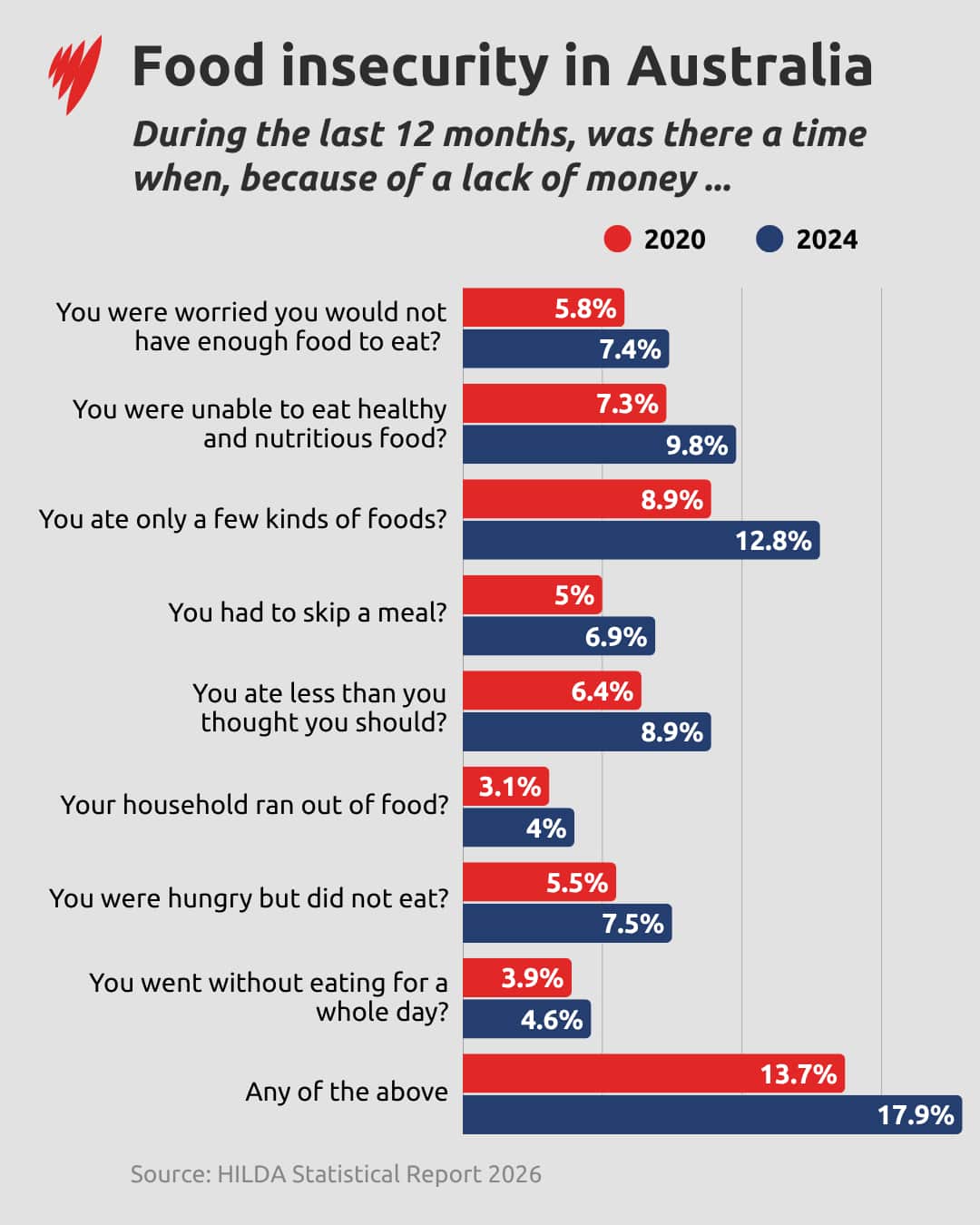
Single-parent families, First Nations people, those with a disability or poor health, and smokers were all at greater risk.
"Food insecurity is one of the most vital measures we have for disadvantage, because it shows, in practical terms, just how many people are struggling to access one of the essentials of life," Wilkins said.
It's also proving hard to shake — half of those facing food insecurity in 2020 were still facing it four years later.
Most commonly, that translated to being unable to afford healthy food, being limited to certain foods, or eating less than they felt they should.
Half of 18 to 29-year-olds are still living at home
The rite of passage of moving out of your parents' house in your 20s may soon become a thing of the past.
Back in 2001, 39 per cent of 18 to 29 year olds lived with their parents.
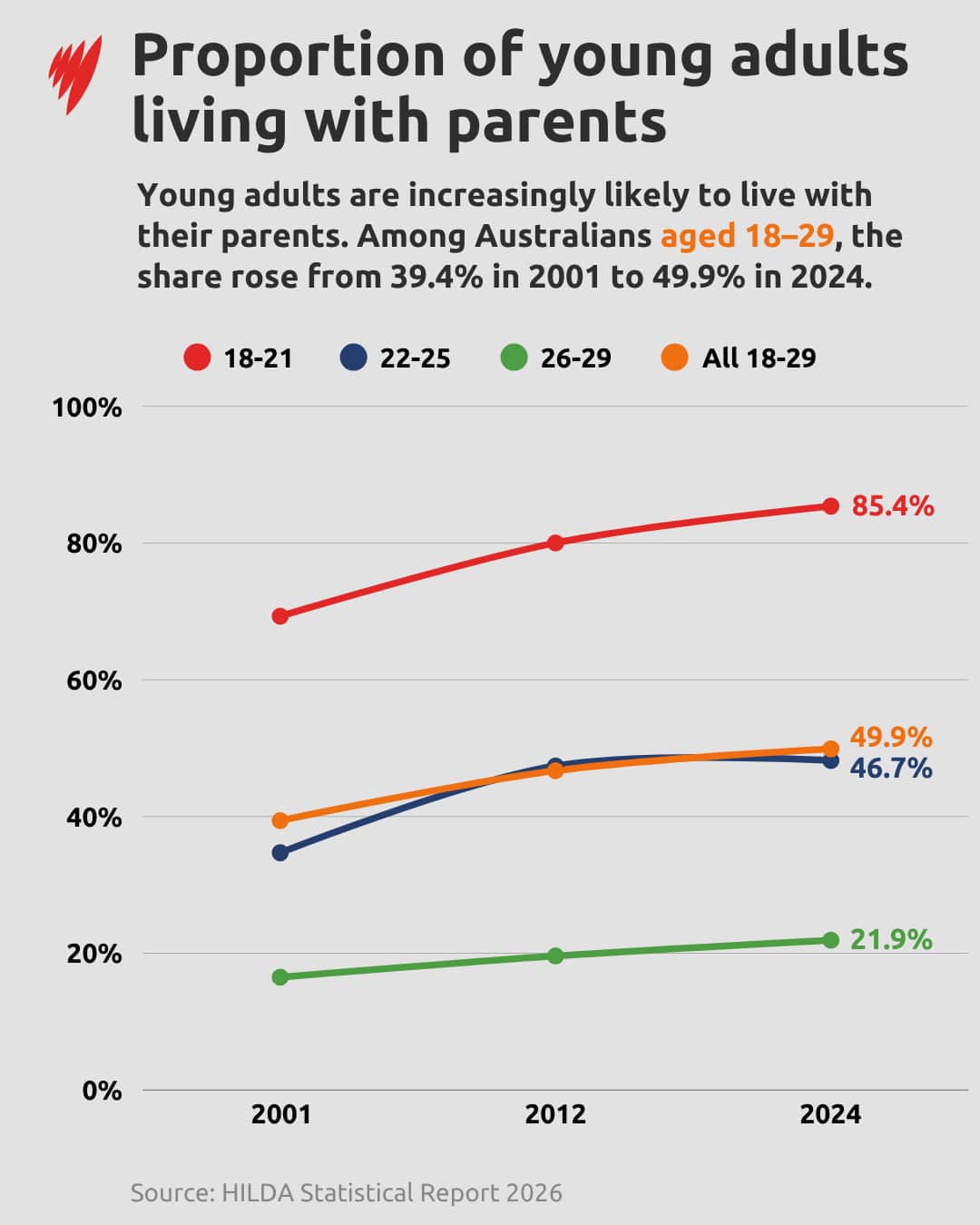
By 2024, after a steady rise over 20 years, that had climbed to roughly half.
A mixed bag of pressures is to blame — but it's not all bad.
"On the negative side, we've had the issue of the rising cost of housing as being a barrier to young people establishing their own household, and also young people taking longer to get into a career track full-time employment," he said.
"On the positive side, one of the drivers is that it's related to the growth in educational attainment — more of us than ever are going on to university," he said, adding that people are also generally hitting adult milestones like marriage and kids later than previous generations.
More fatigue and financial stress
Housing stress hit 23 per cent of private renters and a similar percentage of social housing tenants, while 9.6 per cent of mortgage holders were affected — the highest since 2017.
Across capital cities, 36 per cent of renters and 30 per cent of mortgage holders were spending over 30 per cent of their disposable income on housing, the standard metric for housing stress.
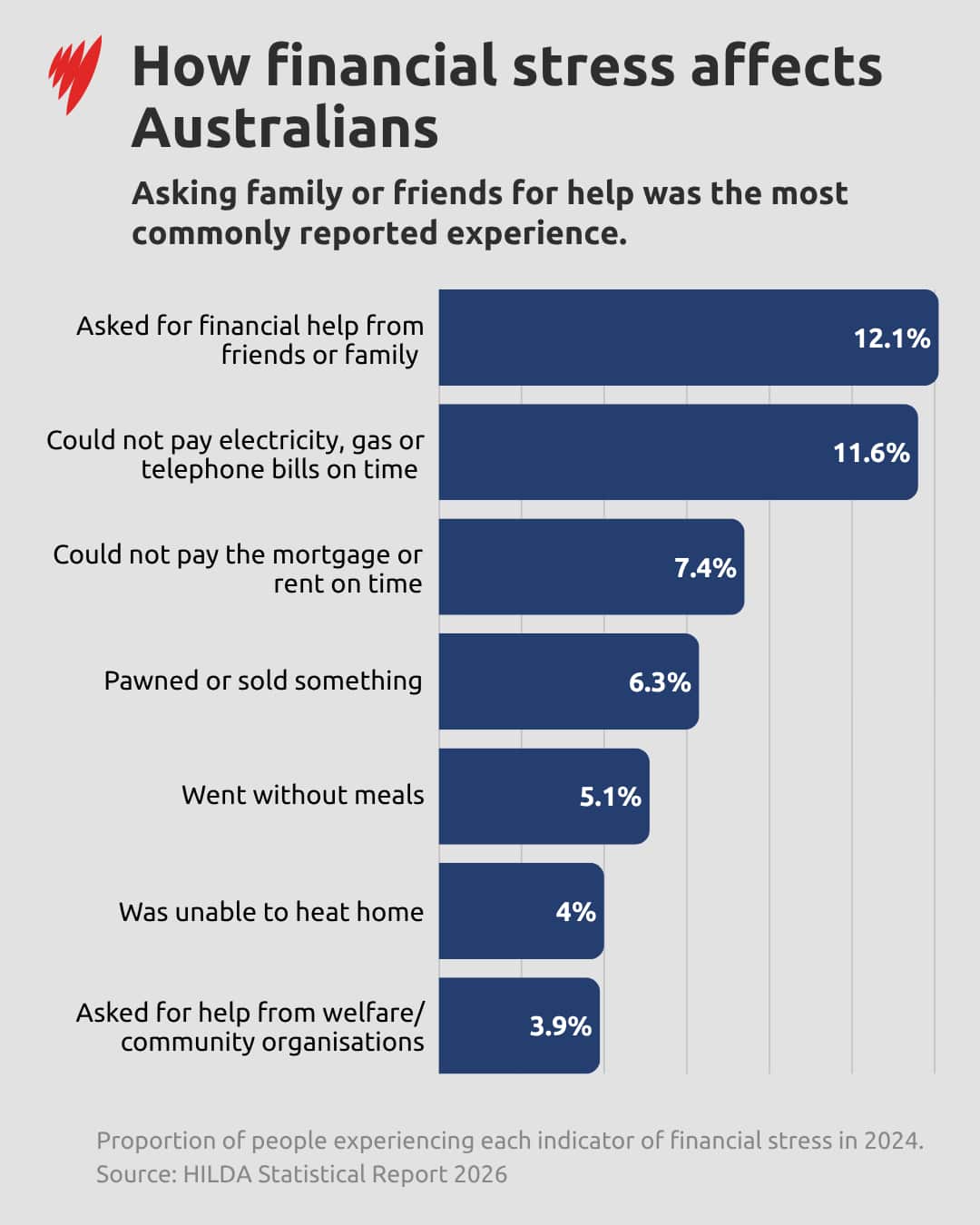
Wilkins said that despite employment participation reaching a record high and unemployment levels remaining low, wages still haven't kept up.
"Incomes are not keeping pace with not just rising prices, but also rising interest rates as well … and more recently, we've had the increases in fuel prices too," he said.
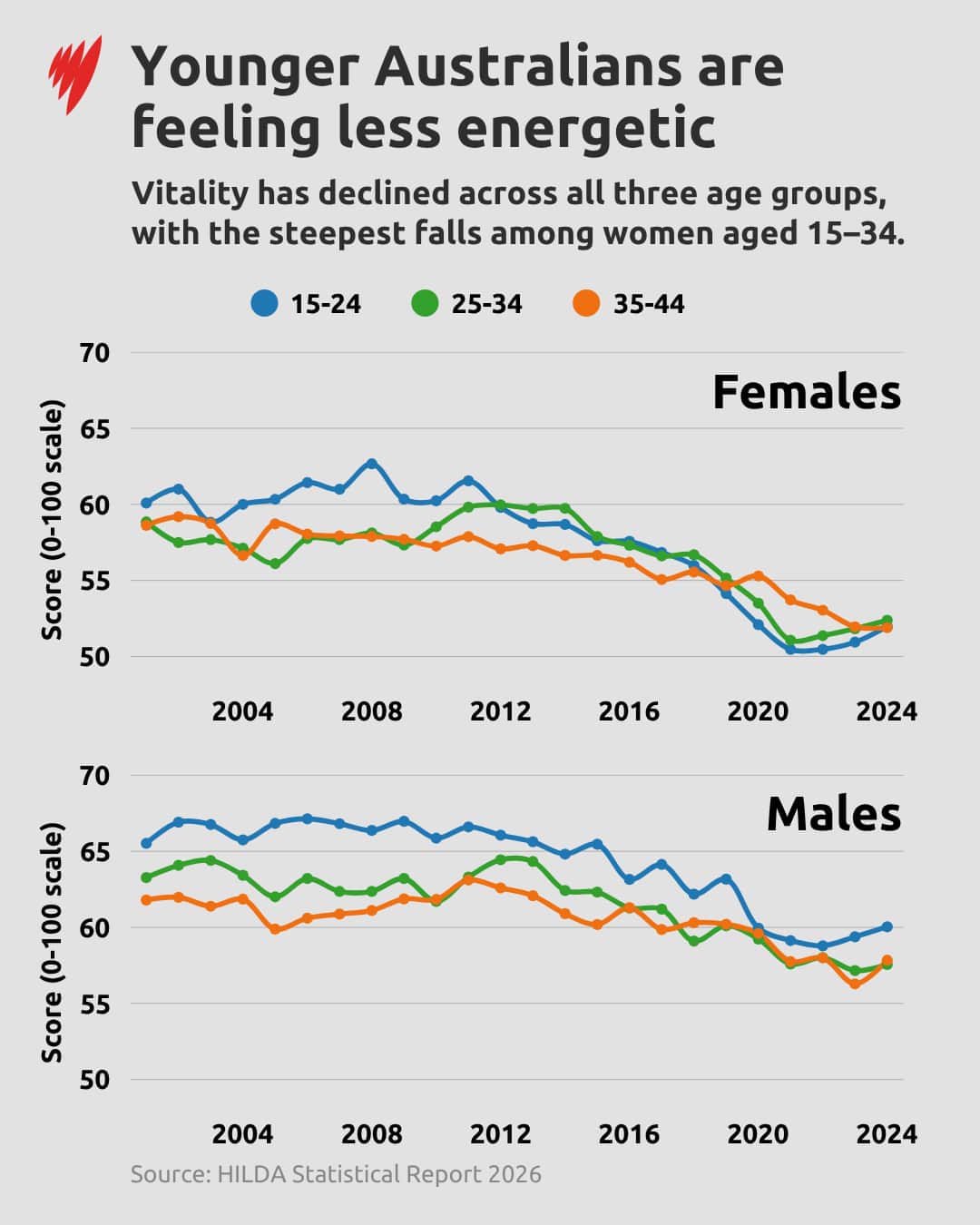
That pressure shows up in wellbeing data too, with Australians reporting less energy and more fatigue than a decade ago.
Mental health also declined among younger Australians, particularly young women, with those aged 25-34 recording a rise in psychological distress that predates the COVID-19 pandemic.
Still, Wilkins said it isn't all doom and gloom in Australia.
"There is quite a lot going right in the Australian community and in Australian society generally," he said.
"Older people's health is better than it's ever been. People are broadly satisfied with their relationships ... by international standards, we have quite a high living standard."
"So on a lot of fronts, there is a positive story to tell about Australian society, but there's also a lot of room for improvement as well."
For the latest from SBS News, download our app and subscribe to our newsletter.







