
WARNING: Aboriginal and Torres Strait Islander readers are advised that this story includes the names and images of Indigenous persons who have passed away.
In December 2025, Australia became the first country to legislate a social media ban for children under the age of 16.
While the jury is still out on its effectiveness, the laws introduced world-first penalties for social media giants that are caught breaking the rules.
Now, a range of countries — including Britain, France and Malaysia — look set to follow suit, something that Australian policymakers have taken as a point of pride.
In late June, the prime minister's office put out a statement saying Australia had "started a global movement". Anthony Albanese himself said the nation was "leading the world".
News that makes sense
Your trusted source for staying up-to-date with the world around you. Get free daily news updates and analysis, straight to your inbox.
It's not the first time Australia has led the charge on ambitious legislation and inventions.
Lucie Shawcross — who has researched Australian ingenuity and inventiveness at the National Archives of Australia (NAA) — believes "there are just so many incredible [Australian] inventions out there that have made an impact globally".
"Spray-on skin is an Australian invention, the cochlear implant, WiFi," the exhibitions curator told SBS News. "There are some really profound inventions that have impacted upon all of us."
Other distinctly Australian inventions that have seen mass uptake include the dual flush toilet, Hills Hoist, the baby capsule, Aerogard and cask wine (also known as goon), according to the NAA.
Tobacco marketing reform
In 2012, Australia took the radical step of removing all branding from cigarette packaging, replacing it instead with plain packaging, public health warnings and confronting images of smoking-related illnesses.
The policy, introduced under Julia Gillard's Labor government, was designed to make smoking less "cool" — or, as Gillard herself wrote in The Guardian in 2013, "kill the glamour and substitute it with the facts: smoking equals death".
The move was widely opposed by cigarette companies who unsuccessfully sued the Australian government over the changes.
By 2016, plain packaging was included in guidelines to the World Health Organisation Framework Convention on Tobacco Control.
From 2017, other countries began to follow.
Now France, the UK, New Zealand, Norway, Ireland, Thailand, Uruguay, Saudi Arabia, Israel, Slovenia, Türkiye, Canada, Singapore, Belgium, the Netherlands and Georgia have all adopted similar policies.
Seatbelts and safe crossings
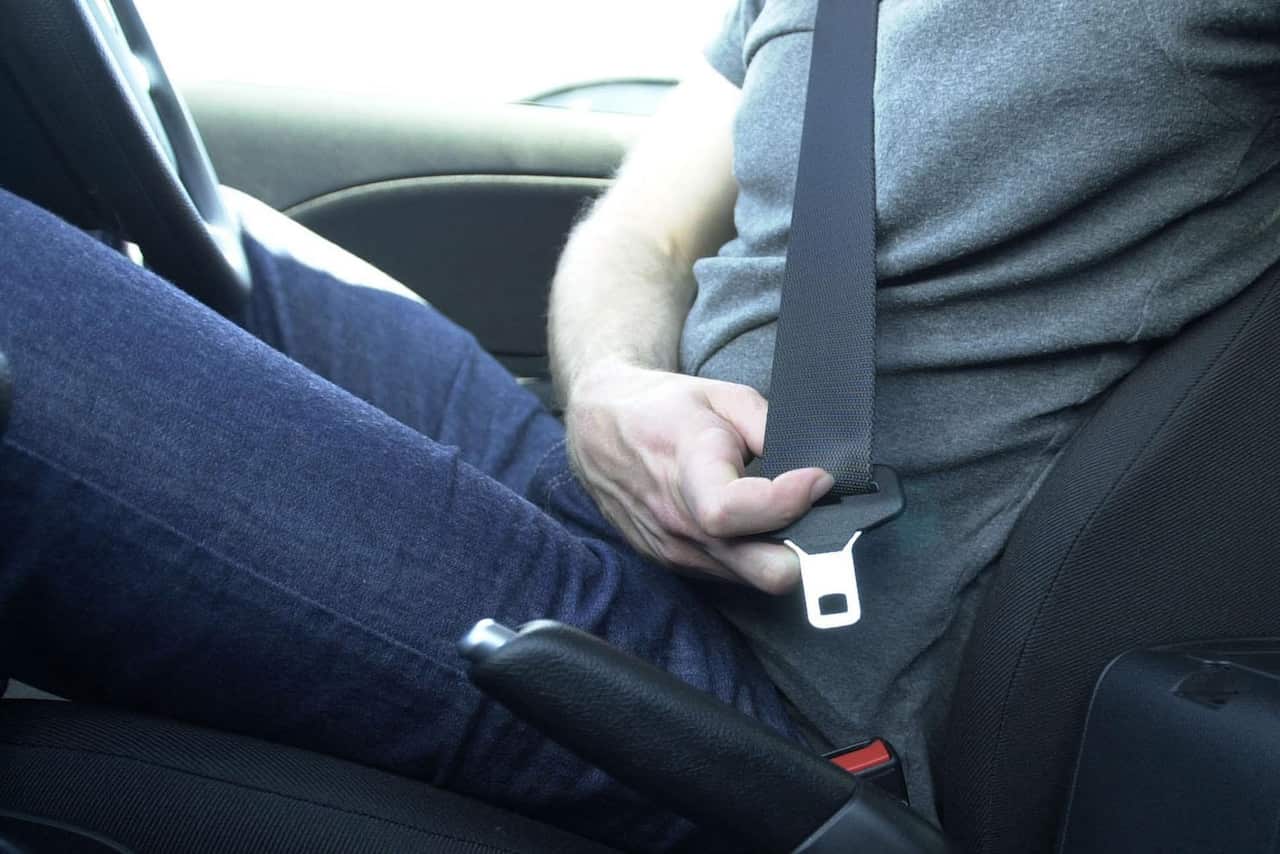
Laws requiring motorists to use seatbelts are almost taken as natural now, but that wasn't always the case — Victoria became the first jurisdiction in the world to make seat belts compulsory in 1970.
The new law followed a devastating year in which 3,798 people lost their lives on Australian roads. Compare that to the nation's road toll in 2025, when 1,314 people died on Australian roads, despite the country's population more than doubling in the intervening period.
By 1972, every Australian state and territory had locked in, and in 1976, Canada and Switzerland introduced their own seatbelt laws.
The UK didn't mandate their use until 1983, and New York became the first US state to legislate for their use in 1984.
Another invention that's likely led to fewer deaths on Australian roads is the PB/5 audio tactile pedestrian crossing button, which originated in Australia in 1984.
It's since reshaped how people move through cities and suburbs in countries including Ireland, New Zealand, Singapore and the US.
Australian ingenuity
Australian inventions and policies are many and varied, but often responsive to environmental conditions, Shawcross said.
"Responding to the environment has been really important ... looking at drought, large distances, car travel of course."
She also acknowledged the impact of immigration and multiculturalism on Australian innovation. One of Shawcross's favourite inventors is Yasukichi Murakami, who migrated to Australia from Japan in 1987 and went on to invent diving equipment to improve pearl divers' safety.
She also said the contributions and creativity of Aboriginal and Torres Strait Islander people were not always captured in official records.
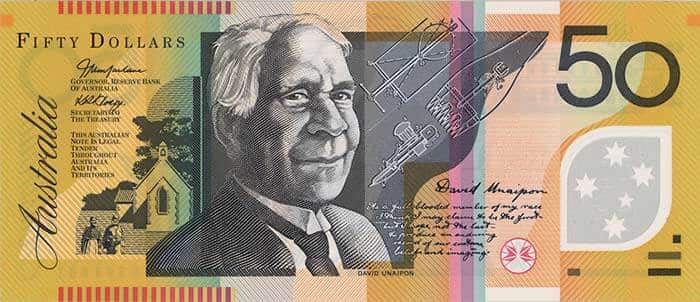
Ngarrindjeri man David Ngunaitponi (Unaipon) is on Australia's $50 note, but during his lifetime did not receive credit or financial reward for many of his inventions.
He developed plans for a flying machine which used spinning blades, akin to the modern-day helicopter and invented a modified handpiece for sheep shearing.
Unaipon took out provisional patents for 19 inventions, none of which he could afford to take full patents on.
"It does take education and money sometimes to work your way through that system of register, design registrations, patents and that kind of thing," Shawcross said.
Privacy at the ballot box
Prior to 1855 it was also common for voting in Western democracies to happen in public: voters would verbally express their vote, use visibly identifiable 'tickets' or write their names on their ballots.
These systems made it very easy for voters to be intimidated into voting for certain candidates, or punished for their choices.
The first jurisdictions to challenge this were the newly minted Tasmanian, South Australian and Victorian governments of colonial Australia.
In 1856 these nascent governments legislated for 'secret ballots,' giving way to what became known as the 'Australian ballot', in which a voter selects the name of the person they want to vote for from a list, without identifying themselves in the process.
Other countries eventually followed: Sweden in 1866, Germany in 1867, and Britain in 1872.
Massachusetts was the first US state to adopt it in 1889. South Carolina was the last in 1950.
For the latest from SBS News, download our app and subscribe to our newsletter.







