This audio is voiced by AI and may occasionally mispronounce words.
Share your feedback and help us improve this feature. Read more about how we use AI at SBS here.
This article contains references to sexual assault and domestic violence.
If history has handed down one lesson, it's that royalty is no stranger to scandal, says Cindy McCreery, an associate professor of history at the University of Sydney.
McCreery, whose research focuses on monarchy and colonialism, tells SBS News almost no royal family has gone unscathed.
"I'm not sure that really any monarchy, that every member of every royal family, is completely seen as being trustworthy and doing good for the country," she says.
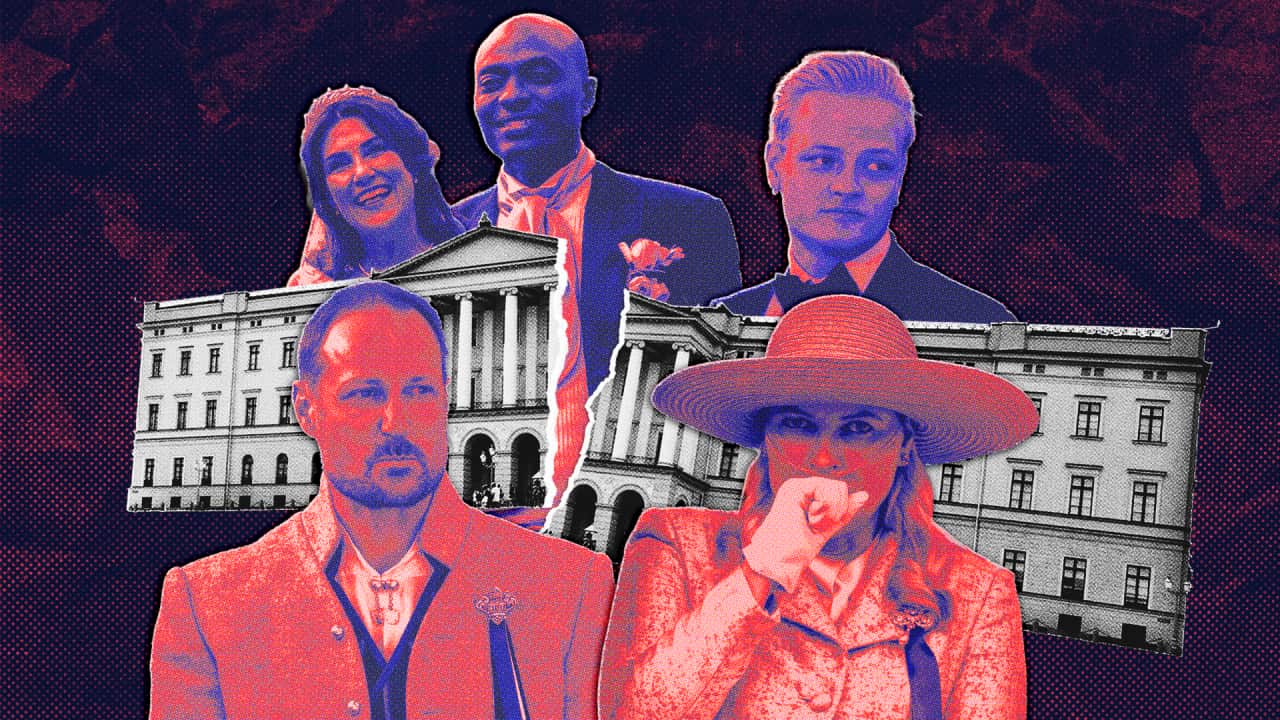
In Norway, a series of recent events involving some members of the royal family has put new focus on the House of Glücksburg, a European dynasty that has occupied the Norwegian throne since 1905.
News that makes sense
Your trusted source for staying up-to-date with the world around you. Get free daily news updates and analysis, straight to your inbox.
Royal experts say the developments have tested the way the Norwegian royal family navigates public scrutiny and maintains trust in the monarchy.
'Known as the son of Mummy'
At four years old, Marius Borg Høiby's picture was splashed across the pages of Norwegian newspapers, wearing a page boy suit as his mother, Mette-Marit, now 52, married Norway's Crown Prince Haakon, also 52. Mette-Marit, who became crown princess after her marriage in 2001, had conceived Høiby during a previous relationship.
Although he is not a member of the royal family and does not hold a royal title, he grew up in the public eye and became affectionately known as "Little Marius".
More than two decades later, Høiby's image returned to Norwegian headlines as he faced criminal proceedings.
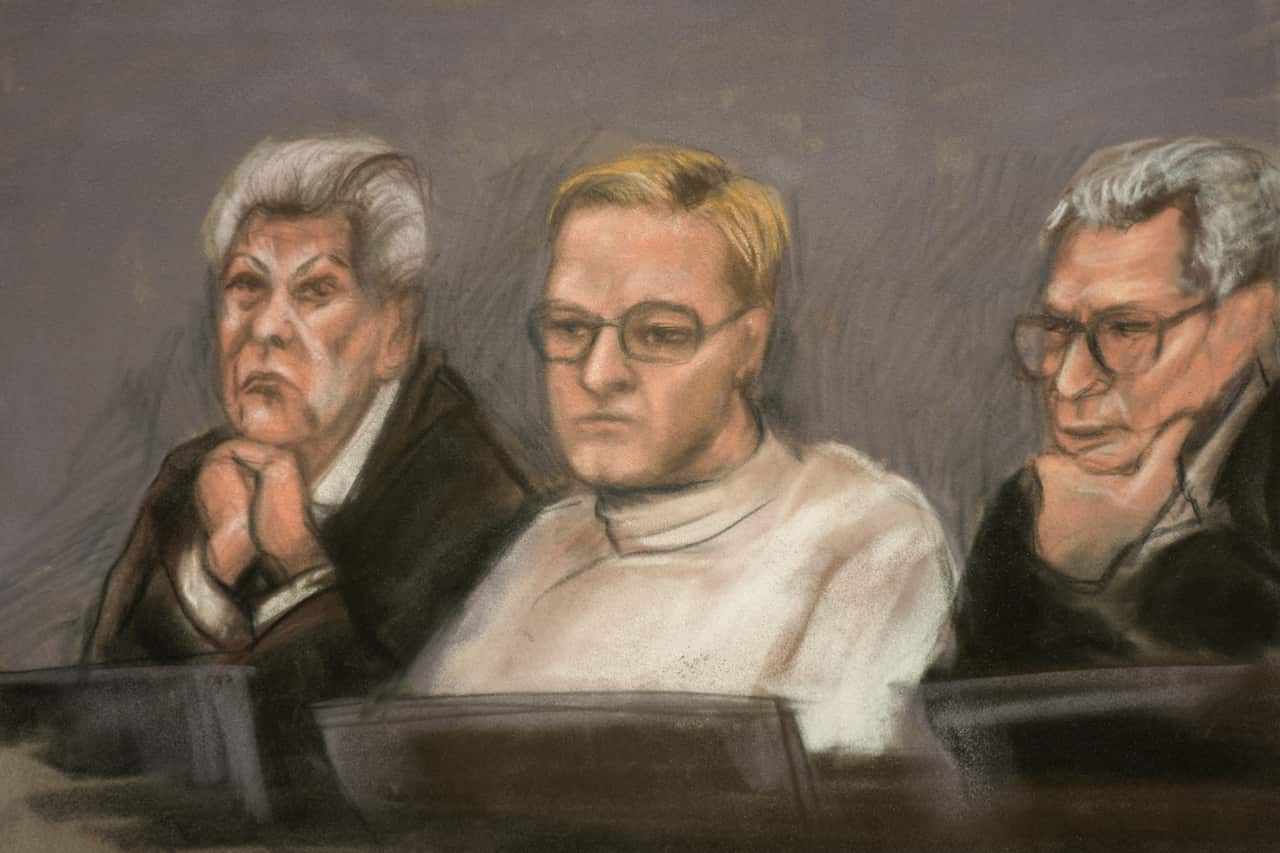
In June, the 29-year-old was sentenced to four years in prison after an Oslo district court found him guilty of 34 offences including serious bodily harm, abuse in close relationships, physical assault and violating a restraining order.
He was also convicted of raping two women, including an assault at Skaugum Estate, the private residence of Haakon and Mette-Marit, in 2018 and another in Oslo in 2014.
Prosecutors said the women were incapacitated or asleep during the sexual assaults.
Høiby was acquitted of two other counts of rape and two counts of violating a restraining order.
Høiby's lawyers have formally appealed the verdict, according to Norwegian news agency NTB. He will remain in detention until his appeal trial, which may not take place until next year.
Tove Taalesen, a royal expert at Nettavisen newspaper, told the Associated Press news agency that while Norwegians' opinions of the royal family vary, "In general, I think we still have sympathy for the crown prince and the crown princess."
As the eldest son of Mette-Marit — the woman is who is expected to become Norway's queen — Høiby has drawn the broader monarchy into the spotlight.
McCreery says it's "impossible" for the royal family to distance itself from the "shocking" case.
"After all, this is the eldest son of the crown princess. I think that, whether this is fair or not, people would imagine that perhaps it's due to his parents potentially shielding him from public attention."
In early February, during the second day of his trial, Høiby described himself as publicly "known as the son of Mummy", referring to Mette-Marit.
"Which means I have an extreme need for affirmation. A lot of sex, a lot of alcohol," he told the court in tears.
"Few can relate to the life I have led. A lot of parties, alcohol, some drugs."
Mette-Marit's emails with Jeffrey Epstein
Just days before Høiby's trial began, news also emerged about Mette-Marit and late sex offender Jeffrey Epstein.
On 30 January, the US justice department released more than three million pages of documents related to Epstein. Among the files were hundreds of email exchanges between Epstein and Mette-Marit dated between 2011 and 2014.
The emails showed the pair exchanged messages about Epstein's so-called "wife hunt" in Paris and discussed literature, including Russian-born American writer Vladimir Nabokov's controversial novel Lolita. The novel tells the story of a middle-aged professor who kidnaps and sexually abuses a 12-year-old girl.
In 2011, three years after Epstein pleaded guilty to a state charge of soliciting prostitution from a minor, Mette-Marit wrote: "Googled u after last email. Agree didn't look too good."
She ended the message with a smiley face.
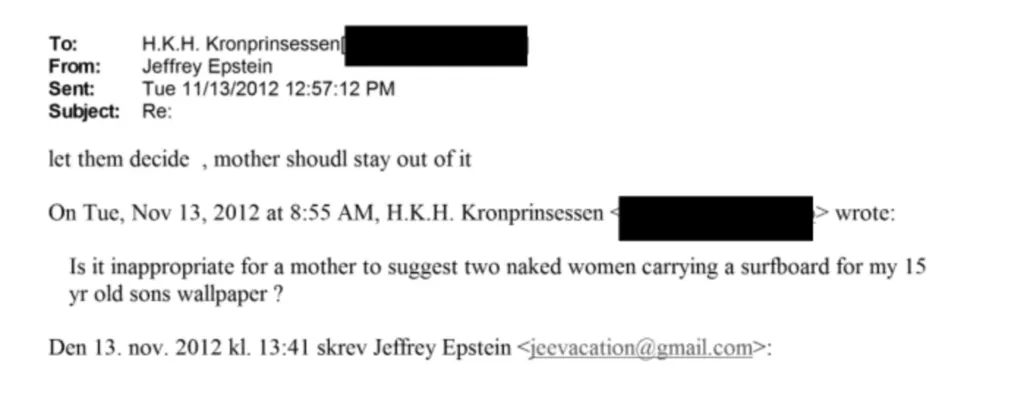
The following year, she asked Epstein: "Is it inappropriate for a mother to suggest two naked women carrying a surfboard for my 15 yr old son's wallpaper?"
According to the emails, Mette-Marit also spent four days at Epstein's Palm Beach house in Florida in 2013.
While her appearance in the Epstein files has drawn scrutiny, it does not imply wrongdoing. Mette-Marit has said she "didn't know" Epstein was a "sex offender or predator".
After seven weeks of silence following the release of the files, Mette-Marit sat down with Norway's public broadcaster NRK for a 20-minute interview, for which questions were reportedly provided in advance.
"It is incredibly important for me to take responsibility for not checking his background more carefully … for being so manipulated and deceived as I was," she said in the interview.
Ketil Raknes, an associate professor in political communication and head of department at the Kristiania University of Applied Sciences in Oslo, says the timing of these developments created what he describes as a "perfect crisis for the royal family".
"They had two crises at the same time, and they had a lot of critique for the way they handled the Epstein files," Raknes tells the Reuters news agency.
Princess Märtha Louise steps back from royal duties
In 2022, Mette-Marit's sister-in-law, Princess Märtha Louise announced she would step back from official royal duties to focus on her own projects and business interests.
Louise is the daughter of King Harald V and Queen Sonja. She is also Haakon's older sister.
Her decision came after she became engaged to Durek Verrett, an American self-described spiritual guide. The couple married in 2024.
They later featured in a Netflix documentary titled Rebel Royals: An Unlikely Love Story and are set to star in a new six-part reality TV series called Alternative Norway.
McCreery says the way royal families respond to public criticism can influence how they are perceived.
"For most monarchies, their sort of business-as-usual approach – nothing to see here, downplaying, ignoring the facts – actually works out worse in the end. What it does is erode the public's trust," she says.
But public reaction to royal controversies can change over time, she explains. For instance, in the case of Norway's crown princess, the public could have a "relatively short-term memory".
A royal family under pressure — and public support
On 5 June, Norway's Royal Court released a statement that Mette-Marit had been placed on a lung transplant waiting list and would undergo surgery when a suitable donor became available.
The palace said the crown princess who was diagnosed with pulmonary fibrosis in 2018 would not receive preferential treatment on the waiting list.
Following the announcement, Norwegian media reported an increase in organ donor registrations. In the weeks that followed, around 12,000 people had registered and in less than a fortnight, Mette-Marit had undergone successful transplant surgery.
Professor Are Holm, head of respiratory medicine at Oslo University, says "it's all about getting the right organ to the right person".
"Many factors have to align to increase the chances of success," he tells Reuters.
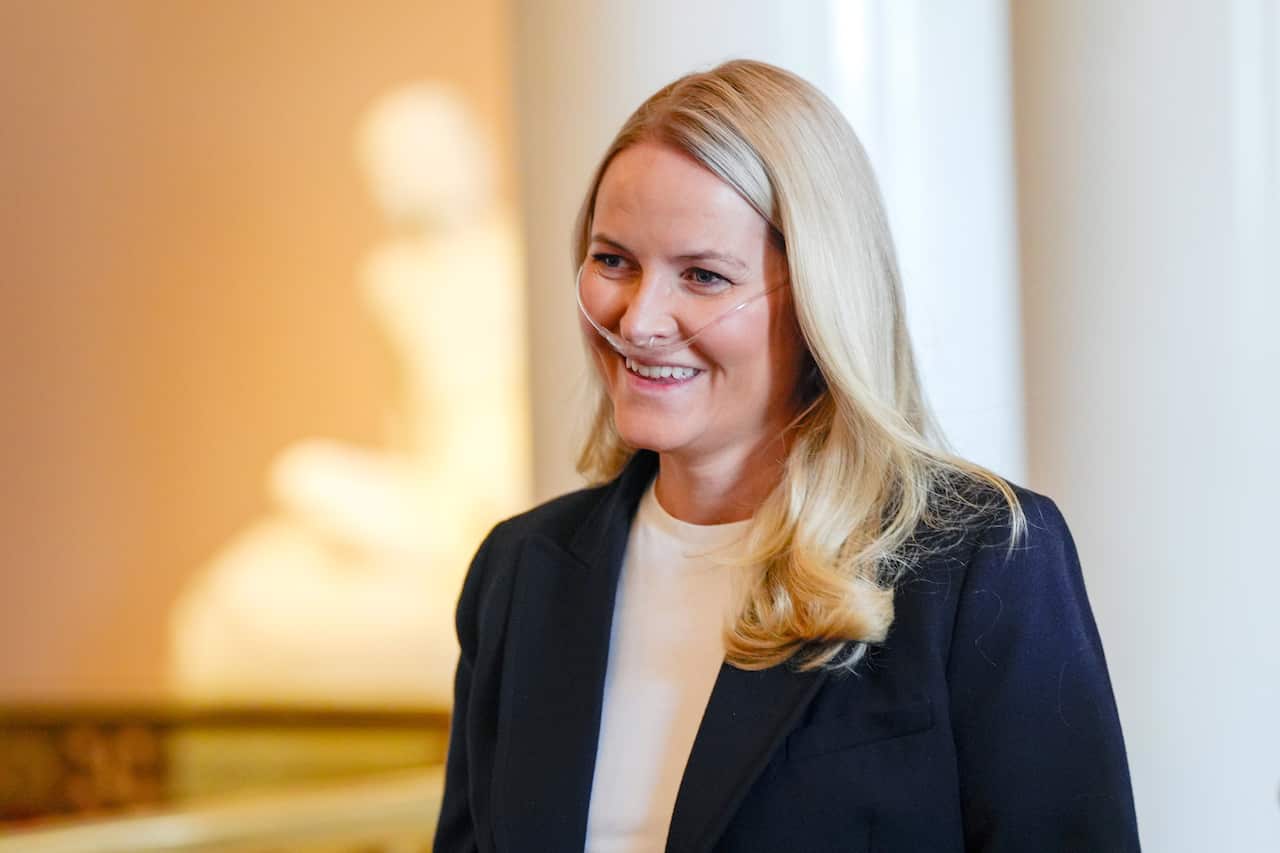
Some corners of the internet have questioned the timing and public response to the announcement.
Historian McCreery says royal figures can hold a unique place in public life because of their symbolic role.
"There is, I think, something very powerful about members of royal families as symbols … they're in a sense, extended family," she says.
"We saw similar outpouring of concern when the [British] King [Charles] and also Princess Catherine separately revealed their cancer diagnosis in the UK. It led to a greater increase in people getting checked out themselves."
A Norstat survey conducted for NRK during Høiby's criminal trial in February found 60 per cent of Norwegians supported the monarchy as an institution, a 10-percentage point drop from January 2026. The survey also recorded an eight-percentage point increase in support for replacing the monarchy with a new system of government.
Despite that recorded shift in public opinion, Norway's parliament rejected a proposed constitutional amendment the same month to establish a republic, with just 26 politicians voting in favour of change.
The future of Norway’s monarchy
Norway's current royal family is relatively young compared to many other European monarchies.
While the Norwegian monarchy dates back to the 9th century, the country's modern constitutional monarchy was established in 1905, when the country separated from its union with Sweden and elected Prince Carl of Denmark as its king. He became known as King Haakon VII.
During World War Two, Haakon VII became a symbol of Norwegian resistance after refusing to cooperate with Nazi Germany. Building on that legacy, his son King Olav V was later dubbed "The People's King".
King Harald V, Norway's current monarch has also been a prominent figure in the country's recent historical milestones, including through his support for equality and the LGBTIQ+ community.
Today, the 89-year-old king has reduced his official duties due to ongoing health and mobility issues, including a recent skin infection.
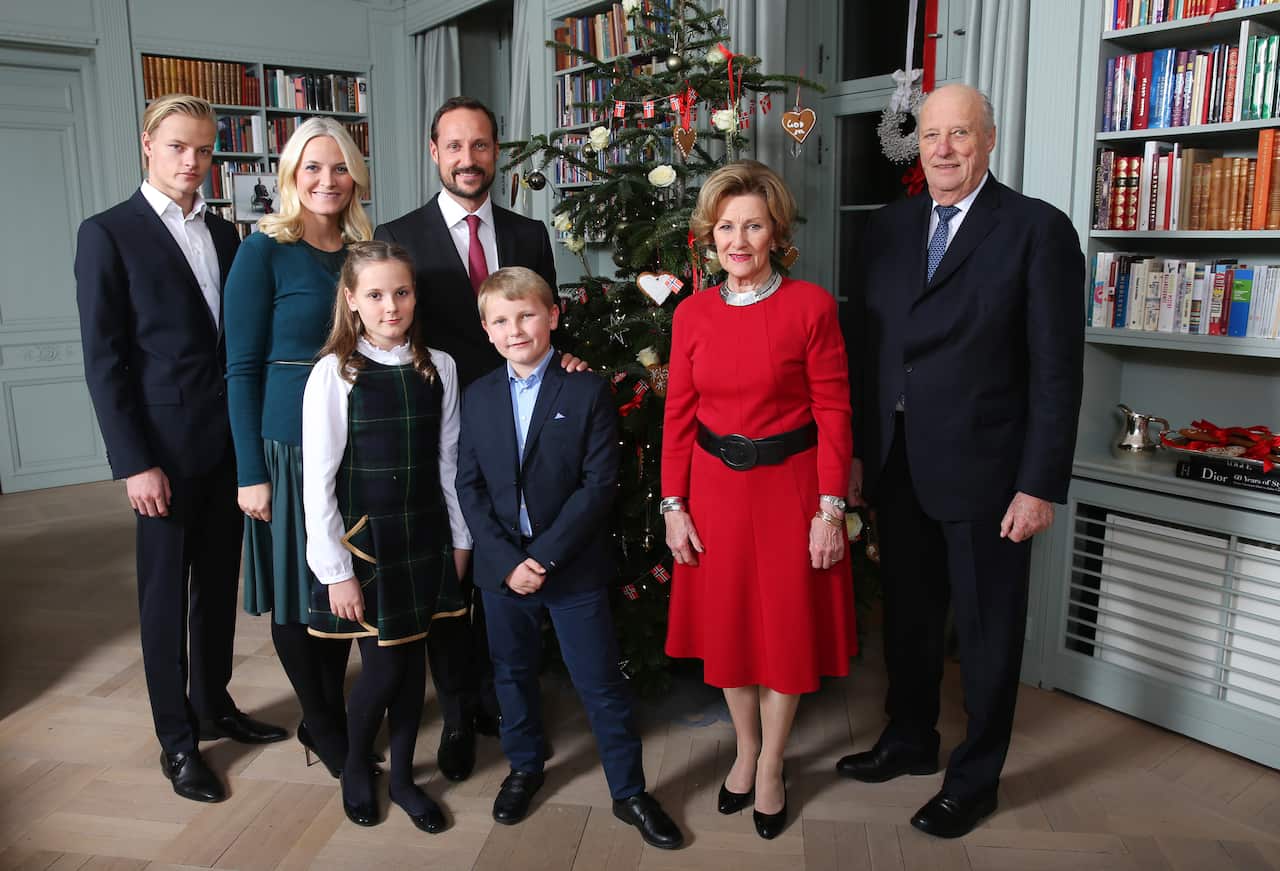
Haakon and Mette-Marit have two children: Princess Ingrid Alexandra, who is second in line to the throne after her father, and Prince Severre Magnus, who is third in line. Alexandra has previously studied at an Australian university.
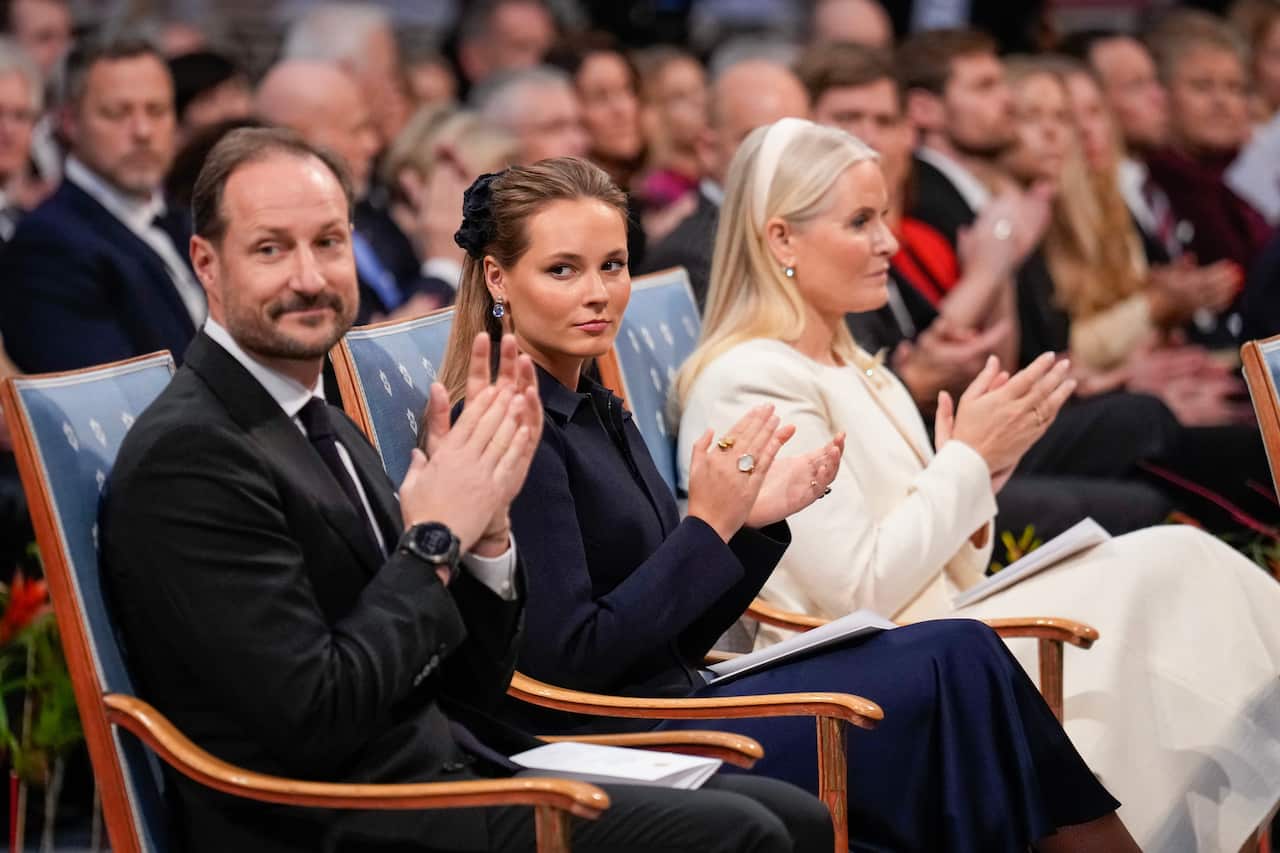
For McCreery, it's the question of succession — rather than public controversies — that represents the "single biggest" challenge facing modern monarchies.
"Many other royal families are facing similar biological challenges. When you've decided to focus on the immediate heir and the vertical line of success … you're also excluding other potential heirs.
"That, I think, is a challenge that many royal families are going to face, and there's not a clear answer to that [problem]."
If you or someone you know is impacted by sexual assault, call 1800RESPECT on 1800 737 732, text 0458 737 732, or visit 1800RESPECT.org.au. In an emergency, call 000.
Anyone seeking information or support relating to sexual abuse can contact Bravehearts on 1800 272 831 or Blue Knot on 1300 657 380.
If you or someone you know is impacted by family and domestic violence, call 1800RESPECT on 1800 737 732, text 0458 737 732, or visit 1800RESPECT.org.au. In an emergency, call 000.
The Men's Referral Service, operated by No to Violence, can be contacted on 1300 766 491.
For the latest from SBS News, download our app and subscribe to our newsletter.







