By Priyan Mendis, University of Melbourne
Last week the global landscape of mitigating and managing disasters changed forever. We heard the news of six Italian scientists charged for manslaughter and jailed for six years each for failing to predict the intensity of the 2009 quake that killed over 300 people. They were charged although they had mentioned the difficulty of predicting these extreme events. Some scientists, expressing outrage, said “We won't advise the state again”.
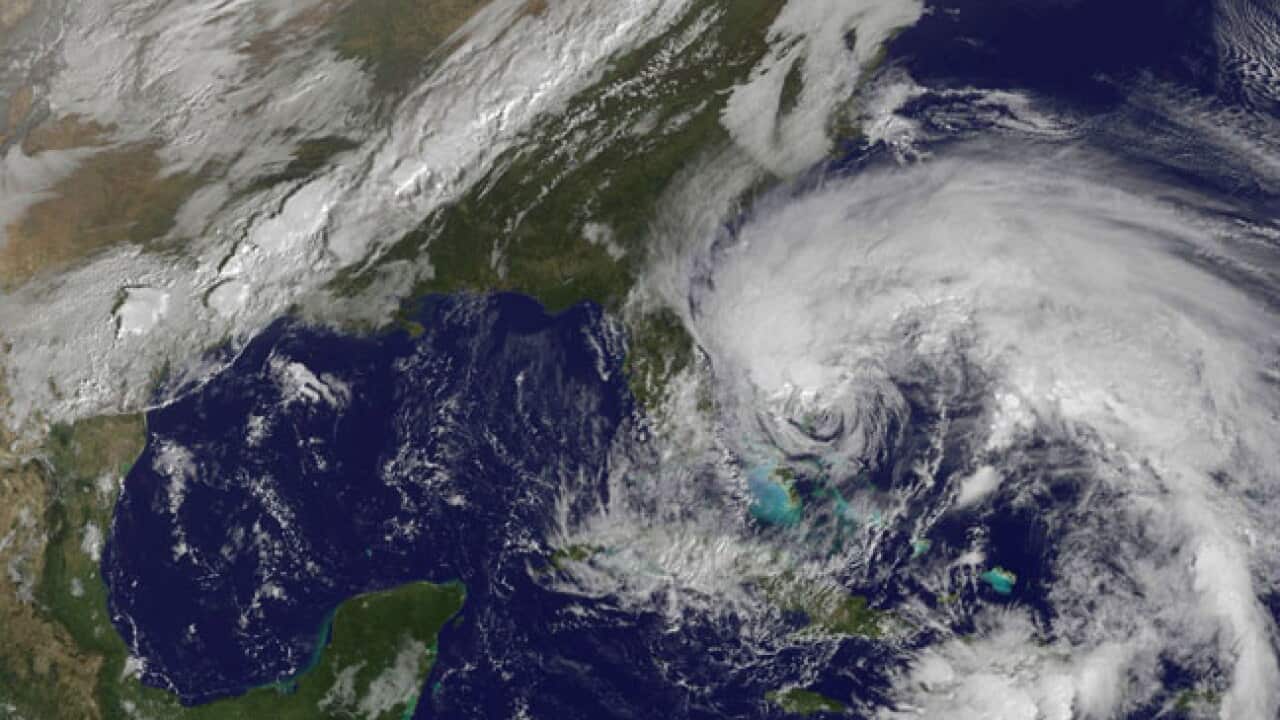
Sandy struck against the backdrop of these events. Although the wind speeds of Sandy (around 150km/h) were not high as Australian Cyclones Tracy in 1974 and Yasi in 2011, it covered a much wider area. The wind gauge in Tracy was destroyed at 217km/h, although the speeds may have reached closer to 300km/h.
Although the measuring equipment and computer prediction models are much better now, it is not easy to predict the exact path of these devastating cyclones or hurricanes. However a similar or even a less intensive storm could cripple Melbourne, Sydney and other major cities in Australia.
A few years back we did a study funded by the Department of Prime Minister and Cabinet to assess the damage in cities in CBD areas in Melbourne and Sydney due to some extreme events. We identified many vulnerabilities which are difficult to address. Our buildings and infrastructure are not designed for these events, therefore we can expect complete collapse or severe damage. We also found in another study that many of our buildings can go through progressive collapse even under less severe events.
News that makes sense
Your trusted source for staying up-to-date with the world around you. Get free daily news updates and analysis, straight to your inbox.

Preparation for these devastating events is not easy. Although buildings can be damaged or even collapse due to large winds, the main problem can come from damage to underground services due to flooding. We saw more than 7 million people affected by power outage in USA. Flooding of road tunnels and damage to storm water and sewage pipes as well as the water supply network could take days or months to recover.
A Queensland resident visiting New York mentioned that she is well prepared because she is used to Queensland cyclones and also she experienced Irene in New York last year. She highlighted the problem many in the southern part of Australia will have. We have not faced major storms and not prepared for them.
Social media may help to improve the communication as we discussed in a forum on New Generation of Disaster Management in Canberra last week. Former Attorney-General and Minister for Emergency Management, Mr Robert McClelland told the forum
While there have been some significant reforms and innovations, and the National Resilience Strategy represents an important change in attitude, there is still a long way to go. Under-resourcing will always be a problem for so long as we concentrate on post event assistance rather than pre-event prevention.
Emergency managers may say, “Don't stay behind! The best thing you can do to protect yourself and your family is by leaving the area if advised to do so”. There is no doubt this may be the best option, but as we saw in Sandy, these disasters affect a very large area and evacuation is not possible in some instances. As we saw in the bushfires in Victoria, congestion could be a major problem and evacuation strategies sometimes don't work. For those stuck in a storm, there are measures that can be taken: if you are in a high-rise building, take shelter in lower floors as winds become progressively stronger, and don't use elevators. Fire damage is also a major concern in these devastating events.
Although we have progressed a bit in managing these events, we have still not established proper planning guidelines. For example, in new buildings and other infrastructure designs in Melbourne and generally in Australia we still use the old wind speed and other design guidelines. We do not consider the possible extreme events.
New York didn't expect a severe storm like Sandy. We can't rule out the possibility of these catastrophic events in our major cities. Very limited research and development funding is available to come up with innovative methods to prevent loss of life. The extent of damage and how they spread and propagate is difficult to estimate accurately. However if properly supported and funded engineers and scientists, can come up with better predictions of these events and avoid what happened to scientists in Italy. One such study is our current work on flood propagation and effects on infrastructure.
Priyan Mendis had received limited funding for some relevant projects from Dept of Prime-Minister and Cabinet.








