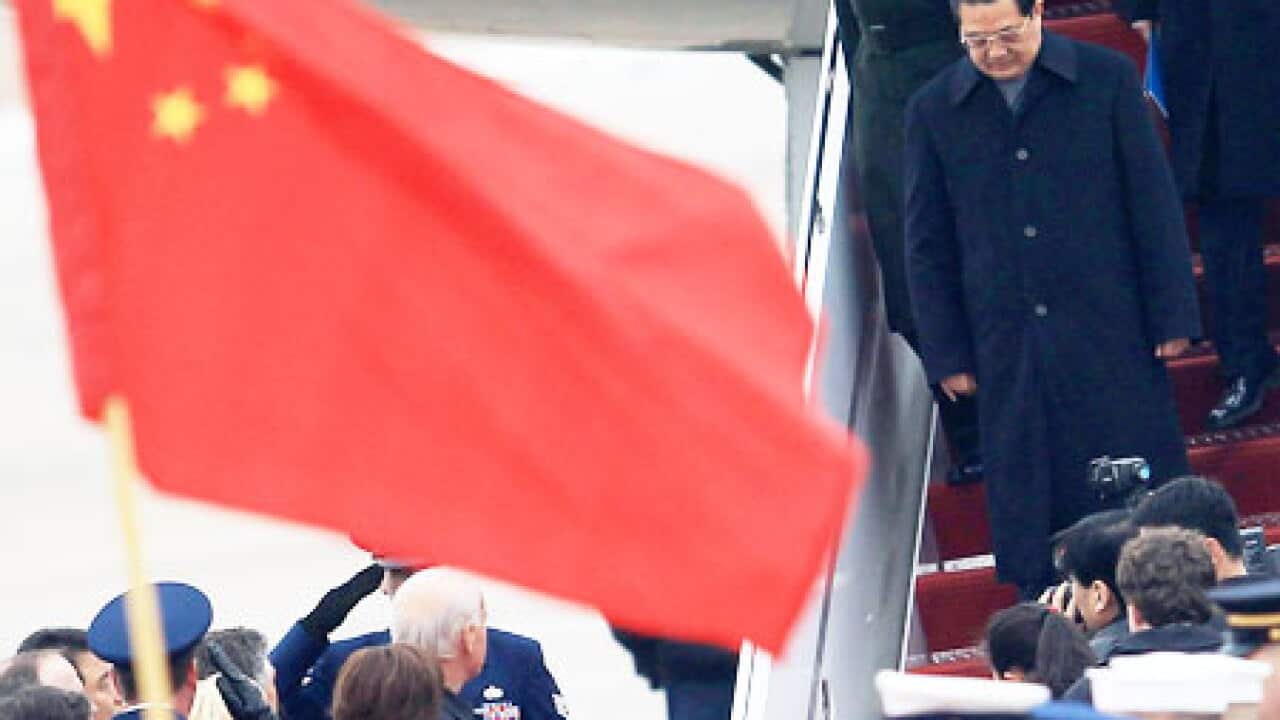
Chinese President Hu Jintao arrived in the United States on Tuesday for a four-day state visit peppered by U.S. complaints about Beijing's currency policies but sweetened by some $8.5 billion in business deals.
Treasury Secretary Timothy Geithner weighed in on the dispute over the level of the yuan hours before Hu flew in, while the White House urged China to take more steps to allow its currency to strengthen.
"I actually think it's helpful for China to understand this is a big issue for Americans, just like it's a big issue for all of China's trading partners," Geithner told National Public Radio.
Hu said earlier this week he would not accept U.S. arguments that the yuan was undervalued - an opening volley in a disagreement that is expected to dominate this week's trip.
Analysts are calling the visit the most important by a Chinese leader since Deng Xiaoping helped open bilateral ties 30 years ago, given China's growing military and diplomatic influence and its emergence as the world's second-largest economy after the United States.
News that makes sense
Your trusted source for staying up-to-date with the world around you. Get free daily news updates and analysis, straight to your inbox.
"The purpose of my visit is to enhance mutual trust, promote friendship, deepen cooperation and move forward the positive, cooperative and comprehensive China-U.S. relationship for the 21st century," Hu said in an arrival statement.
Tensions over trade and a Chinese surplus Washington puts at over $250 billion for 2010, will feature prominently in Wednesday's summit between Hu and President Barack Obama. Other thorny matters, from rebalancing the global economy to dealing with North Korea to the delicate issue of China's human rights practices, will round out the agenda.







