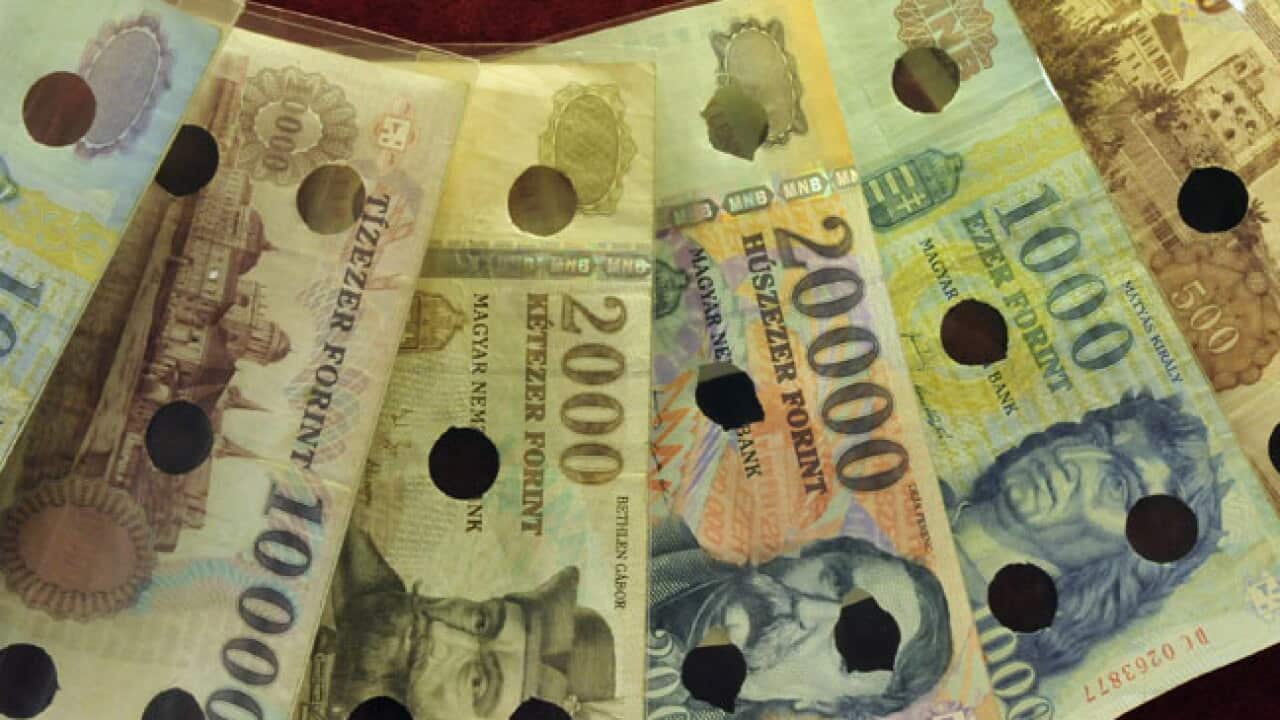
According to the central bank, Hungary's accumulated public debt stood at 82.6 per cent of gross domestic product (GDP), or 22.9 trillion forints ($A93.00 billion) at the end of September, up 76.7 per cent at end-June.
Half of the public debt is in foreign currencies, making the problem even worse as the forint has fallen sharply -- more than 20 per cent -- against the euro since October, analysts say.
News that makes sense
Your trusted source for staying up-to-date with the world around you. Get free daily news updates and analysis, straight to your inbox.
Hungary's centre-right government of Prime Minister Viktor Orban has been engaged in a "war against public debt" since taking office in May 2010.
By the effective nationalisation of some 11 billion euros ($A14.12 billion) in assets held by Hungary's private pension funds, the government had managed to improve the picture by end-June.
Orban has pledged to trim the debt to less than 70 per cent in 2012 and to the EU ceiling of 60 per cent by 2014.
"The statements of the central bank are not prepared on a professional basis and do not the least serve the interests of the country," commented a government spokeswoman.
Gabriella Selmeczi said "the government obtained serious results last year" in its policies.
Hungary was forced to seek a 15-20 billion euros credit line from the International Monetary Fund (IMF) and the European Union (EU) in November after it had difficulties borrowing on the bond market and its currency fell sharply.
However, EU and IMF officials quit preliminary talks in December amid uproar over the government's proposed reforms -- since adopted in parliament -- of the central bank which critics say undercut its independence.
Hungary's Minister without Portfolio Tamas Fellegi is due to meet IMF head Christine Lagarde on January 11 in Washington for informal talks on the country's request for aid, his office said Monday.
Hungary can ill-afford to anger its international partners, which bailed it out in 2008 to the tune of 20 billion euros at the height of the global financial crisis.
Hungary's debt is now ranked below investment grade at two of the three main credit rating agencies who have cited the changes made on the central bank and other government measures.







