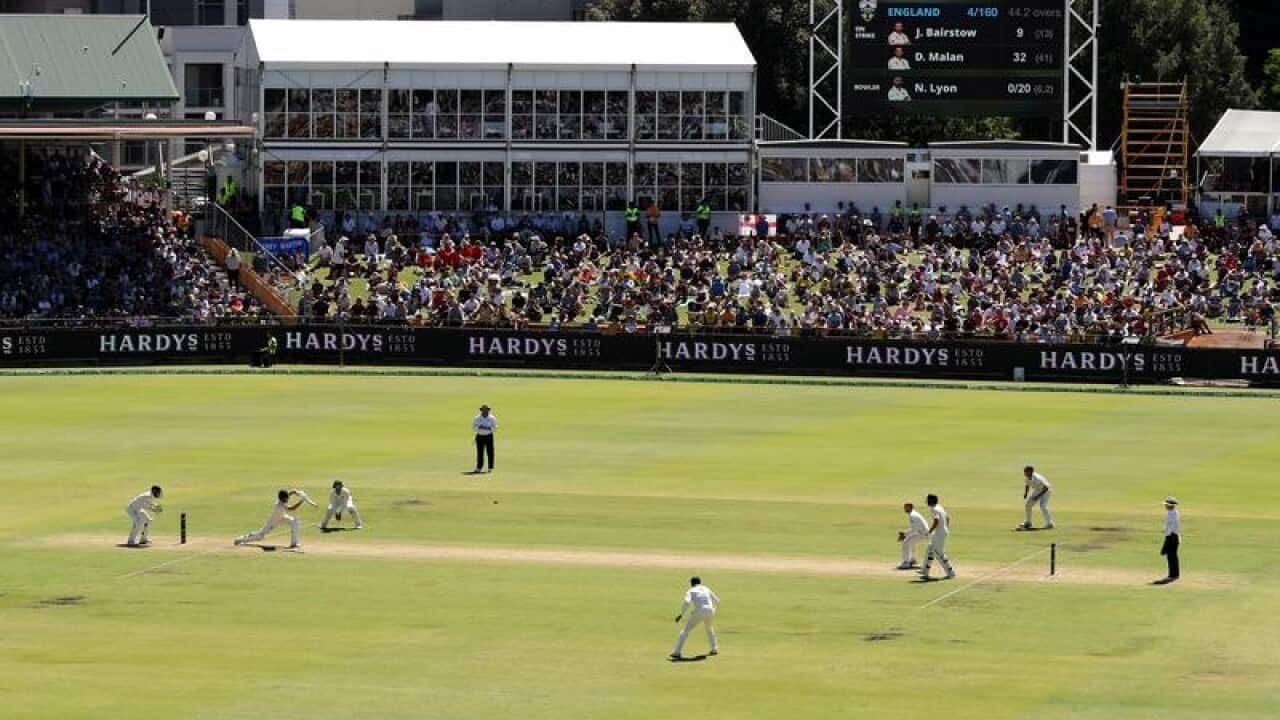
Recent rule changes mean the International Cricket Council has never been so well equipped to crack down on fixing, with the governing body boasting unprecedented power to seize, scrutinise and retrieve data from mobile phones.
The ICC's anti-corruption code was revised in September, empowering investigators to request players, coaches and administrators - at any level - hand over their mobiles and other devices if there are reasonable grounds.
Individuals have a right to refuse any request the ICC makes to download information from a phone. However, the governing body can respond with charges of non-co-operation and threaten bans.
The ICC's anti-corruption unit boasts some of the pieces of technology used by intelligence agencies, meaning it can restore and recover material on phones that has been deleted.
In days gone by, Test players might be approached by fixers or intermediaries after a net session, at a team hotel or even on the street.
News that makes sense
Your trusted source for staying up-to-date with the world around you. Get free daily news updates and analysis, straight to your inbox.
Now, messaging apps and social media have made it easier for those in fixing rackets to reach out to players and support staff.
The ICC noted on Thursday there was no evidence to support The Sun's claim the third Ashes Test had been corrupted or that players from either side had been in contact with alleged fixers.
However, there is no arguing the threat is real. Three international captains have recently reported approaches, while the ICC is running several active investigations.
The most susceptible players are those earning little money in low-profile competitions.
The ICC has often been dismissed as toothless when it comes to governance, including fixing, but the appointment of Alex Marshall as head of its anti-corruption unit has been welcomed by many involved in the sport.
Marshall, having spent almost 40 years with UK police before joining the ICC, is determined to take down the puppetmasters at the top of corruption networks.
Since starting in September, Marshall has worked hard to improve communication and information sharing between his group, national cricket boards plus national intelligence and police agencies. He met with Australian Federal Police representatives earlier this month.
Marshall's powers are limited compared with his previous vocation but he is well supported in countries such as Australia and England, where fixing has been criminalised and the national cricket boards have poured money into anti-corruption measures.
Pakistan cricketers Salman Butt, Mohammad Asif and Mohammad Amir were given prison sentences as well as ICC punishments in response to the News of the World's no-ball sting in 2010.







