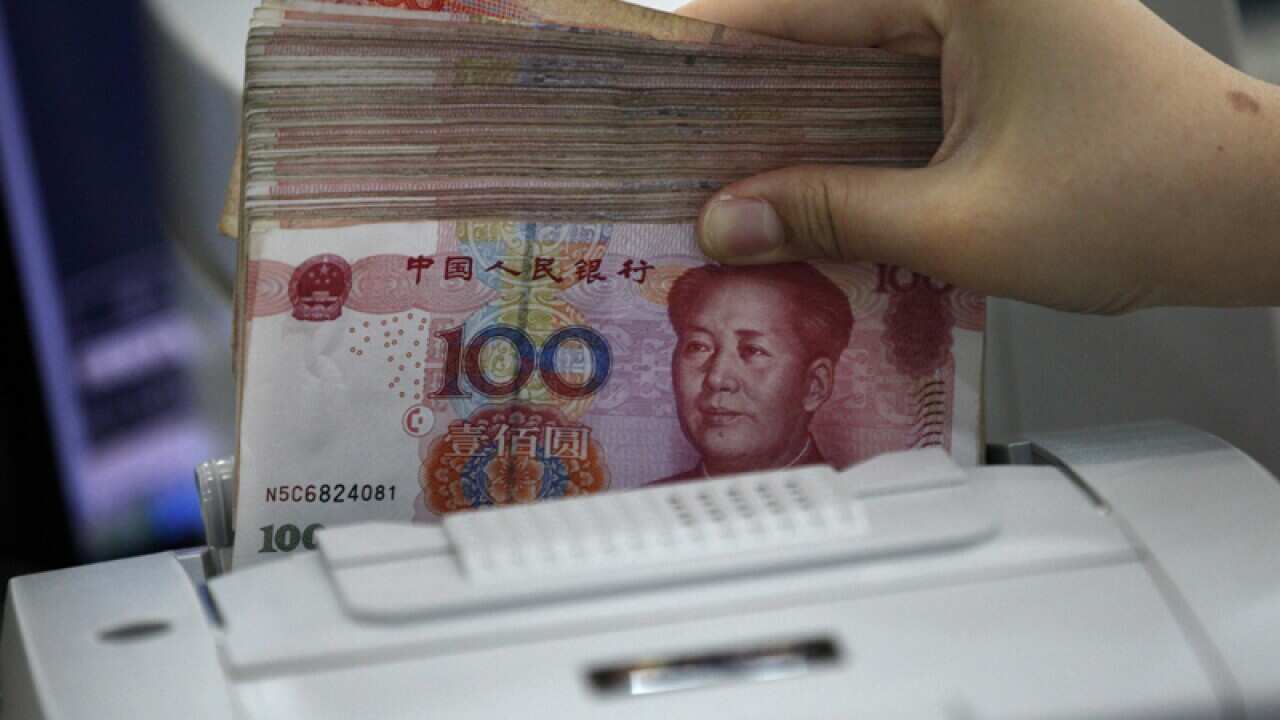
The International Monetary Fund has admitted China's yuan into its benchmark currency basket in a victory for Beijing's campaign for recognition as a global economic power.
The IMF's executive board agreed on Monday to add the yuan, also known as the renminbi, to its Special Drawing Rights (SDR) basket alongside the dollar, euro, pound sterling and yen, in a move earlier backed by IMF chief Christine Lagarde and in-house experts.
To meet the IMF's criteria, Beijing has undertaken a flurry of reforms in recent months, including better access for foreigners to Chinese currency markets, more frequent debt issuance and expanded yuan trading hours.
The currency will have a 10.92 per cent share, in line with expectations, after a review of the weightings formula for the SDR, which determines which currencies countries can receive as part of IMF loans.
The yuan's inclusion is a largely symbolic move, with few immediate implications for financial markets. But it is the first time an additional currency has been added to the SDR basket and the biggest change in its composition in 35 years.
News that makes sense
Your trusted source for staying up-to-date with the world around you. Get free daily news updates and analysis, straight to your inbox.
Last set in 2010, the basket is currently 41.9 per cent dollar, 37.4 per cent euro, 11.3 per cent sterling and 9.4 per cent yen. The yuan would not join until October 2016, allowing reserve managers time to prepare.
Under the new weightings, the euro's share will drop to 30.93 per cent. Sterling and yen will also have lower weights while the dollar remains about the same.
To be included in the SDR basket, the yuan had to meet the criteria to be "freely usable," or widely used to make international payments and widely traded in foreign exchange markets - a yardstick it missed at the last review in 2010.
The addition is likely to fuel demand for China's currency and for renminbi-denominated assets as central banks and foreign fund managers adjust their portfolios to reflect the yuan's new status.
Currency analysts estimate the IMF seal of approval could fuel demand worth more than $US500 billion ($A694.88 billion) in coming years and take the yuan's share of global reserve holdings to around 5 per cent, overtaking the Canadian and Australian dollars.







