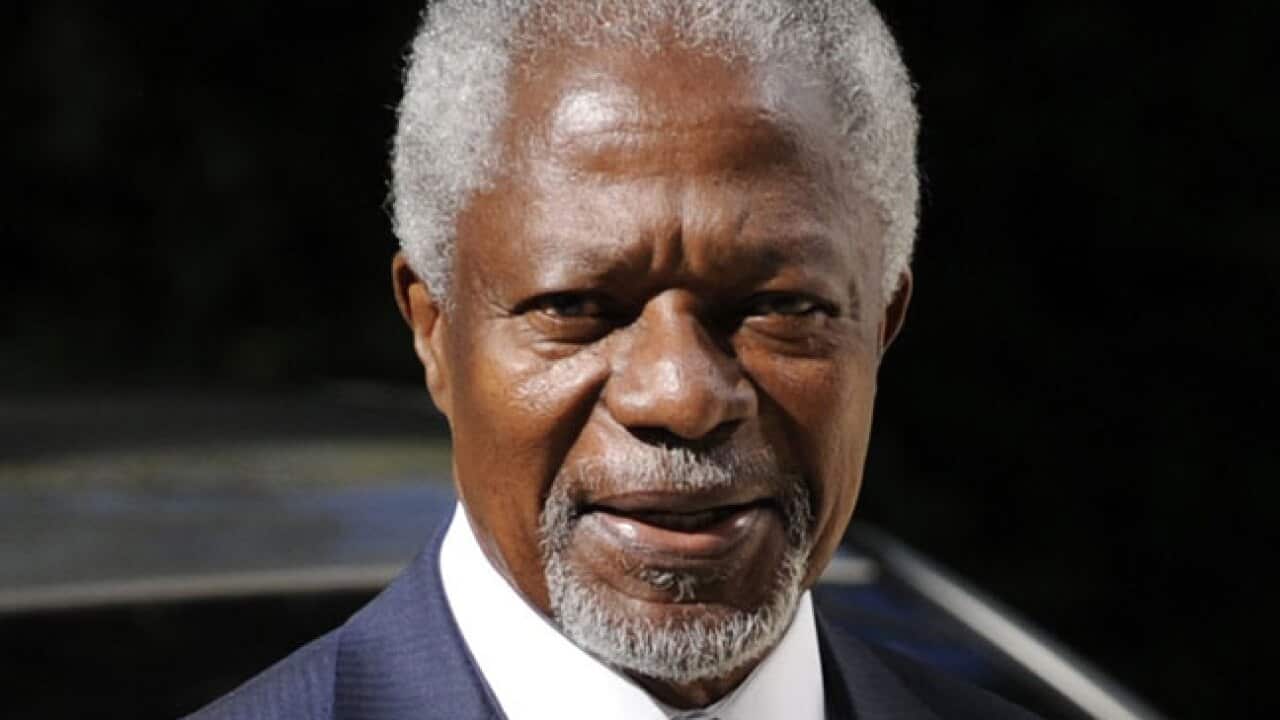
Annan, speaking at a news conference in Tehran on Wednesday, said: "If everyone respects, I think by six o'clock on Thursday the 12th ... we a should see a much improved situation on the ground."
He said the regime of Syrian President Bashar al-Assad has given "further clarifications" over how it would implement its side of the plan after it failed to observe a Tuesday deadline to withdraw its forces from urban areas.
"What they mean and want is an assurance that the other forces, the opposition forces, would also stop the fighting so that we could see cessation of all the violence," he said.
Annan said his team has "had positive answers from them" and that "governments with influence" had also been approached to ensure that all sides in the conflict respect the ceasefire.
He warned it would be "disastrous" if rebels fighting the Syrian regime were to be armed, as proposed by Saudi Arabia and Qatar.
News that makes sense
Your trusted source for staying up-to-date with the world around you. Get free daily news updates and analysis, straight to your inbox.
"I've always said the militarisation of the conflict will be disastrous," Annan told a news conference in Tehran during a visit to Iran, Syria's chief ally in the Middle East.
Annan's six-point plan called for the withdrawal of Syrian troops from populated centres on Tuesday, and then a complete cessation of combat in the following 48 hours.
That 48-hour period is to end at 6.00am Damascus time (1300 AEST) on Thursday. Annan arrived in Tehran late on Wednesday from Turkey for talks with Iranian Foreign Minister Ali Akbar Salehi.
Iran is Syria's principal ally in the Middle East and has given political and material support to Assad's regime. Iran said Assad should stay in power regardless of the course of the Syrian conflict.
"Iran supports the people's will in Syria for more freedom, but also believes that any change should solely be done within talks between the people and the current government," Salehi said after his talks with Annan.
"We oppose any foreign interference in this regard and any calls for power change, and that is our difference with some regional and Western countries," Salehi added.
He further said that Annan did not seek any change in the political formation of Syria and warned that calls for al-Assad's removal would lead to a "power vacuum" in Syria which would then have grave consequences.
"We are satisfied that there is no discussion within Annan's peace plan that the head of the Syrian government should be removed nor that they need a change of the Syrian government," Salehi said.
Iran has supported al-Assad's government since the outbreak of unrest last year, but denies Western claims that it supplied Syria with weapons to crack down on the opposition.
Turkey has called for Assad to step down to resolve the bloody uprising in Syria that has killed more than 9000 people since it started a year ago, according to a UN estimate.
Annan said at the press conference that his main concern was to stop the military conflict in Syria and provide humanitarian assistance to the people. "We need to find a solution to stop the killings in Syria and we need all international help for this solution and Iran can be part of this solution too," Annan said.







