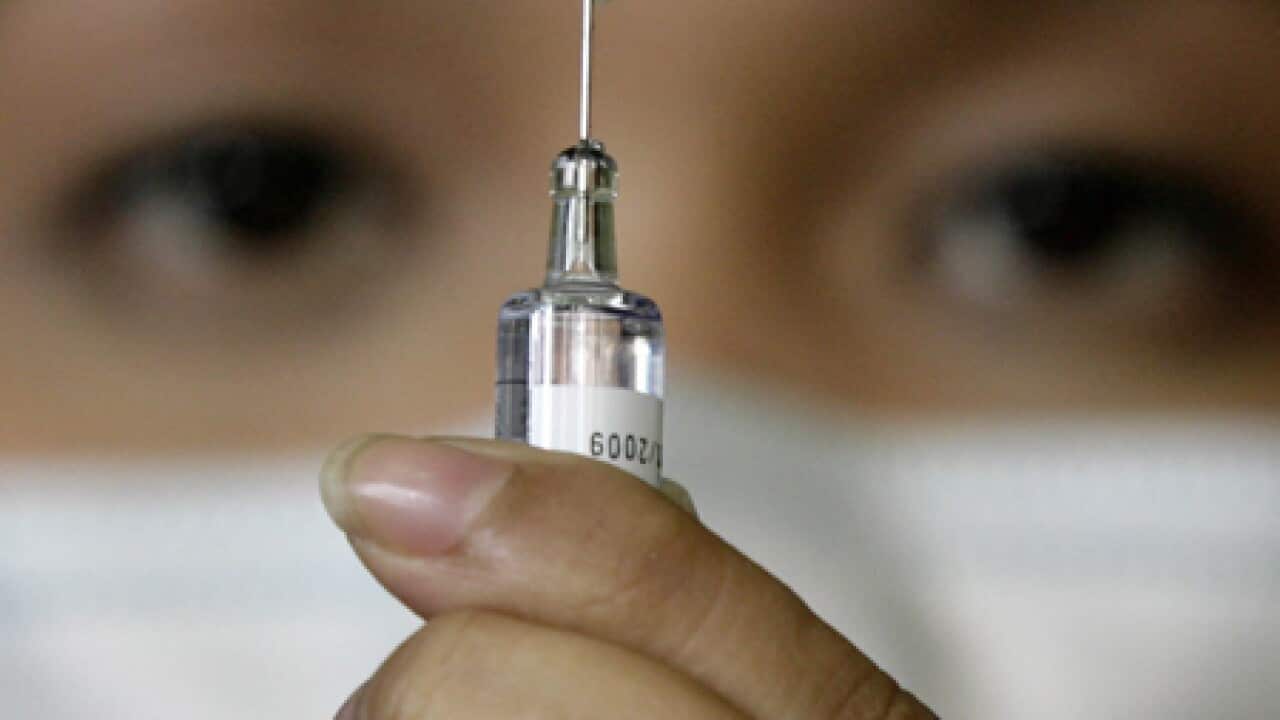
Researchers at the National Institute of Immunology in New Delhi said they had successfully concluded a two-year trial on mice, rats and rabbits of a drug which slowly releases insulin into the body over weeks or even months.
Reporting in the US journal Proceedings of the National Academy of Sciences (PNAS), they said a single dose of the drug - SIA-II - was able to maintain a minimum level of insulin in a rat for more than 120 days.
News that makes sense
Your trusted source for staying up-to-date with the world around you. Get free daily news updates and analysis, straight to your inbox.
"I think this is a very exciting development," Anoop Misra, director of the diabetes department at Fortis Hospitals in New Delhi, and chairman of the Diabetes Foundation (India), told AFP.
Misra said once-a-week injections for diabetes were making good progress in trials but that monthly injections were pioneering territory.
"This longer control of diabetes with a single reservoir of insulin is entirely new, though one must keep in mind this has been done just in animal models," he said of the prototype drug.
"It is still in the early stages of development."
Avadhesha Surolia, director of the National Institute of Immunology and one of the paper's authors, told the Mint newspaper that the technology had been licensed to Life Science Pharmaceuticals in Connecticut.
He described the agreement as "one of the biggest licensing deals from any academic institution in India".
More than 220 million people worldwide suffer from diabetes, which kills more than one million people each year, according to the World Health Organisation (WHO).
The illness is affecting a growing number of people across Asia because of a combination of modern diets, increasingly urban living and genetics.
Some diabetics have to inject insulin every few hours and must carefully watch their diet and blood sugar levels because their bodies are unable to break down glucose in the blood.







