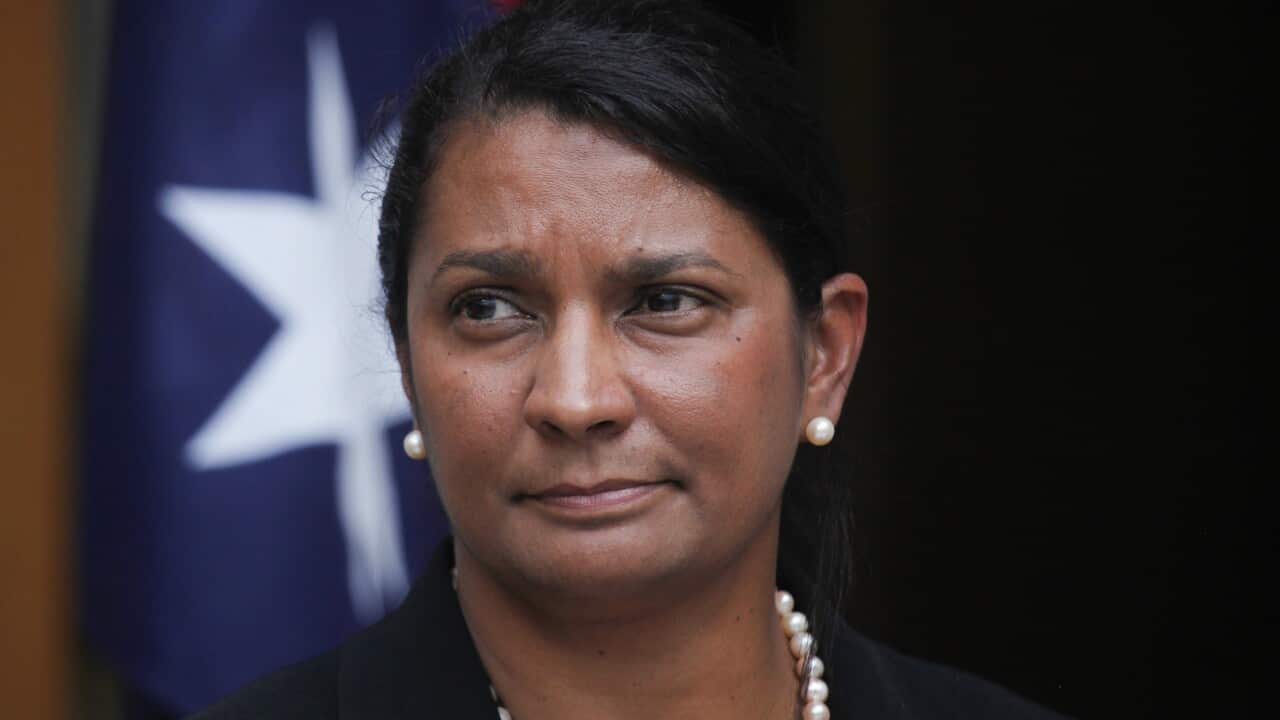
The Labor Party is hoping to get its first Aboriginal member in the federal parliament in the far-north Queensland electorate of Leichhardt.
While in Adelaide, an independent candidate wants to become the first South Australian Aboriginal politician to make it to Canberra.
Indigenous people make up only four per cent of Australia's population, yet are alarmingly over-represented in the nation's jails, job queues and lives lived in poverty.
News that makes sense
Your trusted source for staying up-to-date with the world around you. Get free daily news updates and analysis, straight to your inbox.
One way of tackling Aboriginal disadvantage is through political representation, and that is where Indigenous Australia has always been under-represented.
Australia's oldest political party, the ALP is a case in point, never having had an Aboriginal member in federal parliament.
Billy Gordon is contesting the seat of Leichhardt, in far-north Queensland, currently held by the Liberal National Party with a margin of 4.6 per cent.
Mr Gordon hopes he will be the first Indigenous Labor MP in Canberra after Saturday's poll, but he is also happy to see other Indigenous candidates running for office.
"It's a difficult privilege. I do applaud the fact that they're in this election campaign. We have a whole range of Indigenous people running for different parties, and I think that's a healthy thing for the country, a healthy thing for democracy. It's a great recognition that there's a black right, there's a black centre and there's a black left, you know, and I think that's really, really important to understand. I get a sense of history and a sense of the occasion, but I also think that, with that, comes a tremendous obligation and responsibility."
Another Indigenous voice contesting the seat of Leichhardt is Bruce Gibson.
He is standing for the Palmer United Party because, he says, the major parties are not listening to Indigenous Australians.
"I believe that the major parties have failed to listen, we're missing the whole point here. Poverty exists in Aboriginal communities. Poverty is alive and well. Unless you can understand what happened back then, you can't understand our issues today. When it comes to education, look, we get education, then we take it to our house, but poverty still exists. The prices of food are still there. We're paying through our teeth for food. The only thing that complements Centrelink is our traditional skills to keep our families alive."
In South Australia, an Adelaide lawyer is hoping to become the first Aboriginal South Australian politician.
Ribnga Green is running for a Senate seat as an independent.
Mr Green says his platform is not restricted to Indigenous issues.
"The fact of the matter is that I need 145,000 votes is my estimate, in terms of the quota that a South Australian senator needs to get into the parliament, and, of course, the entire population, Aboriginal population, of South Australia is just over 30,000. Obviously, I need to cast the net much wider, and I want to have an appeal, which I think I have in my policies, that appeals to a much broader spectrum of the Australian society."
Australia's first Aboriginal political party has launched its election campaign in Darwin.
Founding member Maurie Ryan says the federal parliament does not represent Indigenous Australia.
"There has been no representation of Aboriginal voices, tribal voices of Aboriginal people, in federal parliament. It has taken a long time for this voice to be heard. And to the people of the Northern Territory and Australia, this is a wake-up call that the voices of this political party will be heard."
The party, based in the Northern Territory, has four candidates in this Saturday's election, including Rosalie Kunoth-Monks, running for the Senate.
She says the party has always opposed the Intervention in the Territory and the decision to extend it.
"I mean, we've been slammed with the Intervention in the last six, seven years and the continuation of Stronger Futures, which is a policy that was made in our absence. We are human beings."
Also running for the Senate in the Northern Territory is Olympian Nova Peris.
She has been endorsed as Labor's candidate after former prime minister Julia Gillard dumped sitting senator and Kevin Rudd supporter Trish Crossin.
The Indigenous Olympian is also a critic of how the former Howard Government introduced the Intervention, saying it demeaned Aboriginal people.
In Western Australia, the Liberals' Ken Wyatt holds the state's most marginal seat of Hasluck on a margin of just point-6 per cent.
Ken Wyatt became the first Aboriginal member of the House of Representatives when he won the seat in 2010.
Hasluck covers several suburbs to the east of Perth Airport, including Guildford and Midland.
Residents there have complained about aircraft noise since flight paths were altered in 2008.
Ken Wyatt has been campaigning on the issue and told parliament he noticed how bad the noise can be while doorknocking in his electorate.
"Whilst I was speaking to some residents, I was forced on several occasions to pause a conversation mid-sentence for half a minute while a flight passed by overhead. It would simply have been impossible to be heard above the roar of the aircraft. Deputy Speaker, this experience is so renowned that it is known as the Guildford Pause."







