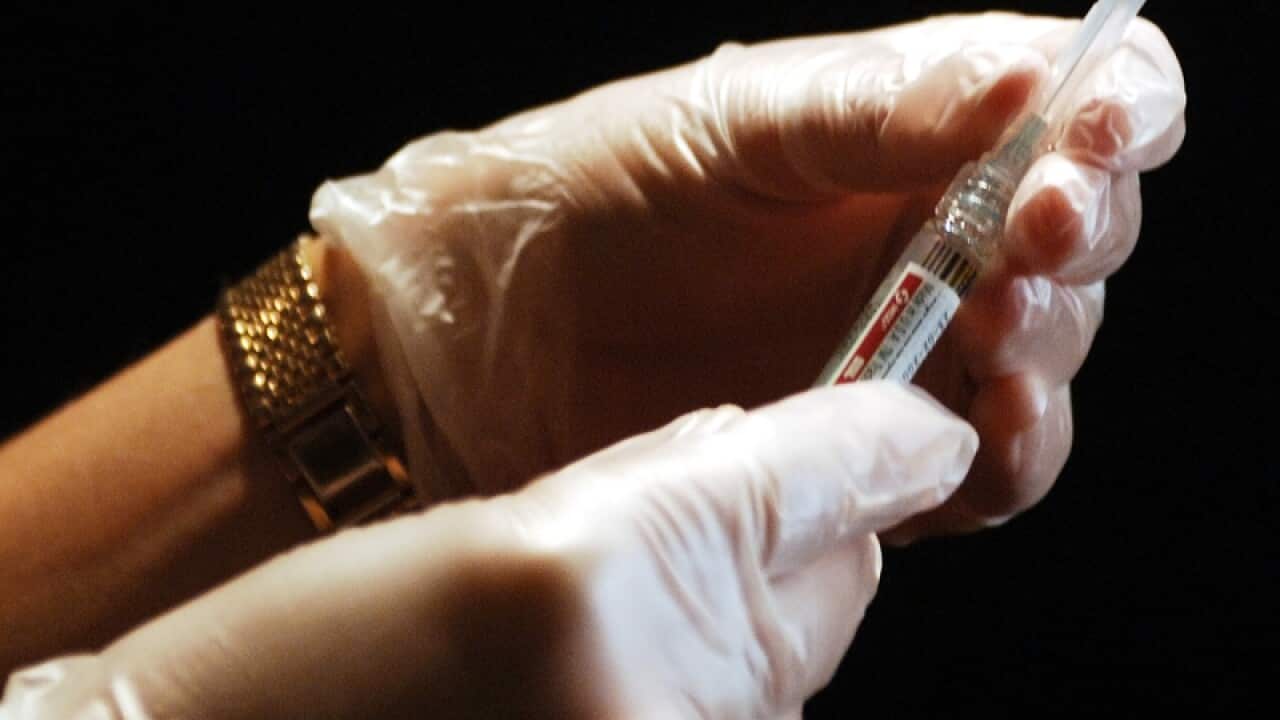
In areas with high rates of full immunisation, Indigenous kids match or exceed the rates for all children, but when they're lower, the difference is extreme.
The biggest problem is among children aged five, according to a report released on Thursday by the National Health Performance Authority.
According to the report, 76,769 out of 900,000 Australian children are behind with their vaccinations and at risk from contagious diseases.
The numbers are much worse for Indigenous children at the age of one. The threat is heightened further for those too young or ill to be vaccinated.
The report, based on 2011/12 data from the Childhood Immunisation Register, assesses the number of children considered fully immunised at one year, two years and five years, and looks at 56 Medicare Local Catchment areas and 325 lower level Statistical Area Levels.
News that makes sense
Your trusted source for staying up-to-date with the world around you. Get free daily news updates and analysis, straight to your inbox.
Of the Statistical Area Levels, 32 were identified as being at risk, with at least 15 per cent of children behind in at least one age group.
LOW INDIGENOUS RATES 'EXTREME'
Immunisation rates of Indigenous children are much lower at one year of age, before improving dramatically at two, then dropping again for children aged five.
In areas with a high portion of full immunisation, the rates for Indigenous children matched or exceeded the rate for all children, however in areas with a lower reported percentage, Indigenous rates were lower than the 'all children' rate by up to 16 percentage points.
When compared to the rates for all children, catchments with high percentages saw the rate of Indigenous children fully immunised equal or higher than than those recorded for all children, but the lowest percentages were far below the records for all children.
The lowest percentages of fully immunised Aboriginal and Torres Strait Islander children recorded for 1 year olds was 69 per cent, compared with 85 per cent for all children -- a variation of 16 percentage points.
There was a variation of just nine percentage points for two year olds.
For Aboriginal and Torres Strait Islander children aged one year, 46 of the 56 Medicare local catchment areas reported had less than 90 per cent fully immunised, compared to 54 across the board.
Eight catchments had a rate of full immunisation in Indigenous one-year-old children below 80 per cent.
This number dropped to 16 local catchments for two-year-olds, but jumped back up to 35 for children aged five years.
The best performing area for all children across all three age groups is Maitland in NSW, where 95 per cent or more children are fully vaccinated.
STILL QUESTIONS TO BE ANSWERED
The worst performer across all three age groups is "Richmond Valley - coastal" in NSW, where 85 per cent or fewer children are up to date.
Overall, two-year-olds have the best vaccination rates but many children fall behind by the age of five.
National Health Performance Authority CEO Dr Diane Watson says the report "shows we have done well to protect children in most local areas and is intended to help local communities better target their efforts".
She says more work is needed to explain why the drop-off occurs among five year-olds and why areas with similar demographics have significantly different figures.
Another question is why the rates for Aboriginal and Torres Strait Islander children are high in some areas and low in others.
The results are reported by Medicare Local catchment areas and some are broken down into 325 smaller areas used by the Australian Bureau of Statistics.
Results are also available for more than 1500 postcodes at www.nhpa.gov.au
PARENTS 'FORGET' THE IMPORTANCE
NSW Director of Health Protection Jeremy McAnulty says immunisation rates have improved dramatically over the past 15 years but "getting those last few is really hard".
Dr McAnulty says a major problem is that parents are busy and forget how important it is to have vaccinations done on time.
Victoria Chief Health Officer Rosemary Lester says immunisation protects individual children against dangerous diseases but also protects people who are not immunised.
"If you have a very high rate of immunisation, diseases like measles cannot find enough susceptible people to circulate," Dr Lester said.







