Three Western journalists, two badly wounded, begged for rescue from Syria, as President Nicolas Sarkozy branded the deaths of two of their colleagues 'murder'.
As Edith Bouvier and William Daniels pleaded in a video message for medical evacuation, efforts were made to get a fifth journalist to safety after he was injured in the same bombardment Wednesday on an opposition-held area of Homs.
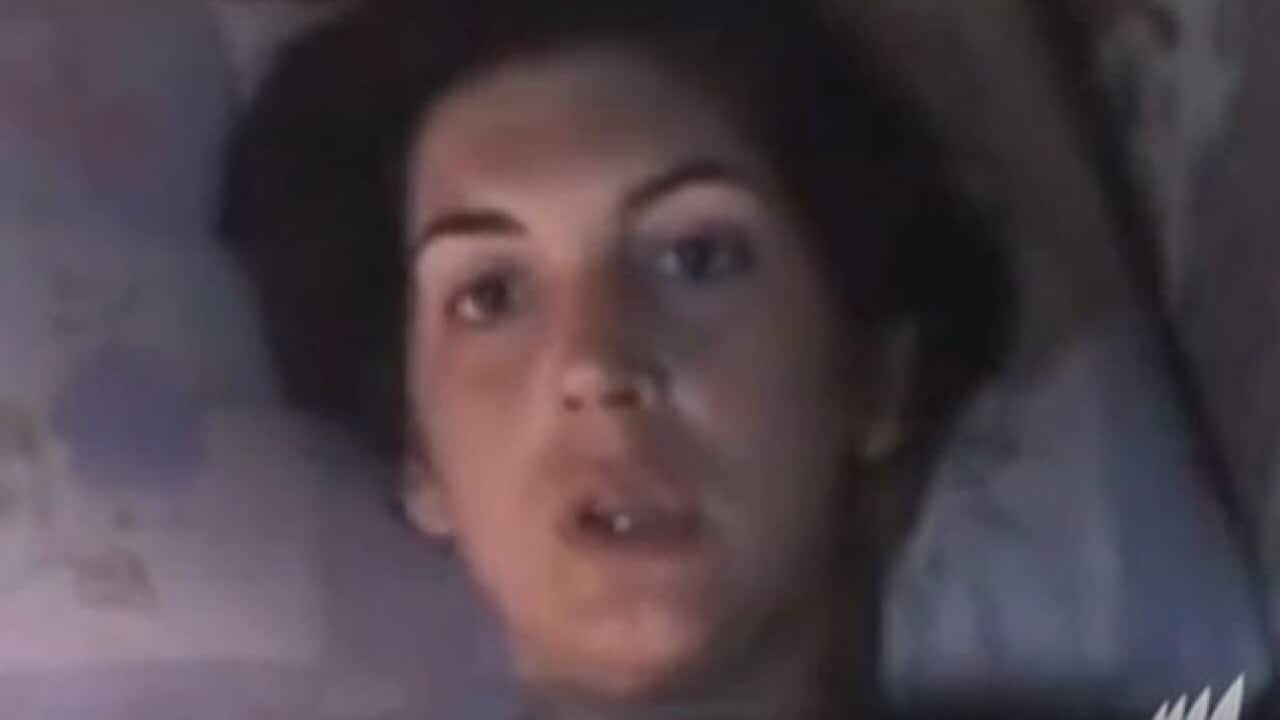
Bouvier, a reporter for the French daily Le Figaro, appeared calm and coherent, even occasionally smiling weakly as she addressed the camera, in a video shot by anti-regime activists in the beleaguered suburb.
News that makes sense
Your trusted source for staying up-to-date with the world around you. Get free daily news updates and analysis, straight to your inbox.
"My leg is broken at the level of the femur, along its length and also horizontally. I need to be operated upon as soon as possible," she said.
"The doctors here have treated me very well, as much as they are able, but they are not able to undertake surgical procedures," she said.
"I need a ceasefire and a medically-equipped vehicle, or at least one in good condition, that can get me to the Lebanese border so I can be treated in the shortest possible time," she said, lying on a sofa under a blanket.
Bouvier said the video was shot on Thursday at 3.00 pm (1200 GMT). It was posted on the YouTube file-sharing site and Syrian activists opposed to Bashar al-Assad's regime quickly emailed links to it to news organisations.
Daniels said he had not himself been hurt in Wednesday's attack, but warned the situation was getting harder, with no power and little food getting through during the siege. Shelling could be heard.
"Our morale is good, she's strong, she's smiling," he said of Bouvier, adding that he was on assignment for Le Figaro and Time magazine.
"I hope the French authorities can help us as quickly as possible because it's difficult here. We have no electricity. We don't have much to eat, bombs are still falling. We need to get out by medical evacuation."
A British photographer injured in the Syrian rebel city of Homs also issued a video message on Thursday saying that he was safe but asking for "government agencies" to help him.
Paul Conroy, who works for Britain's Sunday Times newspaper, was hurt in the same rocket attack that killed his American colleague Marie Colvin and French photojournalist Remi Ochlik on Wednesday.
The Foreign Office in London has said it is working to repatriate Colvin's body and to help Conroy reach safety.
The video, posted on YouTube and broadcast on British television, shows the 47-year-old photographer lying on a makeshift bed of blankets and cushions in a windowless room, with what looks like a drip in his right hand.
"I was wounded in a rocket attack yesterday -- three large wounds to my leg. My colleague Marie Colvin was also killed in the same attack," Conroy said.
"I'm currently being looked after by the Free Syrian Army medical staff, who are treating me with the best medical treatment available. It's important to add that I am here as a guest and have not been captured.
"Obviously any assistance I can be given by government agencies would be welcome."
A doctor is also shown explaining Conroy's wounds, and the voice of an unseen person says he is currently in a safe place. But as the sound of an explosion demonstrates, he says they do not know how long this will be the case.
Conroy says he would like "any help possible", adding that the video was intended "just to reassure family, friends in England that I'm absolutely OK."
American journalist Marie Colvin of Britain's The Sunday Times and freelance French photojournalist Remi Ochlik were killed in the attack, while Colvin's British photographer colleague Paul Conroy, 47, was wounded.
Assad's regime insisted it could not be held responsible for the deaths of journalists who had "sneaked" across the border without visas and were working in "trouble-hit areas".
But Information Minister Adnan Mahmud told AFP that the governor of Homs had been ordered to find the reporters and bring them out safely.
Anger was mounting in Western capitals at what leaders and human rights groups saw as the deliberate shelling of a makeshift civilian media centre in Homs by regime forces and in particular for the deaths of the journalists.
"Those who did this will have to account for it," Sarkozy said.
"Thanks to globalisation, you can no longer commit murder under cover of utter silence. I saw the images. There was a decision to bombard a place because journalists were there," he alleged.
Meanwhile, the British foreign ministry said: "All the necessary work is being done on repatriating Marie Colvin's body and ensuring Paul Conroy gets to safety."
The events surrounding the deaths of Colvin, 56, and 28-year-old Ochlik are not yet clear, but local activists opposed to Assad said they were killed when government troops opened fire with heavy weapons on a rebel press centre.
"The shelling started at 06:00 AM. It was indiscriminate at first but suddenly came close to our place," said Abu Bakr, a militant from the media centre who called AFP by Internet voice-dialling from Homs.
"We came to believed that our place must be known by Assad's troops and at this moment the shells began to fall intensively on the house... The roof of the third floor was hit by two rockets.
"This was followed by another rocket hit on the second floor which was the biggest. All of us were in one room, including the foreign journalists.
"We tried to leave immediately in small groups. The first group rushed out to the other side of street and took shelter in a nearby house," he said.
"The second group was trying to get out as well when a rocket fell on the house. Two of them were killed under the rubble and five others including the two journalists were wounded."
Colvin was a prizewinning correspondent renowned for a 25-year career covering conflict around the world. Her mother also said she believed her daughter had been killed deliberately by the regime.
"My daughter was murdered by these people," Rosemarie Colvin said in an interview with CNN. "That's what they've done."
The head of the UN cultural organisation UNESCO, Irina Bokova, also gave credence to reports of a deliberate attack, denouncing what she called "the shelling of the makeshift media centre in Homs by the Syrian army."







