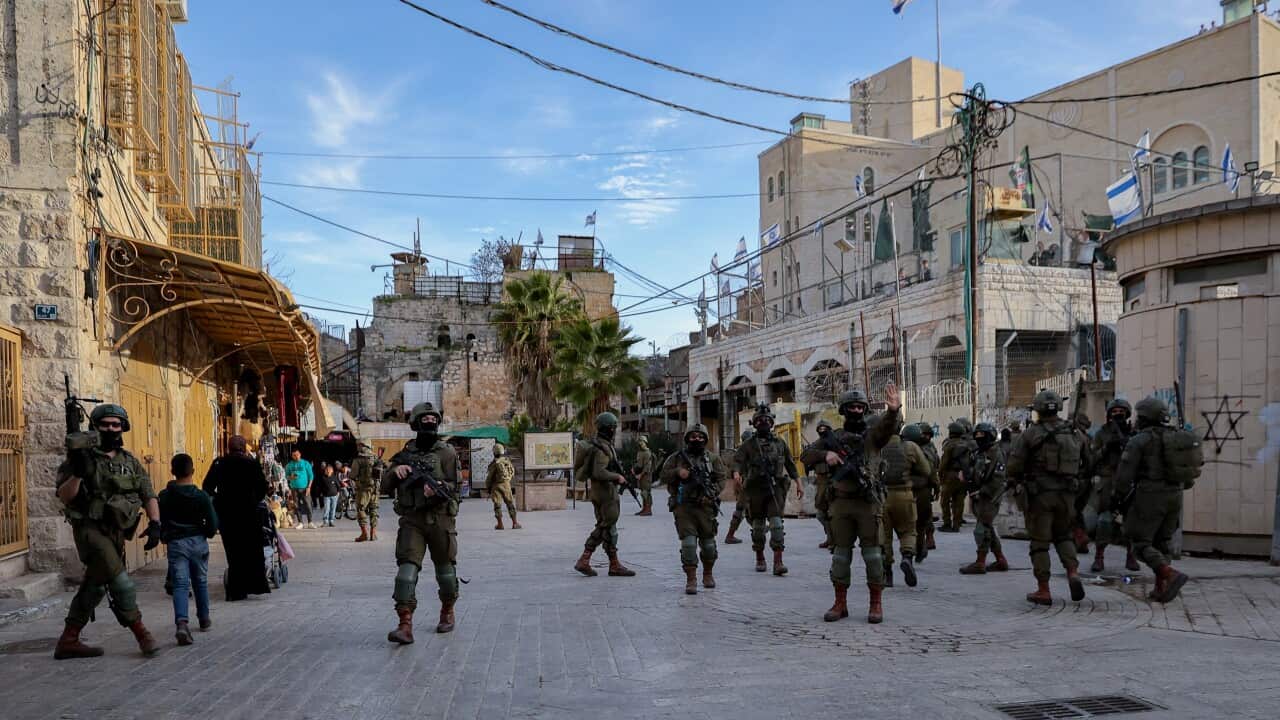
The federal government has said Australia objects to the Israeli security cabinet's decision to expand Israel's control over the occupied West Bank.
International outrage has been growing this week at Israeli plans to tighten the country's grip over the occupied West Bank, with the United Nations chief saying he was "gravely concerned".
Saudi Arabia and seven other Muslim-majority countries condemned the new Israeli measures, which pave the way for more settlements in the occupied Palestinian territory — which are considered illegal under international law.
Announced on Sunday by finance minister Bezalel Smotrich and defence minister Israel Katz after being approved by the security cabinet, they include allowing Jewish Israelis to buy West Bank land directly, and extending greater Israeli control over areas where the Palestinian Authority exercises power.
It was unclear when the new rules would take effect, but they don't require further approval.
News that makes sense
Your trusted source for staying up-to-date with the world around you. Get free daily news updates and analysis, straight to your inbox.
A Department of Foreign Affairs and Trade spokesperson said the decision would "undermine stability and security" in the region.
"The Australian government has been clear that settlements are illegal under international law and a significant obstacle to peace," the spokesperson said in a statement to SBS News.
"Altering the demographic composition of Palestine is unacceptable. A two-state solution remains the only viable path to long-term peace and security for Israelis and Palestinians alike."
UN secretary-general António Guterres was "gravely concerned" at the changes, and warned they were "eroding the prospects for the two-state solution", his spokesman Stéphane Dujarric said in a statement this week.
The West Bank, which Israel has occupied since 1967, would form the largest part of any future Palestinian state but is seen by many on the religious right as Israeli land.
Smotrich had said on Sunday that the changes were aimed at "deepening our roots in all regions of the Land of Israel and burying the idea of a Palestinian state".
Guterres called Israel's actions "destabilising" and pointed to an International Court of Justice finding that Israel's occupation of the Palestinian territory is illegal.
The foreign ministers of Saudi Arabia, Jordan, the UAE, Qatar, Indonesia, Pakistan, Egypt and Türkiye "condemned in the strongest terms the illegal Israeli decisions and measures aimed at imposing unlawful Israeli sovereignty," a Saudi statement said.
It called them an attempt at "entrenching settlement activity, and enforcing a new legal and administrative reality in the occupied West Bank, thereby accelerating attempts at its illegal annexation and the displacement of the Palestinian people".
Australian government grilled on sanctions
During Question Time in parliament on Monday, independent MP Sophie Scamps asked the government if it would impose sanctions on Israeli officials in light of the plans for settlement expansion in the West Bank.
Deputy Prime Minister Richard Marles responded, saying: "The government has in place sanctions in respect of Israel which have been announced and well publicised."
"But underpinning that has fundamentally been a position which has been held by this government, which is consistent with governments of the past, from both political parties, of supporting a two-state solution."
He said a two-state solution provides for the "legitimate aspirations of the Palestinian people to have statehood", while also ensuring security for Israel.
Last year, Australia was among a group of countries that sanctioned Smotrich and another Israeli minister, Itamar Ben-Gvir, accusing them of "inciting violence against Palestinians in the West Bank".
Australia was also among 21 countries that condemned a controversial West Bank settlement expansion plan announced by Smotrich last year.
The Israeli measures also envisage transferring authority over building permits for settlements in the Palestinian city of Hebron — the West Bank's largest — from the Palestinian Authority to Israel.
In addition, the reform strengthens Israeli control over two major religious sites in the southern West Bank: Rachel's Tomb near Bethlehem and the Cave of the Patriarchs in Hebron.
In addition to the diplomatic criticism, the announcement drew condemnation from Palestinians and experts.
The Palestinian presidency in Ramallah, which exercises limited control over some areas of the West Bank, said the move was aimed at "deepening attempts to annex the occupied West Bank".
"What they want is to drive Palestinians into small pieces of land, basically, their major cities, enclaves, and the rest is gone," Palestinian political scientist and former minister Ali Jarbawi said.
Israel's plan could weaken Palestinian Authority
Yonatan Mizrachi of Peace Now, an Israeli anti-settlement watchdog, said the steps would further weaken the Palestinian Authority, which was established under the Oslo Accords of the 1990s as an interim governing body pending the creation of a fully fledged Palestinian state.
"Israel is actually advancing annexation and that's something that we've seen for three years, but what is also significant in this case is that Israel has also decided to weaken the Palestinian Authority," Mizrachi said.
The announcement came days ahead of Israeli Prime Minister Benjamin Netanyahu's visit to the United States, where he is due to meet US President Donald Trump, who has upheld US opposition to Israeli annexation of the West Bank.
The US has yet to formally comment on the new measures.
More than 500,000 Israelis live in settlements and outposts in the West Bank that are illegal under international law.
Around three million Palestinians live in the territory. Another 200,000 Israelis live in Israeli-annexed East Jerusalem, which the UN says is part of the Palestinian territories.
For the latest from SBS News, download our app and subscribe to our newsletter.







