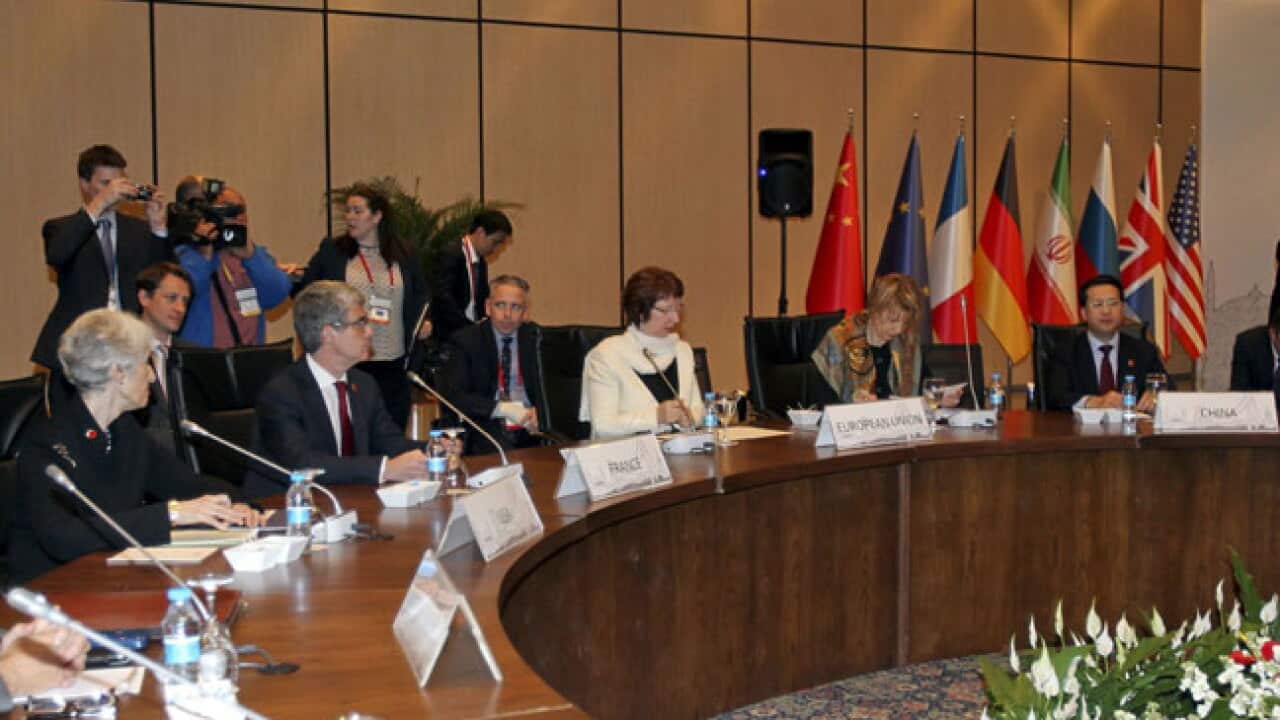
The latest nuclear talks between Iran and six world powers were constructive and the two sides will meet again in Baghdad on May 23, the European Union's foreign policy chief announced on Saturday.
Catherine Ashton's comments following the day's talks in Istanbul added to a growing sense among diplomats involved that the two sides were making notable progress in negotiations related to Tehran's disputed nuclear program.
But the challenges in the next round could be far more significant. That's when the six powers will likely seek further commitments from Tehran to reduce concerns that it could use its uranium enrichment program to make the fissile core of nuclear missiles.
Ashton said future talks will be guided by the "principle of a step-by-step approach and reciprocity". That indicates the international community is ready to reward Iran if it moves to alleviate concerns that it intends to weaponise its nuclear program.
The rewards could including delaying or easing some sanctions on the Islamic republic.
News that makes sense
Your trusted source for staying up-to-date with the world around you. Get free daily news updates and analysis, straight to your inbox.
Iran insists its nuclear program is peaceful, and Ashton said on Saturday that Tehran has a right to such a peaceful program. At the same time, she added, the Nuclear Nonproliferation Treaty must be the "key basis" for future talks.
Iran is under four sets of UN sanctions for refusing to stop uranium enrichment - which can be used both to make reactor fuel and the fissile core of nuclear warheads - and the international community continues to demand that Tehran stop the activity.
But the last set of nuclear talks broke up without result more than 14 months ago after the Iranian team had refused to even discuss enrichment.
The six countries negotiating with Iran - the US, Russia, China, Britain, France and Germany - came to Saturday's meeting with modest expectations.
Diplomats said before the meeting began that even general Iranian readiness to accept the need to discuss its enrichment program would be considered enough of a success to warrant a follow-up round.
Earlier on Saturday, one of the diplomats who, like the others, demanded anonymity because he was sharing confidential information, said the Iranians appeared to be moving toward that readiness, engaging in discussion about the peaceful use of nuclear energy and the nonproliferation treaty.
He said the Iran's team had mentioned Iranian Supreme Leader Ayatollah Ali Khamenei's "fatwa", or edict, prohibiting nuclear weapons for Iran, in the course of the plenary discussions.







