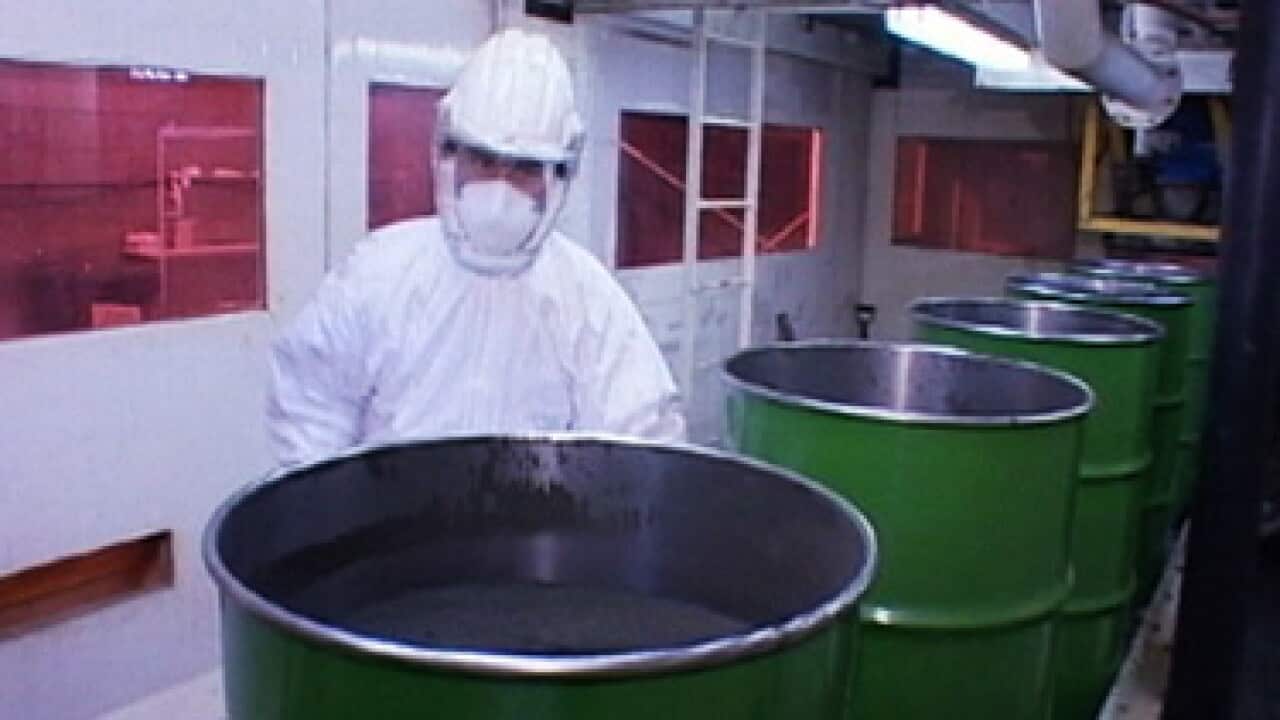
Iran has said it has produced around 20 kilogrammes of 20 percent enriched uranium, in defiance of the world powers who want Tehran to suspend the controversial nuclear work.
"We have produced around 20 kilogrammes of 20 percent enriched uranium and we are working to produce the (fuel) plates," Iran's atomic chief Ali Akbar Salehi told ISNA news agency.
World powers led by Washington want Tehran to suspend its uranium enrichment activity which they suspect masks a nuclear weapons drive, and on June 9 backed a UN Security Council resolution for a fourth set of sanctions on Iran.
News that makes sense
Your trusted source for staying up-to-date with the world around you. Get free daily news updates and analysis, straight to your inbox.
Enriched uranium can be used as fuel to power nuclear reactors as well as to make the fissile core of an atom bomb.
Tehran says its nuclear programme is entirely peaceful.
On Sunday, Salehi reiterated his previous claim that by September next year Iran will on its own "deliver the fuel for the Tehran research reactor."
He previously said that Iran has acquired the technical know-how to make the actual fuel plates which power the reactor, a claim dismissed by Western powers.
They say that the Islamic republic does not possess the technology required to convert the 20 percent enriched uranium into fuel plates for powering the reactor.
President Mahmoud Ahmadinejad ordered the refining of uranium to 20 percent after a swap deal, aimed at providing nuclear fuel for the Tehran reactor and drafted by the UN atomic body in October, hit a deadlock.
Brazil and Turkey brokered a counter proposal in Tehran on May 17 under which Iran would send its low-enriched uranium to Turkey in return for research reactor fuel to be supplied later.
But the world powers cold-shouldered that proposal and voted through a fourth set of sanctions, which had the effect of further tightening financial and military restrictions on Tehran.
On Sunday, in a separate report on ISNA, Foreign Minister Manouchehr Mottaki said Iran was ready to talk with the so-called Vienna group over the fuel swap deal as brokered by Brazil and Turkey.
He said that the Vienna group -- comprising Iran, France, Russia, the UN atomic watchdog and the United States -- "has accepted" the presence of Brazil and Turkey in these talks.
Mottaki added that Iran has two options for getting the fuel -- through the swap deal or by producing it on its own.
"We are ready for whatever they (world powers in the Vienna group) choose," he said.
The Vienna group was formed to work out the fuel swap deal for the Tehran reactor.







