The US imposed sanctions on 11 companies and individuals on Sunday for supplying Iran's ballistic missile program in a move delayed by over two weeks so as not to endanger this weekend's release of US prisoners.
The new measures also came after the lifting of far more comprehensive nuclear sanctions.
"The Islamic Republic will respond to these aggravating and propagandistic measures by pursuing its legal missile program stronger than before and developing its defensive capabilities," a foreign ministry statement said.
Iran conducted a ballistic missile test in October, which the United Nations called a breach of a resolution prohibiting the Islamic Republic from developing missiles capable of delivering nuclear warheads.
News that makes sense
Your trusted source for staying up-to-date with the world around you. Get free daily news updates and analysis, straight to your inbox.
Iran insists the missile was designed to carry a conventional payload.
Foreign ministry spokesman Hossein Jaberi Ansari said Washington's sales of weaponry to allies in the Middle East, worth tens of billions of dollars each year, was used to commit "war crimes against Palestinian, Lebanese and most recently Yemeni citizens".
"The US sanctions against Iran's ballistic missile program ... have no legal or moral legitimacy," he said.
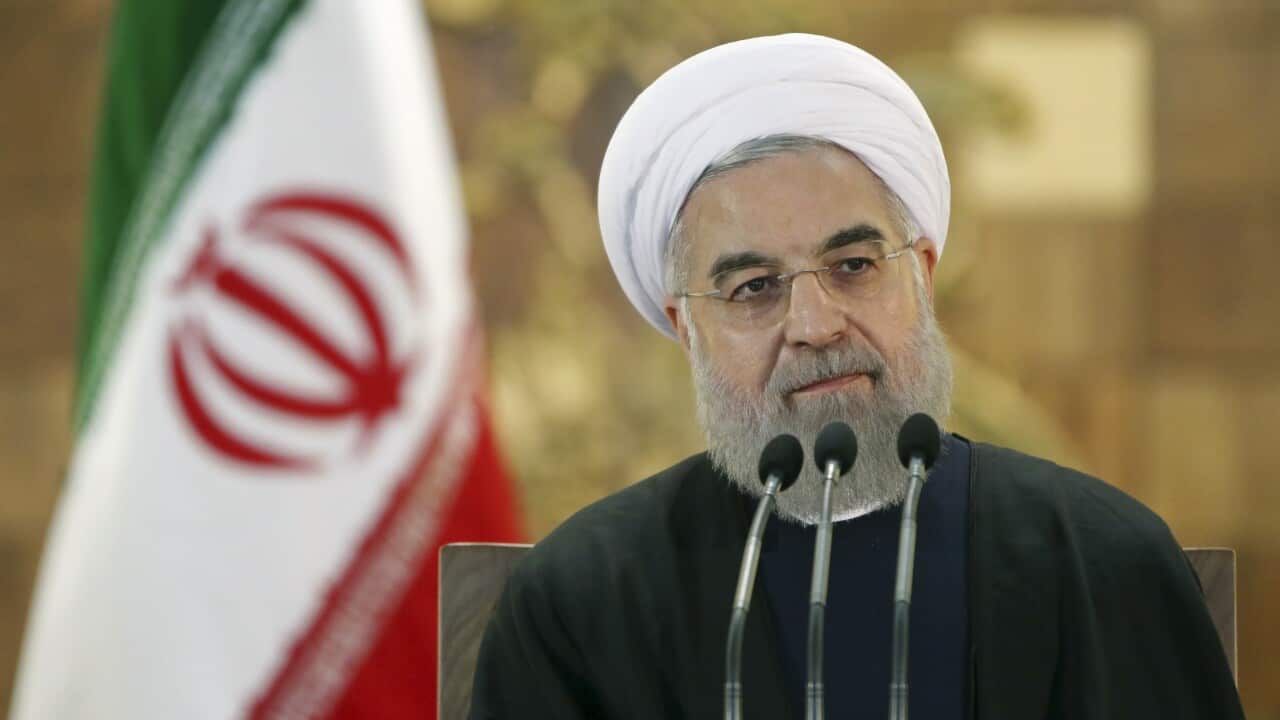
Hardline newspapers Kayhan and Vatan-e-Emrooz splashed the news on their front pages, crowding out a triumphal speech by President Hassan Rouhani, who on Sunday hailed the lifting of the nuclear sanctions.
"Sanctions are back!" ran the Kayhan headline.
The article pointed out that Tehran's top authority, Supreme Leader Ayatollah Ali Khamenei, had said new sanctions under any pretext would constitute a breach of the nuclear deal.







