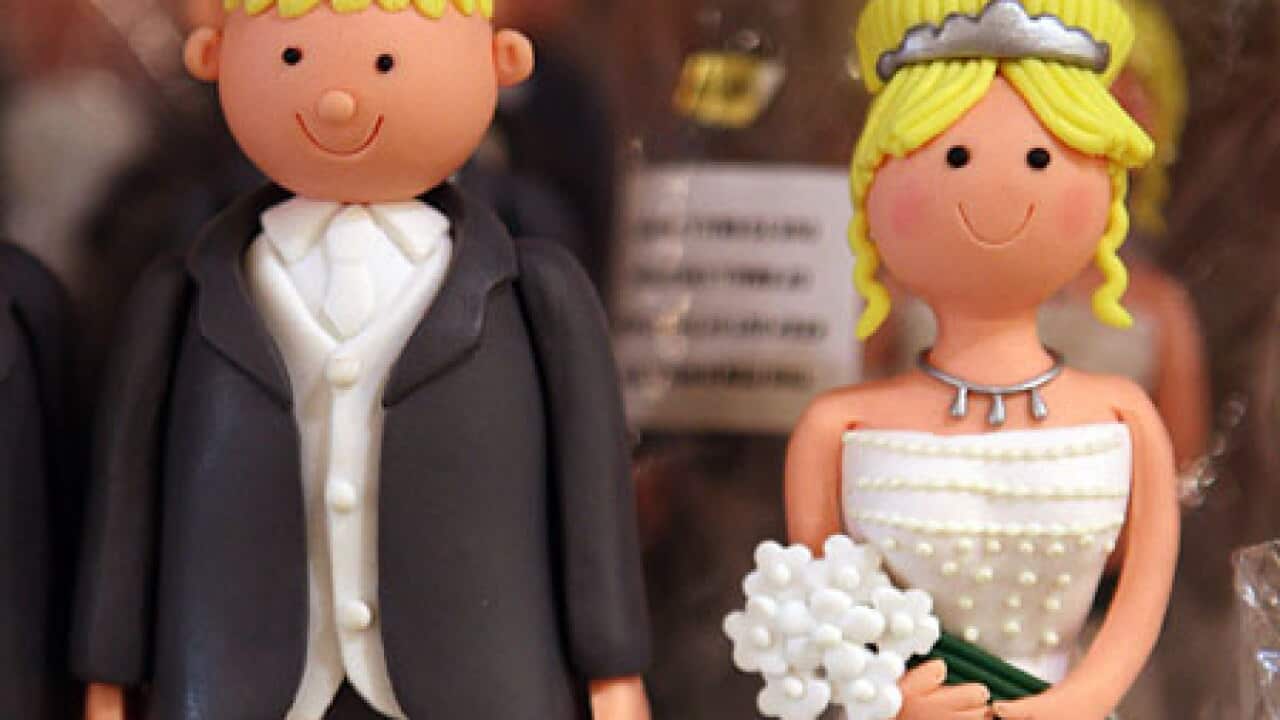
Iranian youths can attend courtship classes and earn a diploma before tying the knot as part of a newly launched government scheme to cut the divorce rate.
The National Youth Organisation has unveiled an online course to educate the Islamic republic's overwhelmingly young population on how to find Mr or Mrs Right, pop the question, and live happily ever after.
Interactive and lasting three months, the course designed by academics and clerics requires pupils seeking the diploma to sit for weekly tests.
News that makes sense
Your trusted source for staying up-to-date with the world around you. Get free daily news updates and analysis, straight to your inbox.
Iran's hardline leaders condemn dating and relationships out of wedlock and like to see men and women married off ideally in their early 20s in a country where traditionalists frown upon singles in their 30s.
Marriage age rises to 29
But according to official estimates, the average age of marriage has risen to 29, mainly due to economic hardship and a change in priorities and values, especially for women who outnumber men at college.
Since rising to power five years ago, conservatives in the parliament and government have made a mantra of "facilitating marriage for young people" in Iran, where about 60 percent of the 70-million population is under 30.
The concept of a "marriage diploma" has already unleashed a torrent of jokes on the Internet, but officials insist Iranians need awareness without revealing much about the content of the course.
Marriage needs 'education'
"Marriage needs hundreds of hours of education," Mehrdad Bazrpash, a deputy to President Mahmoud Ahmadinejad and head of the National Youth Organisation, said on Saturday as he inaugurated the programme in Tehran.
Ahmad Borjali, a psychologist and adviser to the initiative, said the divorce rate has gone up steadily since 2006, rising by 15.7 percent in 2009 compared with the previous year, against a 2.1-percent increase in marriages.
High divorce rate
One in every four marriages ends in divorce in Tehran alone, he said, citing research by social workers as blaming "sexual" and "communication troubles" among main reasons for the problem nationwide.
"Divorce is taboo and against values, but educational work does not cost much," he said in a speech. "Face-to-face education is much more important and this can be a start given the size of the country."
Despite its lofty goals the new initiative has been met with scepticism among government critics and academics.
"Awareness is fine but the question is what kind of a family they are seeking to promote," prominent sociologist Shahla Ezazi told AFP.
Confusion between tradition and modernity
"Our society is confused between tradition and modernity, there are both traditional arranged marriages and modern love marriages. But most propaganda is focused on reinforcing men's leadership and women's obedience," she said.
Publicity material for the course distributed at the launch showed a very conservative approach by authorities, shunning unmarried romantic relationships and encouraging traditional match-making.
"It is wiser to have different relationships ... I will hang out with a few and then choose one," a boy with a Westernised appearance is depicted as saying in a booklet mocking such lifestyles.
It was contrasted by a bearded, pious-looking young man who says "short-term illegitimate relationships harm dignity, but God has left the halal (religiously correct) path open."
Ezazi said the current authorities only favour traditional, arranged marriages and "consider giving men and women equal rights a terrible feminist thing."
"But people do not live as advised by the government and changes do not happen based on its orders," she said.
Since the 1979 Islamic revolution, Iran has been under conservative clerical rule which favours segregation of the sexes and penalises "illegitimate relationships" such as adultery punished by death.
But this has not prevented mainly urban youths from dating and mingling under the regime's beady eyes, although moving in and living with a partner out of marriage is almost unheard of.







