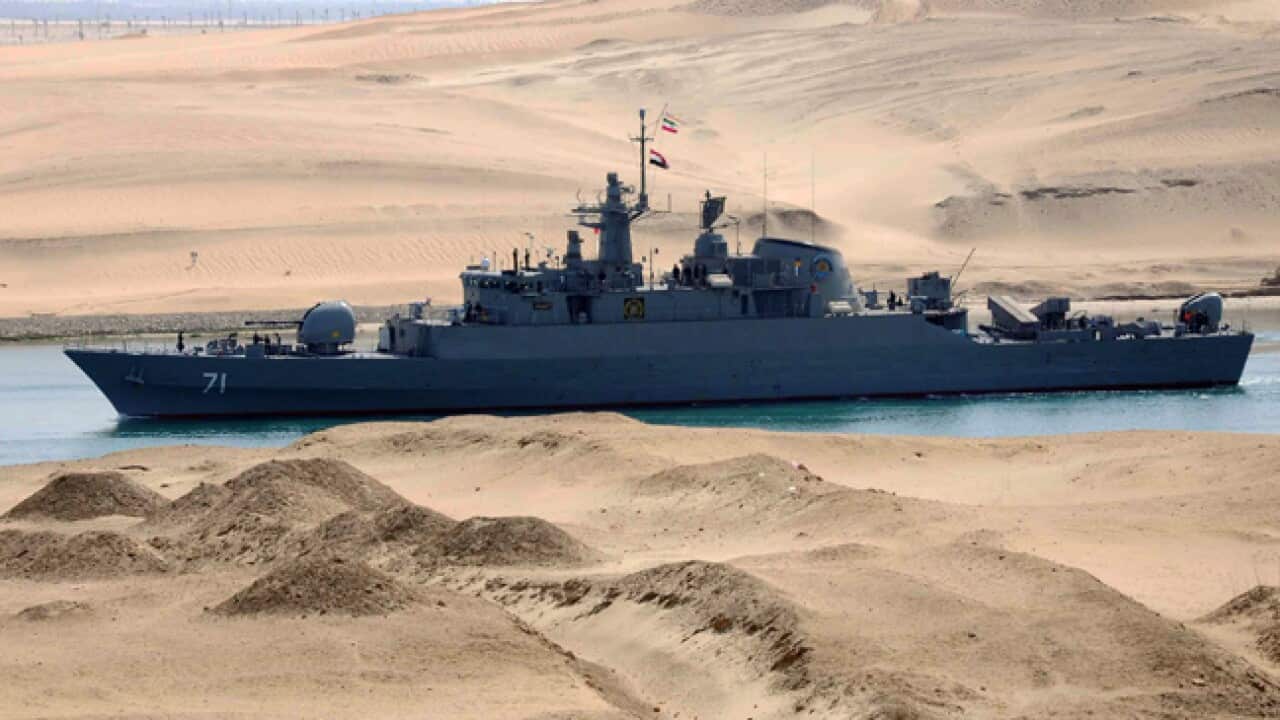
Closing the Strait of Hormuz, the vital oil transit stretch at the entrance to the Gulf, would be "really easy" for Iran to do, but was not necessary right now, Iran's navy chief said Wednesday.
"Shutting the strait for Iran's armed forces is really easy -- or as we say (in Iran) easier than drinking a glass of water," Admiral Habibollah Sayari said in an interview with Iran's Press TV.
"But today, we don't need (to shut) the strait because we have the Sea of Oman under control, and can control the transit," he said.
News that makes sense
Your trusted source for staying up-to-date with the world around you. Get free daily news updates and analysis, straight to your inbox.
Sayari was speaking as Iran was midway through 10 days of navy exercises in international waters to the east of the narrow Strait of Hormuz, in the Gulf of Oman.
World prices climbed after Iran's vice president, Mohammad Reza Rahimi, warned on Tuesday that "not a drop of oil will pass through the Strait of Hormuz" if the West broadened sanctions against Iran over its nuclear programme.
"The enemies will only drop their plots when we put them back in their place," the official news agency IRNA quoted Rahimi as saying.
New York-traded light sweet crude rose to $101.36 on the threat.
FORTY PER CENT OF OIL
Forty percent of the world's tanker-borne oil passes through the Strait of Hormuz, a strategic chokepoint that links the Gulf -- and its petroleum-exporting states of Bahrain, Kuwait, Qatar, Saudi Arabia and the United Arab Emirates -- with the Gulf of Oman and the Indian Ocean beyond.
The United States maintains a navy presence in the Gulf in large part to ensure that passage for oil remains free.
But Sayari asserted that the Strait of Hormuz "is completely under the control of the Islamic Republic of Iran."
He said Iran's navy was constituted with the aim of being able to close the strait if necessary.
Sayari added that the navy manoeuvres east of the strait were designed to show Gulf neighbours the power of Iran's military over the zone.
Ships and aircraft dropped mines in the sea Tuesday as part of the drill, according to a navy spokesman.
Iran has several times said it is ready to target the strait if it is attacked or economically strangled by Western sanctions over its nuclear program.
An Iranian lawmaker's comments last week that the navy exercises would block the Strait of Hormuz briefly sent oil prices soaring before that was denied by the government.
While the foreign ministry said such drastic action was "not on the agenda," it reiterated Iran's threat of "reactions" if the current tensions with the West spilled over into open confrontation.
Tehran in September rejected a Washington call for a military hotline between the capitals to defuse any "miscalculations" that could occur between their navies in the Gulf.
In Washington, US State Department deputy spokesman Mark Toner dismissed the latest threat from Iran's vice president.
"I just think it's another attempt by them to distract attention from the real issue, which is their continued non-compliance with their international nuclear obligations," Toner told reporters.
The United States accuses Iran of using its uranium enrichment programme to build nuclear weapons. Iran denies the charges.
The last round of Western sanctions, announced in November, triggered a pro-regime protest in front of the British embassy in Tehran during which Basij militia members overran the mission, ransacking it.
London closed the embassy as a result and ordered Iran's mission in Britain shut as well.







