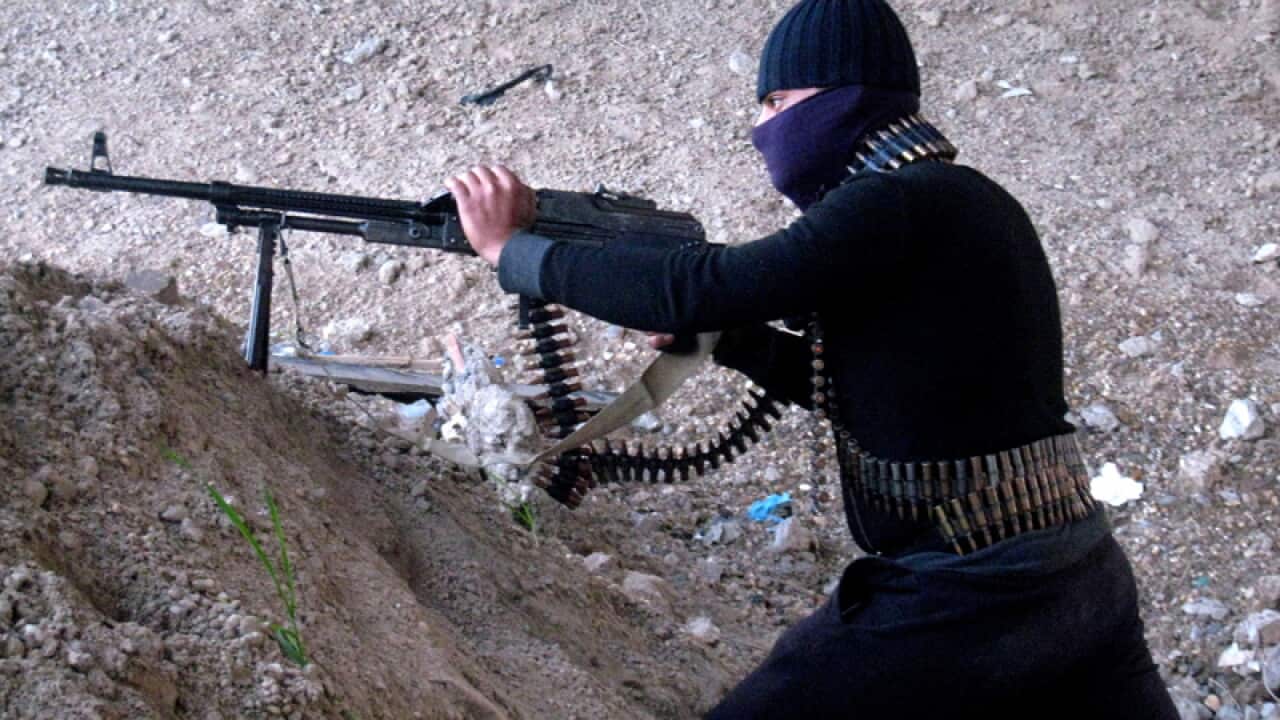
The shooting in Diyala province will increase already significant anger among Iraq's Sunni Arab minority with the Shi'ite-led government, undermining an anti-militant drive that requires Sunni co-operation to succeed.
And the White House statement on the beheading of journalist James Foley raises the stakes in its confrontation with Islamic State (IS) jihadist group, which it is targeting with air strikes in Iraq.
Army and police officers said the attack on the Musab bin Omair Mosque came after Shi'ite militiamen were killed in clashes, while other sources said it followed a roadside bomb near one of their patrols.
Doctors and the officers put the toll from the attack, in which worshippers were sprayed with machinegun fire, at 70 dead and 20 wounded.
Two officers had earlier blamed IS for the attack, but the preponderance of accounts point to Shi'ite militiamen.
News that makes sense
Your trusted source for staying up-to-date with the world around you. Get free daily news updates and analysis, straight to your inbox.
The government turned to militiamen to bolster its flagging forces during the IS offensive, sparking a resurgence of groups involved in brutal sectarian killings in past years that will be difficult to dislodge.
Ibrahim Aziz Ali, whose 25-year-old nephew was among those killed, said he and other residents heard gunfire and rushed to the mosque, where they were fired on by snipers.
Five vehicles with images of revered Shi'ite Imam Hussein were parked at the mosque, Ali said, adding that residents clashed with the militiamen who withdrew when the Iraqi army arrived.
"We found a massacre" at the mosque, he said.
Ali said he hoped for justice from the courts, but if it is not forthcoming, "we will take our right by our hands."
Iraqi premier designate Haidar al-Abadi issued a statement calling for unity and condemning the killings, which may complicate the already-contentious process of forming the country's next government.
In Washington, Deputy National Security Advisor Ben Rhodes said the beheading of Foley, which was carried out by IS and shown in a video posted online, "represents a terrorist attack against our country."
Rhodes also said that paying ransoms to free hostages is "not the right policy," confirming Washington's long-standing position amid claims from IS that other countries had paid to have their nationals freed.
The United States began an air campaign against IS in Iraq on April 8, and has since conducted said 93 air strikes, including three against militants in the area of Mosul dam, the country's largest, on Friday.
Pentagon chiefs warned of the dangers of IS and said operations against it in Syria may be needed, as the West reeled from Foley's grisly killing.
"They marry ideology and a sophistication of strategic and tactical military prowess," US Defence Secretary Chuck Hagel said of the "barbaric" militants.
"They are tremendously well funded. This is beyond anything we have seen."
General Martin Dempsey, chairman of the Joint Chiefs of Staff, said the group "has an apocalyptic end of days strategic vision that will eventually have to be defeated".
"Can they be defeated without addressing that part of the organisation that resides in Syria? The answer is no," he said, when asked if the campaign against the group could go beyond Iraq.
He spoke of a "very long contest" that could not be won by US military prowess alone, but only with regional support and that of "the 20 million disenfranchised Sunnis that happen to reside between Damascus and Baghdad".
He was referring to the alienation of many Sunni Arab Muslims from Iraq's government and the Alawite-dominated regime in Syria.
Foley's killing has stoked Western fears that territory seized by the militants in Syria and Iraq could become a launchpad for a new round of global terror attacks.
The US State Department estimates that about 12,000 foreign fighters from at least 50 countries are in Syria.
Foley, a 40-year-old freelance journalist, was kidnapped in northern Syria in November 2012.
His employer GlobalPost said his captors had demanded a 100 million euro ($A145 million) ransom.







