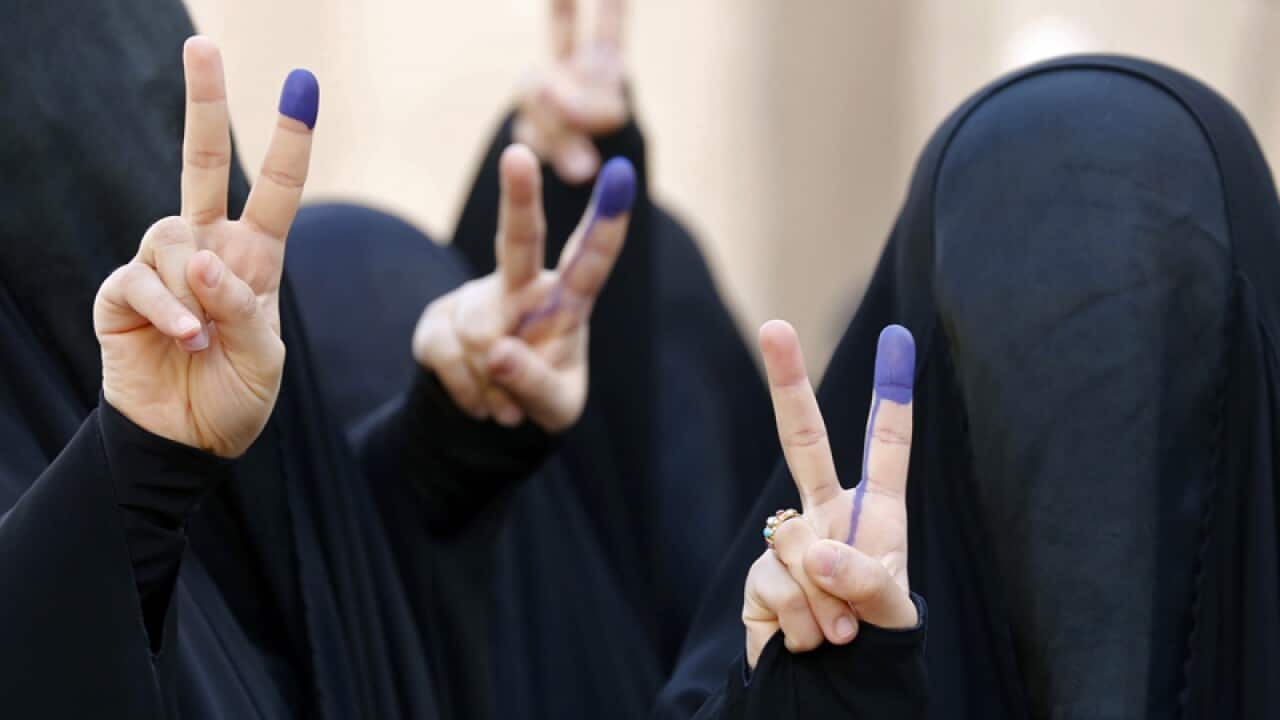
Vote counting is under way after Iraqis braved attacks to participate in parliamentary elections that incumbent premier Nuri al-Maliki said he was "certain" of winning.
Wednesday's general election, the first since US troops withdrew from Iraq in late 2011, took place as further violence rocked the country, with 14 people killed shortly after polling started.
Both Washington and the United Nations hailed the vote as a rebuke to jihadists who sought to derail the political process in a country suffering its worst bloodshed in years.
Preliminary results are not expected for at least two weeks. Initial figures by the election commission said that about 60 per cent of Iraq's 20 million eligible voters cast ballots.
Iraqis complain of myriad grievances, from poor public services to rampant corruption and high unemployment, but the month-long campaign centred on Maliki's bid for a third term and the country's dramatically deteriorating security.
News that makes sense
Your trusted source for staying up-to-date with the world around you. Get free daily news updates and analysis, straight to your inbox.
The premier voiced confidence he would stay in office after voting in Baghdad's heavily fortified Green Zone.
"Our victory is certain, but we are waiting to see the size of our victory," he said.
US Secretary of State John Kerry said Iraqis had "courageously voted", sending "a powerful rebuke to the violent extremists" both in Iraq and the region.
The UN Security Council stressed that "no act of violence or terrorism can reverse a path towards peace, democracy and reconstruction in Iraq, underpinned by the rule of law and respect for human rights".
Analysts had expressed fears that much of the electorate would stay home rather than risk being targeted by militants, who killed nearly 90 people during the two previous days.
Soon after the polls opened Wednesday 14 more people, including two election commission employees, were killed in a wave of attacks that also wounded dozens.
Maliki's critics have accused him of concentrating power and marginalising the Sunni minority.
His State of Law alliance is tipped to win the most seats in parliament but fall short of a majority, meaning he will have to court other Shi'ite parties, as well as Sunni and Kurdish blocs, if he is to remain in power.