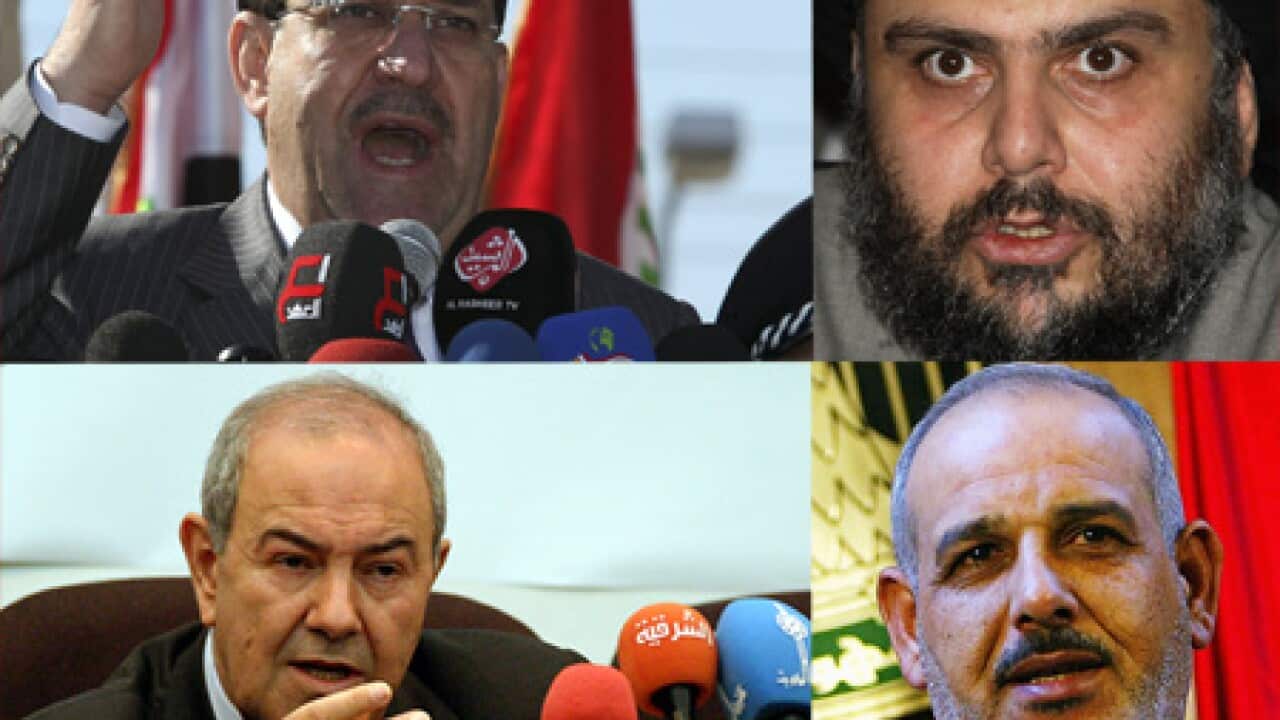
As the US withdraws its combat troops from Iraq, the hung parliament which resulted from March's polls is still delaying political progress in the country.
This comes after a rapid escalation in violence throughout August.
Over 300 political entities contested Iraq's national elections in March. And while some hailed this as a sign of Iraq's growing political maturity, the result has been six months of deadlock and a failure to form government.
News that makes sense
Your trusted source for staying up-to-date with the world around you. Get free daily news updates and analysis, straight to your inbox.
Inaction has befallen the people of Iraq, and no amount of coalition-forming – the bodies which now dominate Iraqi politics – have brought a solution to the table.
In June, Iraq's Supreme Court ratified the results of the parliamentary elections and declared Al Iraqiya the biggest vote winner with 91 seats – ahead of State of Law's 89 seat haul.
The Main Blocs after the March 2010 polls
Al Iraqiya - 91 seats
Ayad Allawi's Al Iraqiya, or the Iraqi National Movement, contains both Shia and Sunni groups in a largely secular movement. Although secular, it is by and large sectarian, and heavily backed by Iraq's Sunnis.
Allawi was installed as the first post Saddam Hussein head of government in by Iraq's Governing Council in 2004, reportedly under pressure from the US.
And while his Iraqi National Accord is the biggest group, the alliance's strong Sunni make-up also encompasses Vice President Tariq al-Hashimi's Renewal List and the Iraqi National Dialogue Front, with Saleh al Mutlaq at its head, plus several other parties.
Al Mutlaq was one of many contestants banned – along with around 500 other candidates – for reported affiliation to the Baathist regime of Saddam Hussein. A threatened boycotting of the election from the party was withdrawn before the polling date.
State of Law - 89 seats
Incumbent PM Nuri Al Maliki failed to win a governing majority for his State of Law coalition party, after the Supreme Islamic Iraqi council scrapped its alliance with him.
State of Law is made up of a number of members, branching Al-Maliki's own moderate Shia Islamic Dawa movement, as well as Sunni groups and some others.
Dawa itself was formed as shia a religious movement in the 1950s as Iraqi society became increasingly secularized, and was targeted by Saddam Hussein's Baathist's after carrying out military operations against it. Many of the party faithful fled to the Islamic Republic of Iran.
In May – after the election – State of Law agreed to join forces with the religious Iraqi National Alliance, forming a Shia coalition (the 'National Alliance') with 159 seats – still, however, four short of a majority.
Iraqi National Alliance (prior to 'National Alliance' branding) - 70 seats
A successor of the United Iraqi Alliance, and a collection of all the major Shia parties in Iraq, with the exception of al Maliki's Dawa Party. Al Maliki initially chose to form the State of Law coalition instead of teaming up with the Shia alliance.
The alliance had dominated government since elections in late 2005, and includes a number of members, most significantly the Sadrist movement fronted by Moqtada al-Sadr, the Islamic Supreme Council of Iraq, the Badr Organisation and other smaller groups.
With State of Law and al Maliki joining the bloc after the election, it is now known as the National Alliance. Now that al-Maliki is involved, however, the stumbling block is resistance within the coalition to al-Maliki keeping hold of the prime ministership.
Kurdish Alliance - 43 seats
Although the Kurdish parties are divided amongst themselves – including President Jalal Talabani's Patriotic Union of Kurdistan as well as the Kurdish Democratic Party– the alliance contested the 2010 elections as a bloc - not including smaller islamic Kurdish groups which won seats in their own right.
The PUK and KDP struggled against one another for years in Iraqi Kurdistan. The eviction of each other's members from one another's strongholds took place amid occasional violence, but a ceasefire was reached in 1997 (de-facto autonomy had been enjoyed in the region since 2001.) by 2003, reconciliation was well under way.
Other seat winners
Gorran - Movement for Change - 8 seats
A Kurdish movement with PUK affiliation and left-leaning academic involvement/
Seats designated for minorities - 8 seats
Iraq reserves representation for certain ethno-religious groups in set areas.
Iraqi Accord Front (Tawafuq) - 6 seats
Pro Sunni-rights Islamist coalition.
Unity Alliance of Iraq (Bolani)- 4 seats
Non-sectarian grouping which includes Interior Minister Jawad Bolani and other secular nationalists, and came close to joining State of Law.
Kurdistan Islamic Union - 4 seats
Kurdish group with links to the pan-Arab islamist Muslim Brotherhood
Islamic Group of Kurdistan - 2 seats
An Islamist movement in Iraqi Kurdistan which had previously run in elections as part of a larger coalition.
Useful Links on Iraq's political set-up
Middle East Progress - Iraqi Government formation
Carnegie Endowment - Iraqi Elections 2010
Results by region from the Independent High Electoral Commission.
Global Security - Major Parties in Iraq
Council on Foreign Relations - Iraq's political landscape
CIA World Factbook on Iraq.







