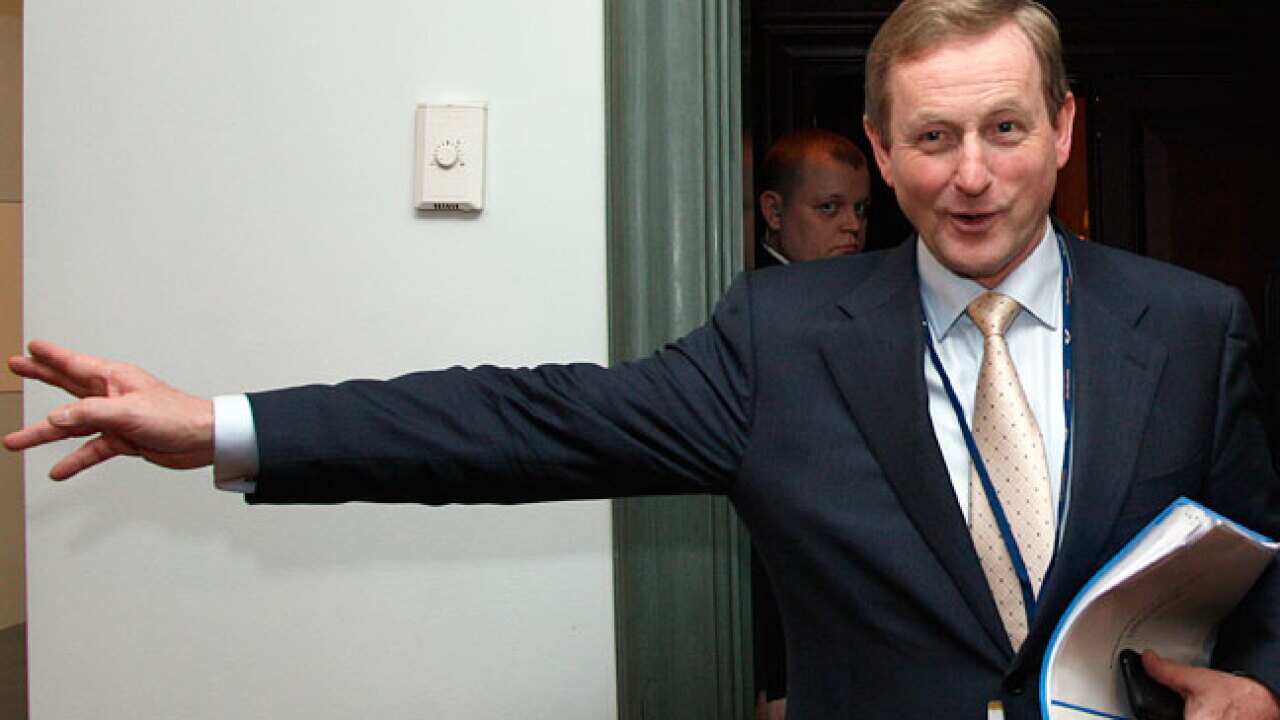
"I am happy to tell you that we have concluded an agreement," Fine Gael leader Enda Kenny told RTE state radio on Sunday.
"Some of the final details are now being worked out for presentation to both parties."
News that makes sense
Your trusted source for staying up-to-date with the world around you. Get free daily news updates and analysis, straight to your inbox.
The February 25 election has redrawn the political map of eurozone nation Ireland as voters hammered Fianna Fail, the party of outgoing premier Brian Cowen which had dominated Irish politics for 80 years.
The former ruling party's collapse came three months after Fianna Fail agreed to an EU-IMF bailout worth 85 billion euros ($A117.14 billion), which many Irish see as a humiliation.
Ireland's budget deficit reached an alarming 32 per cent of gross domestic product after a state bailout of the country's banks, which had lent recklessly and fuelled an unsustainable property boom.
Ireland became the second country in the 17-nation eurozone after Greece to accept a bailout following the collapse of an economy whose roaring growth saw it dubbed the Celtic Tiger.
Kenny, a 59-year-old former teacher, is keen to wrap up the coalition talks quickly so he can get on with trying to renegotiate the terms of the bailout.
In the election, Kenny's opposition Fine Gael became the largest party with 76 seats in the 166-member Dail, the lower house of parliament, following the historic defeat of Fianna Fail.
Labour has 37 and Fianna Fail was left with just 20 seats, down from the 78 it won in 2007.
Fianna Fail's former coalition partner, the Green Party, was also punished, losing all of its six seats.
The Sinn Fein party almost tripled its seats to 14, while its president, Gerry Adams, entered the Dail for the first time.
Elsewhere, 19 independents and other lawmakers were elected in last month's vote.
Ireland's economy was once the envy of the world but when the house of cards collapsed and Dublin was forced to agree to an international bailout, voters were left asking what went wrong.
Between 1995 and 2007, a country once reliant on farming averaged growth of six per cent a year - hitting 10 per cent some years - while unemployment dropped from 15 to five per cent in a decade and GDP doubled.
But in 2008, the worst recession in Ireland's history hit, causing the economy to shrink by 3.5 per cent, widening to a crushing eight per cent contraction in 2009.
Unemployment soared to almost 14 per cent, triggering a new wave of Irish people looking for work abroad just as their ancestors had once done.
After stabilising last year, growth is predicted to return at a modest one per cent in 2011, but the figure is far from what is required if Ireland is to claw its way out of its deep debt hole.







