Israel's security cabinet voted on Wednesday to allow a callup of army reservists "according to need" as the Jewish state launched a campaign against Hamas militants in the Gaza Strip.
In a meeting "it was decided...to permit the IDF (army), according to need and with the approval of the defence minister, to call up reservists," a cabinet statement said.
An army spokesman told AFP that some notices had been issued to specific personnel but there was no general callup.
News that makes sense
Your trusted source for staying up-to-date with the world around you. Get free daily news updates and analysis, straight to your inbox.
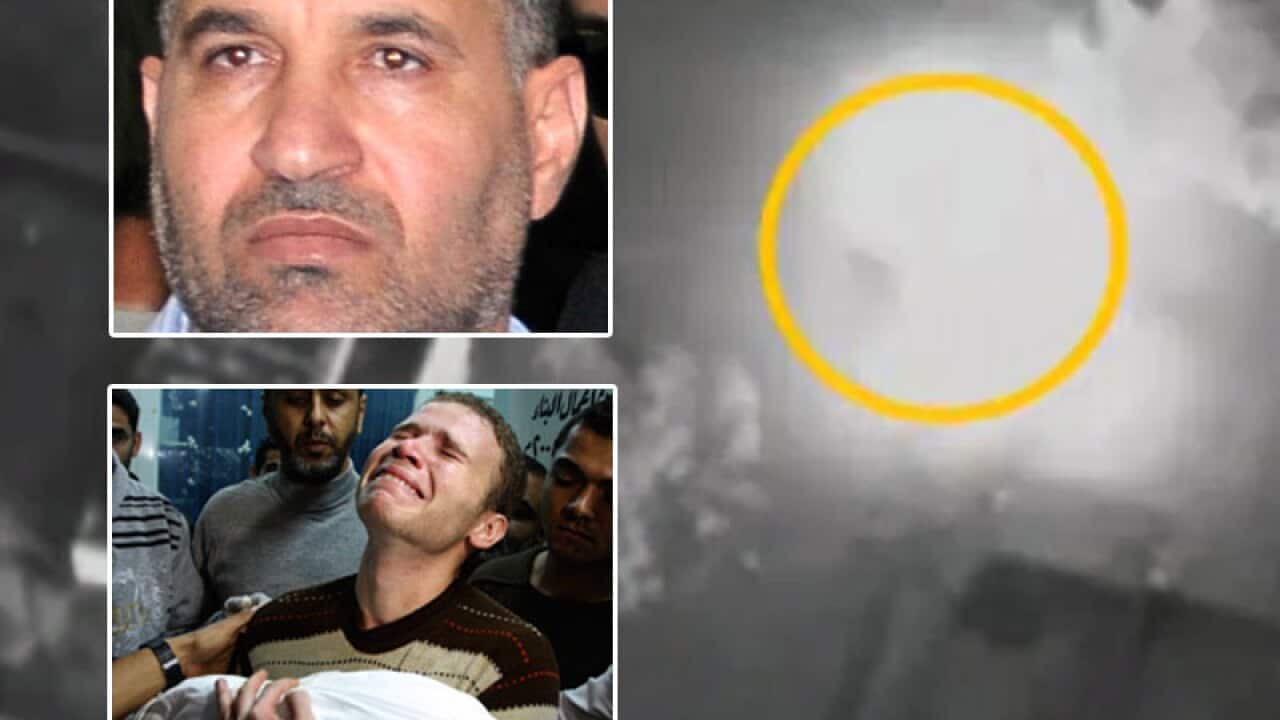
Hamas leader killed by Israel strike
Israel killed a top Hamas military commander in a targeted strike in Gaza on Wednesday, prompting outrage from militants who said the Jewish state had opened "the gates of hell."
Israel confirmed it had targeted Ahmed Jaabari in an air strike on a car in Gaza City, warning it was only the start of an operation to target militant groups which was launched as the Jewish state prepares for general elections in January.
It also warned it was prepared to launch a ground operation "if necessary."
Following the strike that killed Jaabari and his bodyguard, Israel pounded the strip with more than 20 others, killing another five people, two of them children, and wounding at least 45, Hamas health ministry spokesman Ashraf al-Qudra said.
The air strikes capped five days of rising tension in and around Gaza, which saw Israel killing seven Palestinians and militants firing more than 120 rockets over the border, injuring eight.
Jaabari's death sparked furious protests in Gaza City, with hundreds of members of Hamas and its armed wing, the Ezzedine al-Qassam Brigades, chanting for revenge in and around Shifa hospital where Jaabari's body was taken.
As Gaza hospitals and medical centres went on high alert, bracing for more strikes, Israeli Prime Minister Benjamin Netanyahu convened his security cabinet and was to issue a joint statement with Defence Minister Ehud Barak at 1830 GMT.
The Israeli army said it had targeted "a significant number of long-range rocket sites" and was prepared to launch a ground operation if necessary in order to stamp out rocket fire.
"All options are on the table. If necessary, the IDF (army) is ready to initiate a ground operation in Gaza," the military said on its official Twitter account.
Israeli police spokesman Micky Rosenfeld said the level of alert in southern Israel had been raised "in anticipation of potential retaliatory attacks" and said at least seven rockets had hit Israeli immediately after the Jaabari strike.
Egyptian Foreign Minister Mohammed Kamel Amr condemned the violence and called for an "immediate stop" to attacks on Gaza, warning against an "escalation and its possible negative effects on regional stability."
Britain also called for restraint while Washington said it was watching developments in Gaza "closely."
Israeli army spokeswoman Avital Leibovich said the air strikes were just the start of an operation targeting Gaza militants and had been authorised by Chief of Staff Lieutenant General Benny Gantz.
"After the rocket fire of recent days, the chief of staff has decided to authorise the targeting of terrorist organisations in the Gaza Strip," she said.
"This is the beginning."
After the strike on Jaabari, Israeli forces had hit "close to 20 targets" used for launching rockets, especially those with a range of 40 kilometres (25 miles) or longer, causing "significant damages" to Hamas and Islamic Jihad infrastructure.
The strike prompted an outpouring of grief and anger, with armed men firing weapons into the air outside Shifa hospital in Gaza City, and mosques throughout the city calling prayers to mourn the commander's death.
The Qassam Brigades issued a furious communique in response to Jaabari's death, saying Israel had "opened the gates of hell on itself."
And Fawzi Barhum, a spokesman for the political wing of the ruling Islamist movement said it was tantamount to a "declaration of war."
"The occupation committed a dangerous crime and crossed all the red lines, which is considered a declaration of war," he said in a statement.
"The occupation will pay dearly for this and we will make it regret the moment they thought about it."
Israel Ziv, former head of the army's Gaza division, said the strike was "a very clear message to Hamas."
"This is the beginning of a larger operation that will go on for the next few days," he told reporters. "There will surely be an escalation."
Israel's last major operation in Gaza began at the end of December 2008, just six weeks shy of general elections, when troops embarked on a 22-day campaign which led to the deaths of 1,400 Palestinians -- half of them civilians -- and 13 Israelis, 10 of them soldiers.
Egypt recalls Israel ambassador
Egyptian President Mohamed Morsi decided on Wednesday to recall the ambassador to Israel after a series of air strikes in Gaza killed a top Hamas militant and six other people, his spokesman said.
Morsi decided to "recall Egypt's ambassador to Israel," spokesman Yassir Ali said in a statement broadcast on state television.
He also ordered the foreign ministry to summon Israel's ambassador in Cairo.
Israel and Hamas exchange Twitter fire
The two parties have both issued public reactions to the events via Twitter. An official account for the Israel Defence Forces (IDF) this morning issued a warning to Hamas that "no operatives, whether low level or senior leaders, show their faces above ground in the days ahead."
An unverified account alleging to be the official voice of Al Qassam Brigades - the military arm of Hamas - in Palestine, fired back a response to the IDF account, saying that their "blessed hands will reach your leaders and soldiers wherever they are".


The IDF has also posted a video to its official YouTube page that claims to show the strike that killed Ahmed Jabri in Gaza.







