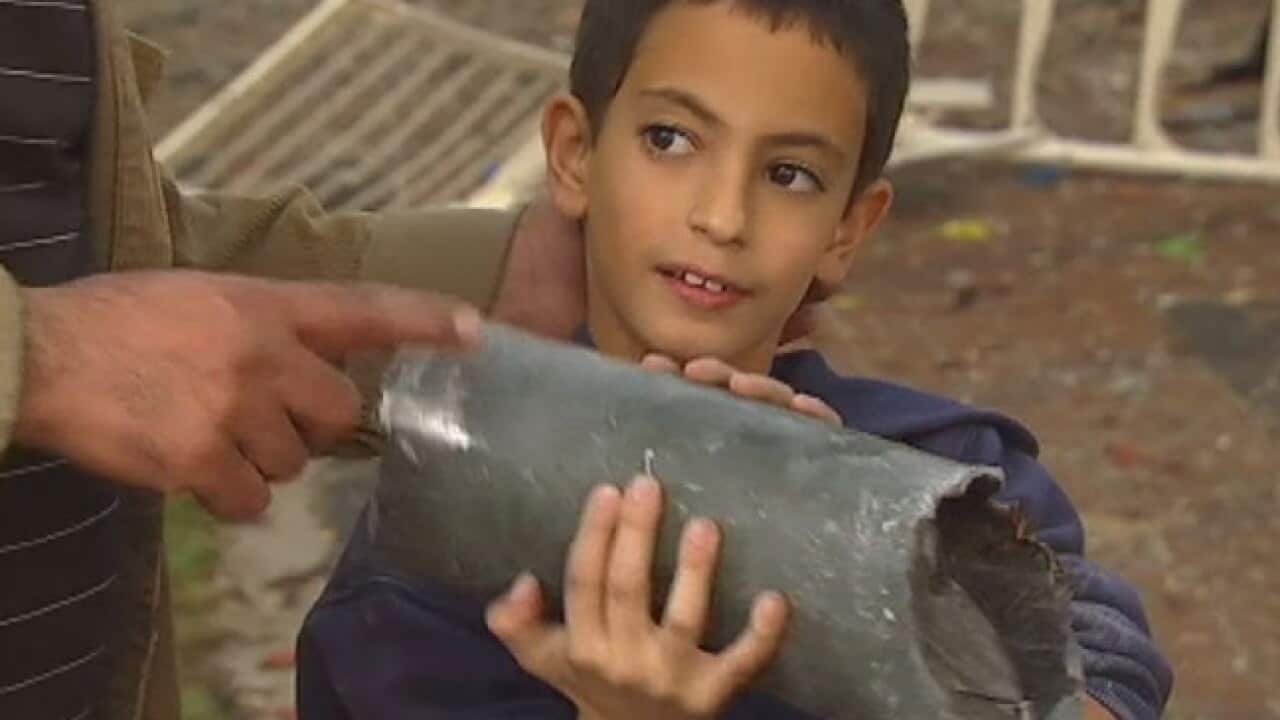
In Israel, it has taken several days for some families to trust the ceasefire and return home after fleeing from rocket attacks.
The Sharon family returned to a damaged home with gaping holes in walls and debris scattered all around.
Tamir Sharon says while he is glad his family left their home, it was a difficult decision.
News that makes sense
Your trusted source for staying up-to-date with the world around you. Get free daily news updates and analysis, straight to your inbox.
"It's a very hard decision to leave your house. It's a very hard decision to take your family and kids".
The family moved to their home on a kibbutz at Sufa in southern Israel in 1984. While they have had countless evacuations and several near-misses, it's the first time their house has been directly hit, despite being just 2.5 kilometres from the Gaza strip.
Neighbours Eyal and Ziva Brandeiss refused to leave even during intense rocket fire. Metal shutters turned the house into a bomb shelter. Eyal says he would never leave.
"This is my house. This is where I live. No one is going to drive me away. This is where my life is, so there's no reason for me to go".
Sydney-born social worker Debbie Maisell is working on a nearby kibbutz. She says emotions run high in the community and members often experience a range of disorders including anxiety and family dysfunction.
"If the community is organised and gives people the response they need, they feel like there's people looking after them".







