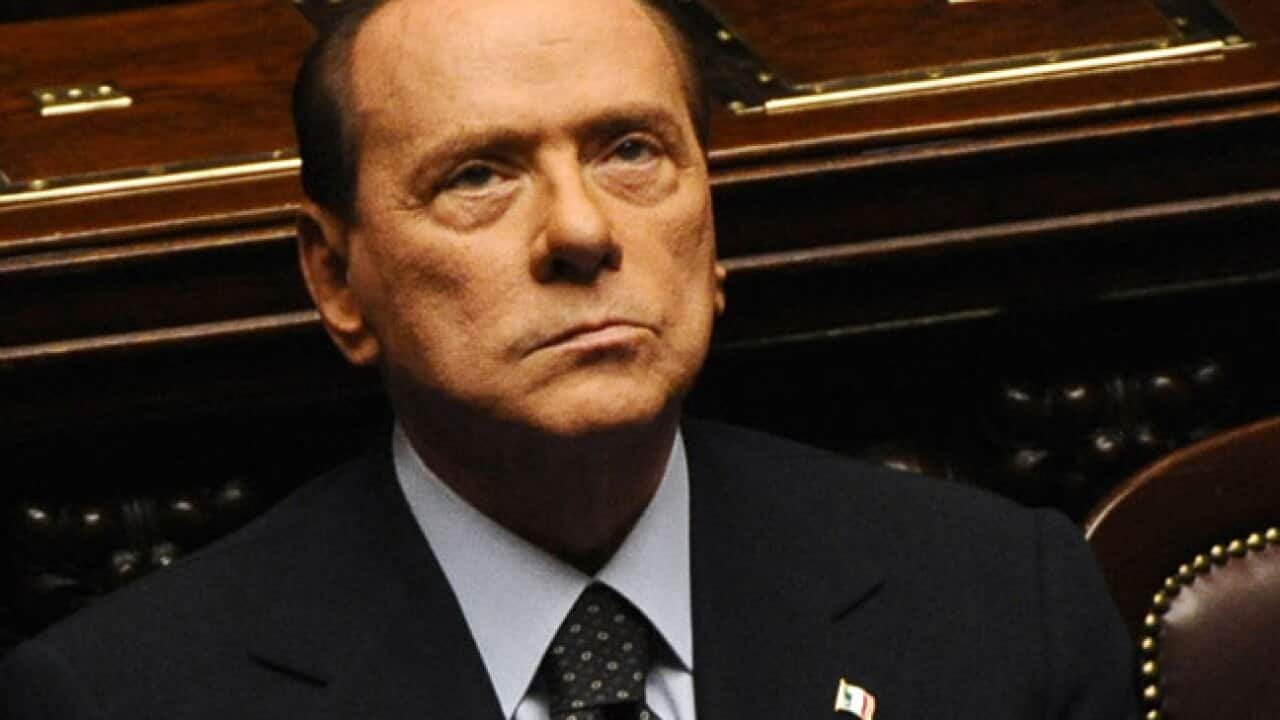
Italian Prime Minister Silvio Berlusconi announced Tuesday he would resign after the adoption of key reforms, saying it was vital to show markets that Italy was 'serious' and to work for the good of the country.
"We have to show the markets that we are serious. I think that is the important thing we should worry about, then we can worry about who leads the government. The important thing is to work for the good of Italy," he said.
President Giorgio Napolitano's office said Berlusconi had shown "his awareness of the implications of the results of today's vote" as well as "concern for the urgent need to give prompt answers to the expectations of European partners," it said.
The announcement came after Berlusconi's centre-right coalition was hit by a rash of defections and lost its overall majority in parliament on a key vote amid pressure for Italy to move quickly to put its public finances in order.
News that makes sense
Your trusted source for staying up-to-date with the world around you. Get free daily news updates and analysis, straight to your inbox.
A vote on Italy's 2010 public accounts -- a precondition for the approval of future budgets -- was passed by 308 votes in favour, none against with one formal abstention and 321 deputies who did not take part in the vote.
The overall majority in Italy's 630-seat parliament is 316 votes.
A scathing Berlusconi spoke bitterly of betrayal as he stormed out of parliament, according to newspaper reports. Eight deputies who refused to support him were labelled "traitors" in a scribbled note captured on camera.
The EU's Economic Affairs Commissioner Olli Rehn said the situation in Italy was "very worrisome" and said it was under "very significant" market pressure.
Italy has promised reforms including a sell-off of state assets and an overhaul of the labour market in a law to be adopted by the end of the month.
Borrowing rates hit new records after the vote on investor fears, with the yield on 10-year bonds reaching 6.77 percent and the spread between Italian and German benchmark bond yields widening to a new high of nearly 5.0 percent.
"The government no longer has a majority in this chamber," Pier Luigi Bersani, leader of the main opposition Democratic Party, said after the vote.
"We all know that Italy runs the risk over the next few days of not having access to commercial debt markets," he said.
The premier's main coalition partner had called for his resignation ahead of the vote, with a nervous Europe watching on as political consultations also continued in crisis-hit Greece over the formation of a new cabinet.
"We have asked him to step aside," Northern League party leader Umberto Bossi, a long-term ally of Berlusconi from the early 1990s, told reporters.
Global markets were focused on the political crisis playing out in Italy, the third-biggest economy in the eurozone, while European Union ministers held talks in Brussels in which they voiced concern about the situation.
The euro rose to $1.3830 after the announcement of Berlusconi's resignation from $1.3787 earlier.
The combination of Italy's low growth rate and 1.9-trillion euro ($2.6-trillion) debt has fanned investor alarm that it could be the next victim of Europe's debt crisis even though its deficit is relatively low.
Although the current political picture in Italy is far from clear, the idea that Berlusconi -- a dominant feature in Italian politics for almost two decades -- could step down is no longer taboo, including among his supporters.
Among the possible political scenarios mooted in recent days are early elections, a national unity government, a government led by technocrats and a widening of the current coalition to include the centrist UDC party.
Berlusconi's popularity rating has slumped to a record low of 22 percent amid the current crisis and he is currently a defendant in three trials for bribery, tax fraud, abuse of power and paying for sex with a 17-year-old girl.
Italy has been on the ropes since last week when the government agreed to special surveillance from the International Monetary Fund and the European Union to ensure it was meeting crucial targets to cut its massive debt.
The first EU experts are set to begin work in Italy on Wednesday.
Greece's two main parties meanwhile were tantalisingly close to a breakthrough on naming a new government and outgoing Prime Minister George Papandreou demanded the resignation of his ministers to ease the process.
Khoon Goh, strategist at ANZ bank in Wellington told Dow Jones Newswires: "Greece may still be hogging the headlines at present, but we could be moving from a Greek crisis towards an Italian crisis."







