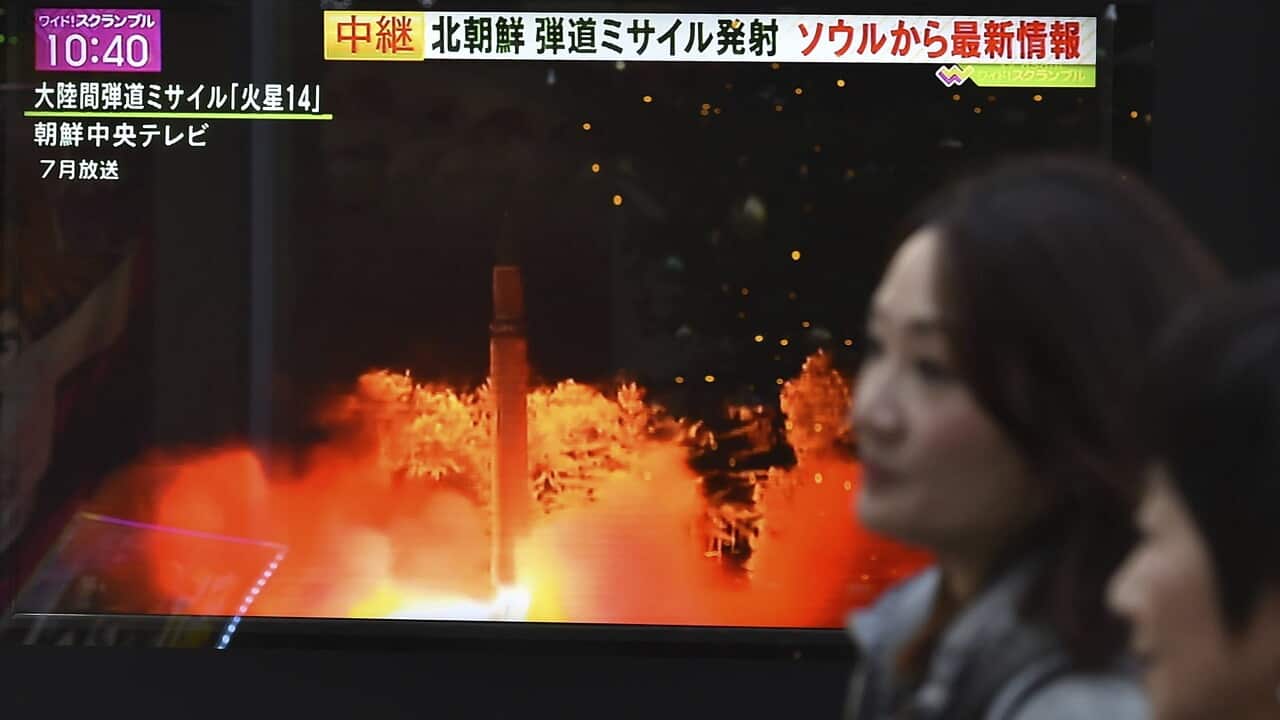
Japan plans to purchase offensive air-to-surface missiles to counter North Korea's rising military threat, its defence minister said Friday, a move likely to stir debate over its decades-long pacifist policy.
Itsunori Onodera said the ministry intends to request a special budget for the fiscal year starting April 2018 to purchase long-range cruise missiles deployed on fighter jets.
According to local media, the ministry plans to buy JASSM and LRASM long-range, air-to-ground missiles with a range of some 900 kilometres from US firms.
It also plans to buy Joint Strike Missiles with a range of some 500 kilometres from Norway's Kongsberg Defence and Aerospace, news reports said.
News that makes sense
Your trusted source for staying up-to-date with the world around you. Get free daily news updates and analysis, straight to your inbox.
The move will likely draw controversy as Tokyo has long maintained an exclusively defence-oriented policy under its pacifist constitution, which bans the use of force as a means of settling international disputes.
But Mr Onodera insisted his ministry will continue to uphold the policy, telling reporters: "We will introduce them as stand-off missiles that allow us to deal with our opponents from outside the range of threats."
Japan's military policy has been restricted to self-defence and relies heavily on the US to attack enemy territory under the Japan-US security alliance.
US President Donald Trump had caused consternation during his White House campaign by suggesting allies such as Japan need to do more to defend themselves, although since taking office Mr Trump and his diplomats have offered reassurances of support.
Earlier this week, Prime Minister Shinzo Abe told parliament that North Korea's missile tests were an "imminent threat" to Japan and talking to the reclusive state was meaningless.
The upper house unanimously adopted a resolution protesting against the North's firing of an intercontinental ballistic missile that dropped into the sea inside Japan's exclusive economic zone last week.
Global anxiety about North Korea has steadily risen this year and Washington last week called on other UN members to cut ties with Pyongyang in order to squeeze the secretive regime.
The call, however, has fallen short of persuading key North Korean backers China and Russia to take steps to isolate the regime.







