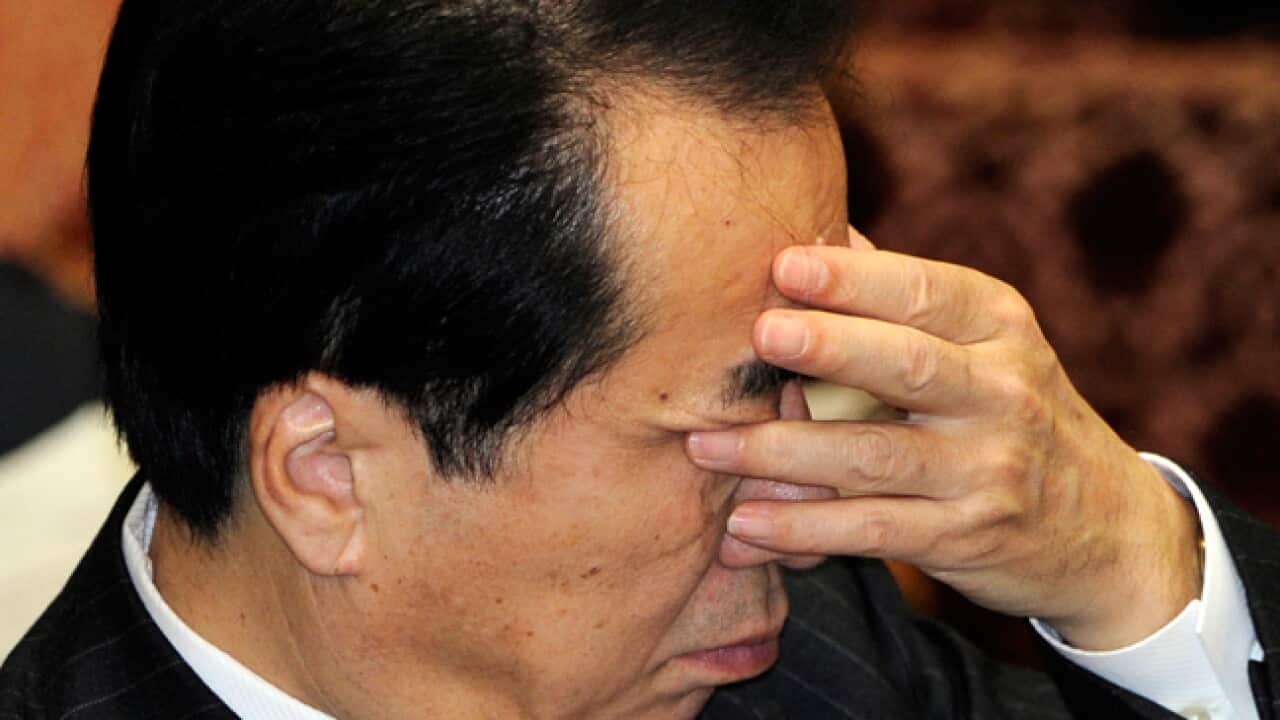
Japan's embattled Prime Minister Naoto Kan on Friday admitted he had received donations from a man believed to be a foreign national, the same violation that cost the foreign minister his job.
The revelation piles more pressure on Japan's fifth premier in as many years, who already battles low poll ratings, internal party divisions and a split parliament but has resisted calls to step down or call snap elections.
The Asahi newspaper reported that Kan's fund-management body had accepted donations from a South Korean resident of Japan, in breach of a political funding law that bans contributions from foreign individuals or entities.
News that makes sense
Your trusted source for staying up-to-date with the world around you. Get free daily news updates and analysis, straight to your inbox.
"I thought he was a Japanese national as he had a Japanese name," Kan told a parliamentary committee about the reported $12,500 in donations. "I wasn't aware at all that he is a foreign national as the report says."
The centre-left premier pledged to "return all the money if it is confirmed that he is a foreign national."
Kan's right-hand man and top spokesman, Chief Cabinet Secretary Yukio Edano, said Kan is not considering stepping down.
Finance Minister Yoshihiko Noda said "as it wasn't intentional, I don't see any legal problems there," Dow Jones Newswires reported.
The donation came to light just days after Seiji Maehara resigned as foreign minister for taking money from another South Korean resident of Japan.
Maehara, a high-profile minister who had widely been tipped as a successor to Kan, apologised for taking the donation and announced his resignation late Sunday despite Kan's efforts to persuade him to stay.
Maehara illegally accepted about $3,000 from a 72-year-old woman of Korean background, a family friend who is not a Japanese citizen.
Japan, which occupied the Korean peninsula until the end of World War II, is home to nearly one million ethnic Koreans. Many are children of former forced labourers and do not hold Japanese nationality despite having lived their entire lives in the country.
The Asahi daily said that Kan's fund-management body had received a total of 1.04 million yen ($12,500) in 2006 and 2009 from the unidentified man, a 58-year-old resident of Yokohama, near Tokyo.
The man, a former executive of a credit association for ethnic Koreans, made the donations under his Japanese name, but his relatives and business acquaintances say he is a South Korean national, the report said.
Kan said he met the man through an acquaintance, who introduced the man as a real estate figure. The premier said the three of them went fishing together, and that he and the donor had dinner several times.
Kan took office last June as the second premier of the Democratic Party of Japan, which scored a landslide in general polls in 2009, ending more than half a century of almost unbroken conservatives rule.
But his government has struggled because the conservative Liberal Democratic Party controls the upper house of parliament, where it can block crucial budget support bills, risking a government shutdown.







