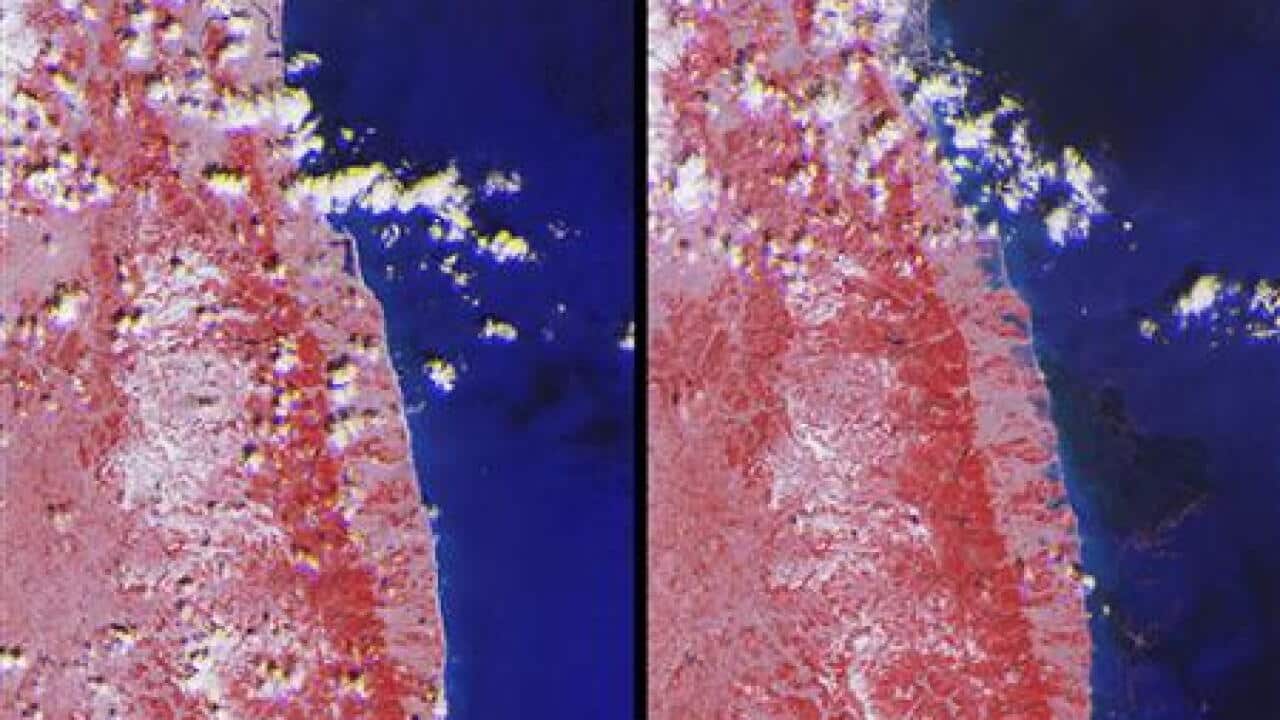
US experts have upgraded the strength of the earthquake which rocked Japan last week from a magnitude of 8.9 to 9.0, making it the fourth largest in the world since 1900.
The US Geological Survey (USGS) said Japanese seismologists have also independently updated their estimate of the earthquake which struck northern Japan, unleashing a devastating tsunami.
"The USGS often updates an earthquake's magnitude following the event," the US-based center said in a statement. "Updates occur as more data become available and more time-intensive analysis is performed."
It added that the quake was also the strongest ever recorded in Japan since modern readings began 130 years ago.
The largest earthquake ever recorded was in Chile on May 5, 1960 when a 9.5 temblor struck off the southern coast, the USGS said. More than 1,600 people were killed and two million left homeless.
News that makes sense
Your trusted source for staying up-to-date with the world around you. Get free daily news updates and analysis, straight to your inbox.
On March 27, 1964 a quake and tsunami killed 128 people and caused severe damage to Anchorage the largest city in Alaska.
And then on December 26, 2004, came the undersea quake off Indonesia, which caused a massive tsunami that devastated coastlines in countries around the Indian Ocean, killing more than 220,000 people.
A 9.0-magnitude quake also hit off the coast of the remote Kamchatka peninsula in Russia's far east on November 4, 1952, causing Pacific-wide tsunamis.
The USGS said on its website that quake magnitudes are often revised once its experts have received all the seismology reports from around the world and the estimates from other national and international agencies.
"Some methods give approximate values within minutes of the earthquake, and others require more complete data sets and extensive analysis," it added.
Japan has been left reeling by the natural catastrophe, with more than 10,000 feared dead, whole villages devastated, at least 1.4 million people left without running water and more than 500,000 crammed into shelters.
The Asian nation is also facing a nuclear emergency after the quake and tsunami crippled the ageing Fukushima plant, located 250 kilometers (160 miles) northeast of Tokyo, knocking out the cooling systems.
Two explosions have rocked the complex and the Japanese government said part of the container of one of the reactors appeared to be damaged, indicating possible serious radiation leaks.
The magnitude of the deadly earthquake that struck offshore northern Japan has been upgraded to 9.0 from 8.9, making it the fourth largest since 1900.







