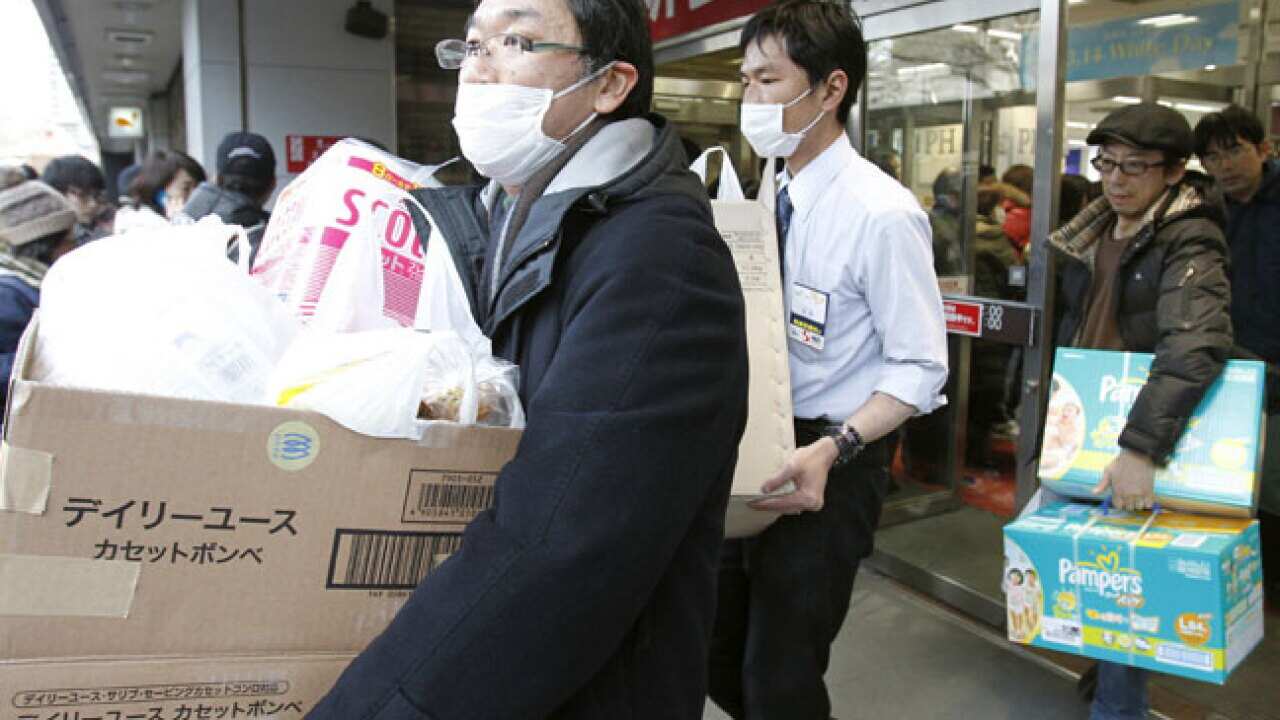
In towns and cities, fearful citizens stripped shelves of food and water, prompting the government to warn that panic buying could hurt its ability to provide aid to areas devastated by the massive quake and tsunami.
But scared Tokyo residents filled outbound trains and rushed to shops to stock up on face masks and emergency supplies amid heightening fears of radiation headed their way.
"What we most fear is a radiation leak from the nuclear plant," Kaoru Hashimoto, 36, a housewife living in Fukushima city, 80 kilometres northwest of the stricken plant, told AFP by phone.
News that makes sense
Your trusted source for staying up-to-date with the world around you. Get free daily news updates and analysis, straight to your inbox.
Supermarket shelves bare, petrol shortage
Hashimoto said supermarkets were open but shelves were bare. "Many children are sick in this cold weather, but pharmacies are closed. Emergency relief goods have not reached evacuation centres in the city.
"Everyone is anxious and wants to get out of town, but there is no more petrol," she said.
More than 200,000 people have already been evacuated from the exclusion zone around the crippled plant.
Absolute devastation in Sendai
The devastation in tsunami-hit areas such as Sendai city in the northeast, however, is absolute.
At the once-bustling regional airport, small planes jutted out at awkward angles from thick mud amid the wreckage of clusters of wooden beachfront houses that were splintered into flotsam in an instant by the waves.
The machinery of modern life has been crumpled almost beyond recognition as far as the eye can see, cars are stuck incongruously into the few remaining structures or balanced on top of wrecked homes.
Millions facing harsh conditions
Millions have been left without water, electricity, fuel or enough food and hundreds of thousands more are homeless and facing harsh conditions with freezing temperatures overnight, with snow and rain forecast.
Aid workers and search teams from across the world have joined 100,000 Japanese soldiers in a massive relief push in the shattered areas.
Rescuers pulled two survivors, an elderly woman and a man, from underneath the rubble, four days after the earthquake, public broadcaster NHK reported.







